Health Communication

What role do digital media play in health-related behaviour? How can communication science contribute to improving health communication?

The “Health Communication” research group focuses on changes in health-related communication processes in the context of ongoing digital transformations. It examines health-related communication phenomena in digital environments—ranging from health and “sickfluencers” on social media, health apps, serious games, and games for health, to the use of AI-supported applications in healthcare settings.

The focus is on the effects of these developments on health-related communication processes. This includes, among other things, questions regarding the influence of these technologies on trust in health-related information, the attribution of medical expertise, the quality of the doctor-patient relationship, and health-related attitudes and behaviors—for example, with regard to processes of shared and informed decision-making.

In addition, the research group examines the health-related function of automated communication (e.g., chatbots) and the question of how this affects mental health—particularly among adolescents and young adults.

Head of the research group: Dr. Claudia Lampert

Overview

Leaders

Last update: 16.09.2026

Blog Articles, News, Projects, Publications, Podcast Episodes

Cover
Visions for a Non-Discriminatory Internet Governance

Critical Voices, Visions and Vectors for Internet Governance

In the new issue of the research magazine encore, Katharina Mosene and PD Dr. Matthias C. Kettemann present five visions for a discrimination-free Internet.

Cover
Download Free of Charge

Towards a Global Framework for Cyber Peace and Digital Cooperation

Matthias C. Kettemann, together with Wolfgang Kleinwächter, Max Senges and Katharina Mosene, has published an anthology in which central perspectives on the future of Internet regulation can be found.

Portrait Matthias C. Kettemann
Facebook Must Delete Hate Posts

Glawischnig-Piesczek and the Dangers of National Jurisdiction Conflicts on the Internet

Facebook can be forced to delete hate postings worldwide. Matthias Kettemann and Anna Sophia Tiedeke assess this decision of the European Court of Justice in their article on the constitutional blog.

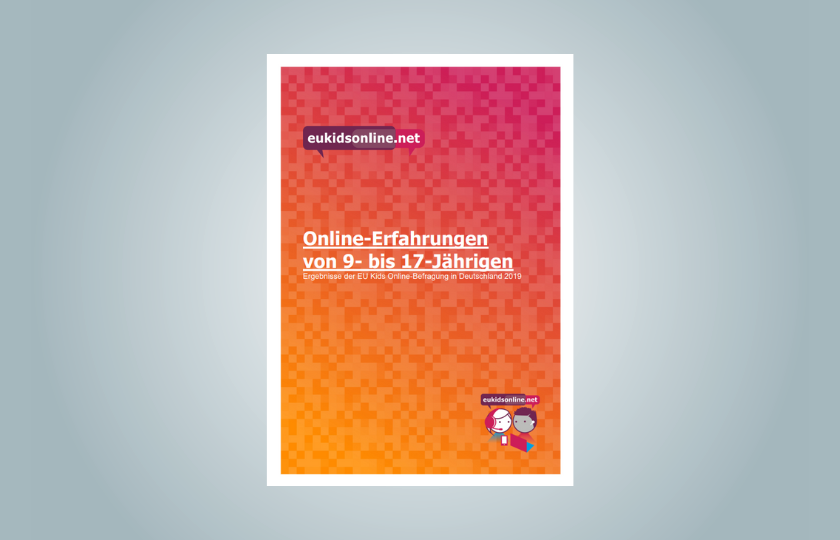
Cover Studie Online-Erfahrungen von 9- bis 17-Jährigen
Results of the EU Kids Online Survey

Online Experiences of 9- to 17-Year-Olds

In this study, Uwe Hasebrink, Claudia Lampert, and Kira Thiel describe how children and adolescents in Germany use the Internet, what negative experiences they encounter online, and how they cope with these experiences. These are the results of a representative survey conducted in 33 countries by the European research network EU Kids Online.

Cover
Diversity Report 2019

News Interest and News Usage in the Digital Media Environment

In the Diversity Report 2019 of the Media Authorities, Uwe Hasebrink and Sascha Hölig write about the news usage habits of Internet users.

Cover der Publikation
Handbook Published

Research Handbook on Human Rights and Digital Technologies

In a digitally connected world, the question of how to respect, protect and implement human rights has become unavoidable. This contemporary Handbook offers new insights into well-established debates by framing them in terms of human rights. It examines the issues posed by the management of key Internet resources, the governance of its architecture, the role of different stakeholders, the legitimacy of rule making and rule-enforcement, and the exercise of international public authority over users.

Cover der Publikation
Article in Handbook

This is Not a Drill”: International Law and Protection of Cybersecurity

Matthias C. Kettemann examines the role of international law in protecting cybersecurity and explores how legal norms can address cross-border digital threats.

Cover der Publikation
Introduction to Handbook

Introduction to the Handbook Human Rights and Digital Technology

Matthias C. Kettemann introduces the key questions of the handbook and explores how digital technologies create new challenges for human rights, global governance, and legal regulation.

Portrait Matthias C. Kettemann
Blog Article

How an Online Order Fights Fragmentation

The Internet will not fall apart. Matthias C. Kettemann explains in the Digital Society Blog, a normative shift has taken place on the Internet, leading to the emergence of a normative order for the Internet.

Cover
Contribution to Handbook

Talking to People I: Surveys

In their contribution to the Palgrave Handbook of Methods for Media Policy Research, Uwe Hasebrink and Sascha Hölig write about one of the most important tools in communication science: the survey.

Cover der Publikation "Schriftliche Stellungnahme zum zweiten Diskussionsentwurf eines Medienstaatsvertrages der Länder"
Written Statement

Written Statement on the Second Draft of an Interstate Media Treaty

The new Interstate Media Treaty (MStV) is supposed to modernise media regulation and adapt it to new forms of offerings and usage. Like the first version, the core of the revised draft aims to include new media actors in the scope of application of the State Treaty. The media law experts Prof. Dr. Wolfgang Schulz and Dr. Stephan Dreyer have again published a statement on this draft.

Cover der Publikation "Non-commemorative memory in news production"
“Memory” in Journalistic Practice

Non-Commemorative Memory in News Production

This paper, published by Irene Broer and lead author Stefanie Trümper in the journal *Memory Studies*, explores how media professionals incorporate memories of historical events into their journalistic work.

1 … 40 41 42 43 44

Page 42 from 44

Newsletter

Information about current projects, events and publications of the institute.

Subscribe now