Opinion Formation

The “Opinion Formation” research group investigates how people can form their own independent opinions and what is required to make this possible on the part of lawmakers, society, the media, and online platforms.

Public opinion does not emerge in a single place or through a single actor. It emerges from a complex interplay among citizens, the media, platforms, politics, academia, civil society, businesses, and, increasingly, automated systems.

All of these actors pursue different goals, operate under different conditions, and influence in various ways which issues gain visibility and how they are evaluated.

Digitalization, platformization, and the use of artificial intelligence are raising classic questions about the democratic public sphere anew.

  • What is needed for people to form opinions freely and with full knowledge of the facts?
  • How do platforms change the visibility of information?
  • What are the consequences of disinformation, misinformation, and targeted manipulation?
  • And what responsibilities do the media, platforms, the state, and society bear?

Photo by Annie Spratt/Unsplash
Overview

Last update: 24.09.2026

Blog Articles, News, Projects, Publications, Podcast Episodes

Wiebke Loosen
Podcast “After the Editorial Deadline – The Media Podcast”

How Close Are Media to Their Audience?

Prof. Dr. Wiebke Loosen is a media expert and guest on Deutschlandfunk's media podcast “Nach Redaktionsschluss”. What makes this format unique is that listeners choose the topics. This episode focuses on the relationship between journalists and their audience.

Cover der Publikation "
Research Project on Misinformation and Disinformation

Destructive Discourses

The final research report, jointly written as part of the NOTORIOUS research project, looks at how climate-related misinformation and disinformation spreads across different platforms. At the HBI, Philipp Keßling, Dr. Felix Victor Münch, Dr. Gregor Wiedemann, and Mattes Ruckdeschel worked on the report.

Altmodischer schwarzer Telefonhörer mit Schnur auf grauem Grund
Call for Papers

Special Issue of IJPP “Global Myth and Magic around AI”

For a special issue of the International Journal of Press/Politics on “Global Myth and Magic around AI: Enchanted Determinism and Folk Theories in Public Discourses on AI”, the guest editors welcome submissions until 15 June 2025.

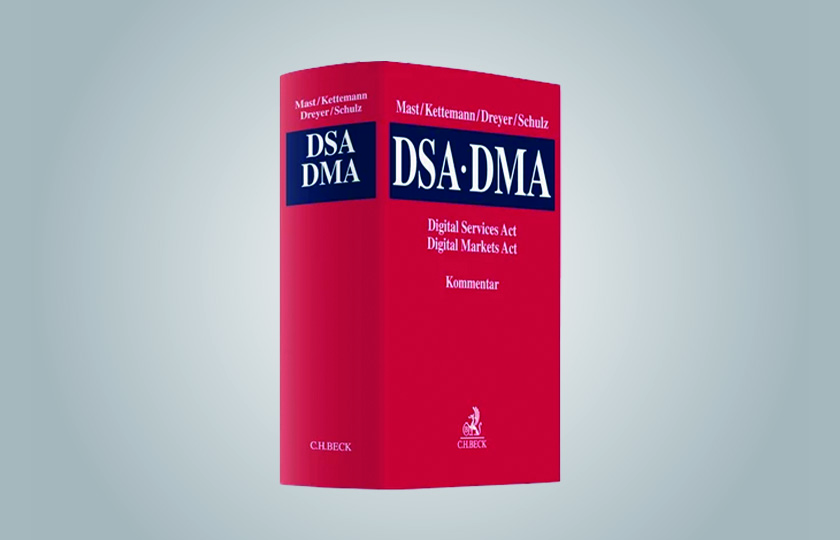
Bild des 1600 Seiten starken Kommnatrs
The most comprehensive HBI publication ever!

DSA DMA Commentary

It is the most extensive publication the HBI has ever produced: the 1600-page commentary on the Digital Services Act (DSA) and the Digital Markets Act (DMA), edited by Tobias Mast, Matthias C. Kettemann, Stephan Dreyer and Wolfgang Schulz. In addition to several current and former researchers from the institute, almost 30 other experts from Germany, Austria and Switzerland were recruited for the commentary project.

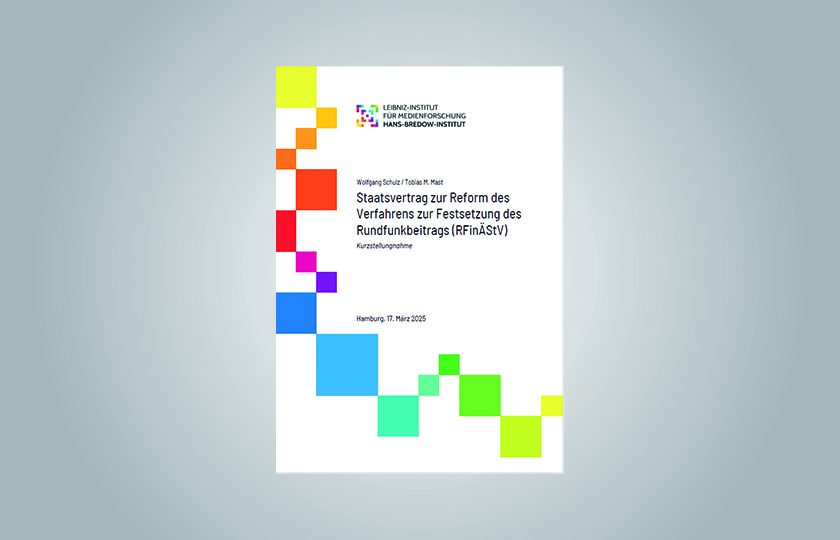
Cover des Kurzgutachtens
Brief Expert Opinion

State Treaty on the Reform of the Procedure for Setting the Broadcasting License Fee

Prof. Dr. Wolfgang Schulz and Dr. Tobias Mast have provided their expert opinion on the State Treaty on the Reform of the Procedure for Setting the Broadcasting Fee (RFinÄStV). At the end of 2004, the federal states had decided to separate the pillars of the reform of public broadcasting and to adopt the draft reform first and to continue the process of reforming the procedure for setting the licence fee separately.

Hans-Ulrich Wagner
Podcast about ARD history

ARD and Politics – The Struggle for Independence

About 75 years ago, in June 1950, the constituent assembly of the ARD took place. The aim was to strengthen the position of the broadcasters in the political arena and to have a say in international affairs, for example in the allocation of broadcasting frequencies. At that time, "the broadcasters" meant exclusively radio. In a podcast by Rainer Volk for SWR Kultur, media historian Dr. Hans-Ulrich Wagner and other experts shed light on the history of the ARD.

Sascha Hölig
ZDF Television Council

Sascha Hölig on His Work on ZDF’s Self-Regulation Declaration

Media researcher Dr. Sascha Hölig is an expert advisor to ZDF Television Council and has been supporting the council for two years in implementing the quality goals of ZDF's voluntary commitment. Within the team, he has been mainly concerned with ZDF Kompass measurement tools, their potentials and limitations. In an interview published in the newsletter of ZDF Television Council, he draws a conclusion.

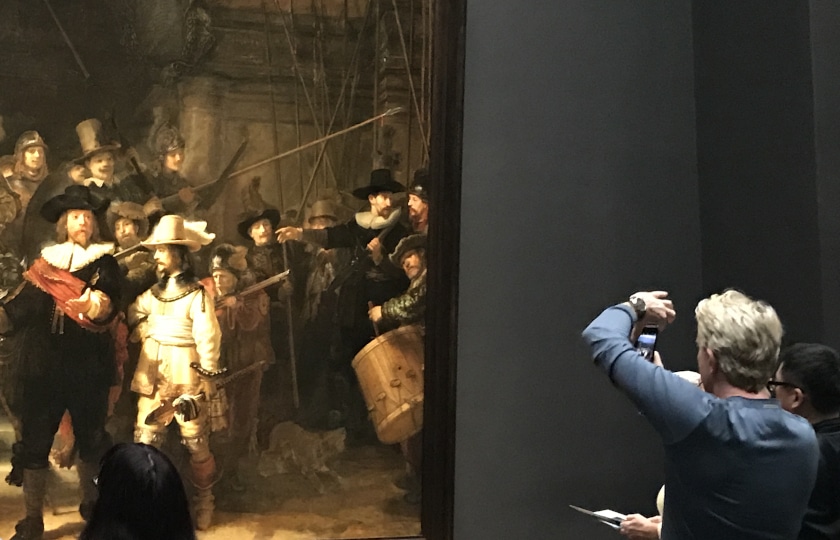
Menschen vor einem Gemälde im Amsterdamer Rijksmuseum
New Funding Phase!

Leibniz Research Alliance “Value of the Past” Receives Four More Years of Funding

The Senate of the Leibniz Association has decided to continue funding the Leibniz Research Alliance “Value of the Past” until September 2029. In addition to the partner institutes' own funds, the network will receive an additional 1.2 million euros for research and knowledge transfer. Within the research network, the HBI is part of the Research Lab “Practices of Appropriation”, which also focuses on historical memes and TikTok videos as well as historical Instagram and Twitter accounts.

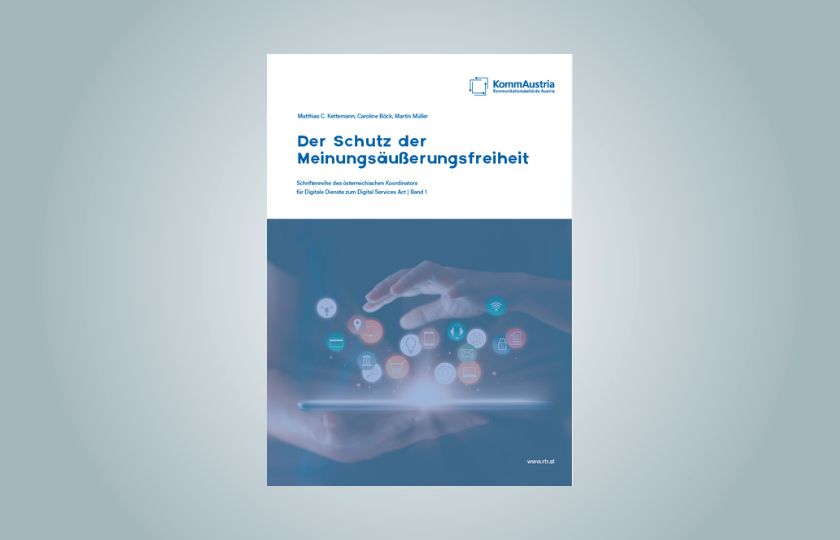
Cover of the first volume of the EU publication series

The Protection of Freedom of Expression in the Digital Services Act

The publication "Der Schutz der Meinungsäusserungsfreiheit im Digital Services Act" [The Protection of Freedom of Expression in the Digital Services Act], to which Matthias C. Kettemann contributed significantly, is the first in a series of KommAustria publications on the DSA, which are intended to provide a basis for understanding the DSA and contribute to a more differentiated discussion.

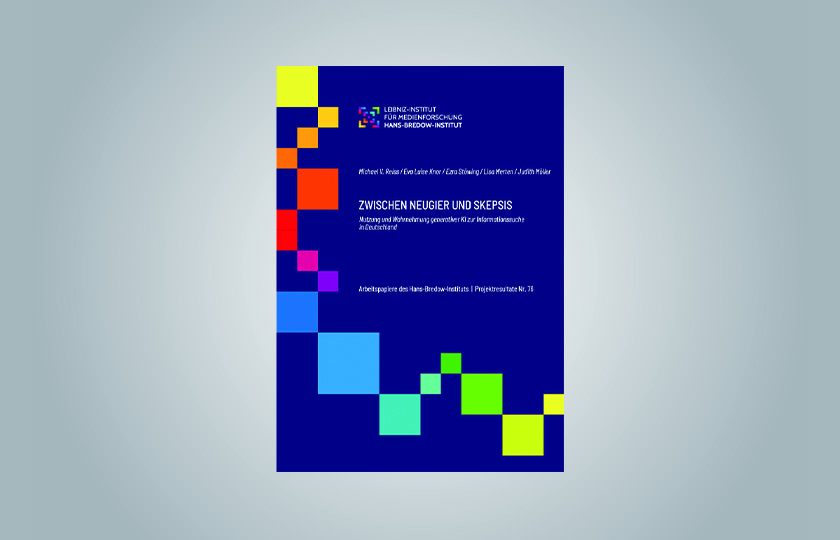
Cover of Working Paper No. 76
Project Findings Available for Download

Between Curiosity and Skepticism: Use and Perception of Generative AI for Information Search in Germany

The research project "Generative Artificial Intelligence for Information Navigation", funded by the German Federal Ministry of Education and Research (BMBF), investigated to what extent, for what purposes and for what reasons the German population uses generative artificial intelligence in applications such as ChatGPT or Google Gemini. The findings can be downloaded as a working paper.

Two statues with VR glasses look at each other
Presentation of Findings

Use and Perception of Generative AI for Searching Information in Germany

The research project "Generative Artificial Intelligence for Information Navigation" has examined how, why, and for what purposes the German population uses generative artificial intelligence (AI) in applications such as ChatGPT or Google Gemini. The findings are presented in two videos, a report and a podcast.

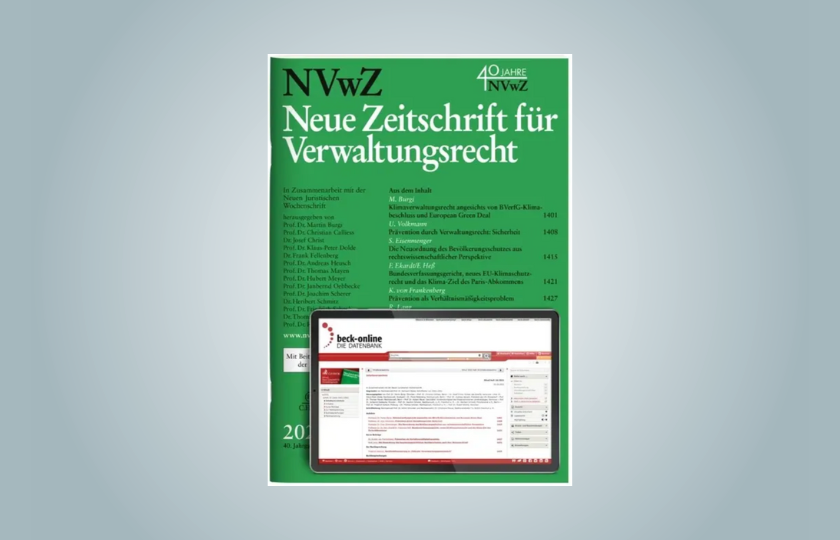
Cover of the 6/2025 issue of the New Journal of Administrative Law.
Article in Journal for Administrative Law

Trusted Flaggers Are Not Authorized Agents!

In the current issue of the Neue Zeitschrift für Verwaltungsrecht, Tobias Mast challenges the increasingly prominent view in legal literature that trusted flaggers under Art. 22 of the Digital Services Act (DSA) are public authorities in the sense of German administrative law.

1 … 12 13 14 15 16 … 43

Page 14 from 43

Newsletter

Information about current projects, events and publications of the institute.

Subscribe now