Opinion Formation

The “Opinion Formation” research group investigates how people can form their own independent opinions and what is required to make this possible on the part of lawmakers, society, the media, and online platforms.

Public opinion does not emerge in a single place or through a single actor. It emerges from a complex interplay among citizens, the media, platforms, politics, academia, civil society, businesses, and, increasingly, automated systems.

All of these actors pursue different goals, operate under different conditions, and influence in various ways which issues gain visibility and how they are evaluated.

Digitalization, platformization, and the use of artificial intelligence are raising classic questions about the democratic public sphere anew.

  • What is needed for people to form opinions freely and with full knowledge of the facts?
  • How do platforms change the visibility of information?
  • What are the consequences of disinformation, misinformation, and targeted manipulation?
  • And what responsibilities do the media, platforms, the state, and society bear?

Photo by Annie Spratt/Unsplash

Overview

Last update: 24.09.2026

Blog Articles, News, Projects, Publications, Podcast Episodes

Jan Rau
Article for the bpb

The Internet as a Success Story for the Far Right?

On the website of the Federal Agency for Civic Education (bpb), Jan Rau explains that the political challenges our democracies have faced in recent years do not have their roots in the digital realm. However, the issues and conflicts he mentions are increasingly being played out, shaped, and, in some cases, amplified in the digital arena of the Internet.

Cover Forschungsbasierter-Wissenstransfer-und-Gesellschaftlicher-Zusammenhalt
First volume in a new series of publications

Research-Based Knowledge Transfer and Social Cohesion

The first volume in a new series published by the Research Institute for Social Cohesion (FGZ) has been released. It explores how to foster a successful two-way exchange of knowledge between research, civil society, and politics.

Cover einer Studie
Risks of Online Interaction from the Perspective of Adolescents

Between Annoyance and Stress

The risks of online interaction from the perspective of adolescents are the focus of the essay by Kira Thiel and Claudia Lampert in the December 6/2023 issue of the JMS Youth Media Protection Report. The article was written as part of the “SIKID – Safety for Children in the Digital World” project and is available via open access.

Cover:
Comments on the Draft Bill

Minimum Penalties for Child Pornography

Media law experts Sünje Andresen and Stephan Dreyer comment on the draft bill presented in November 2023 by the Federal Ministry of Justice (BJM) to adjust the minimum penalties for the distribution, acquisition, and possession of child pornography (Section 184b, paragraph 1, sentence 1, and paragraph 3 of the Criminal Code).

Vorschau des Artikels "
Digital Turbulence

Digital Turbulence: Building a Democratic Society in Times of Digital Upheaval

In the special issue of the journal “Knowledge Creates Democracy” on the topic of “Online Cultures and Platform Policies,” researcher Jan Rau describes how our democracy can be strengthened in digital spaces. “Knowledge Creates Democracy” is a series published by the Institute for Democracy and Civil Society.

Cover des Arbeitspapiers Lazy Legislative
Working Paper Nr. 70

The Lazy Legislature

In an article titled “The Lazy Legislature,” media law experts Tobias Mast and Christian Ollig explore a new, unconventional approach to lawmaking at the EU level.

Cover der
Article in the journal KJuG

Sexting Under Criminal Law

Sünje Andresen and Stephan Dreyer, along with two colleagues from the “Working Group on Child and Youth Protection in North Rhine-Westphalia,” discuss the criminal law issues surrounding “consensual sexting” involving young people in the current issue of the journal “Child and Youth Protection in Science and Practice.”

Cover der Publikation
Anthology

The Science-Media Interface

This open-access anthology brings together recent studies on science journalism, science communication, information science, and specialized scientific communication.

Cover des Arbeitspapiers
Working Paper Nr. 69 for Download

Insights into the Needs and Usage Practices of Low-Information-Oriented Young People

The Leibniz Institute for Media Research in Hamburg investigated the information needs, usage practices, and attitudes of “people with low information orientation” through focus group discussions.

Cover des Arbeitspapiers
Working Paper Nr. 68 for Download

Journalism in Germany in 2023

Wiebke Loosen, Anna von Garmissen, Elsa Bartelt, and Tim van Olphen present the initial findings of a representative survey of 1,221 journalists in Germany, which was conducted between September 2022 and February 2023.

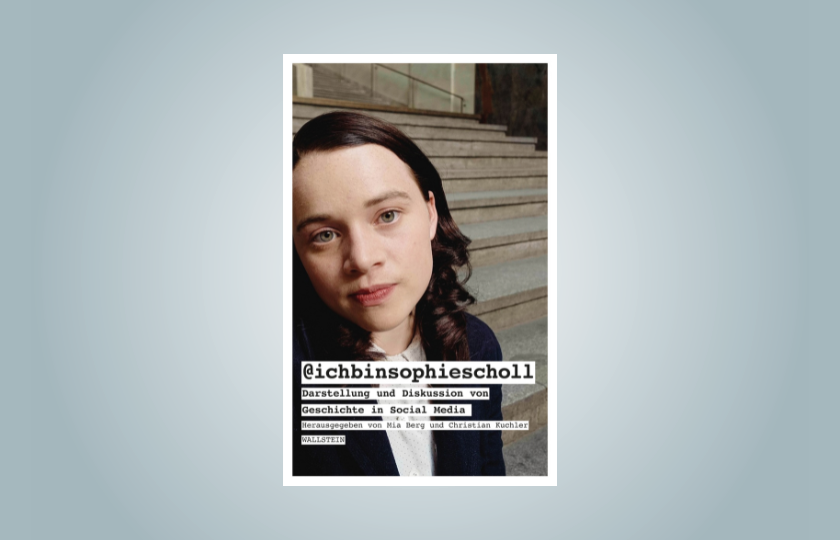
Buchcover
How to Tell Stories on Social Media?

@ichbinsophiescholl: The Representation and Discussion of History on Social Media

In 2021/22, the Instagram project @ichbinsophiescholl, a collaboration between SWR and BR, allowed users to follow the last 10 months of the life of a “remediated” Sophie Scholl. An anthology examines the project from various academic perspectives and explores how history can be told on social media.

1 … 24 25 26 27 28 … 43

Page 26 from 43

Newsletter

Information about current projects, events and publications of the institute.

Subscribe now