Order Formation

Communication spaces do not emerge on their own. They are shaped—by law, technology, social practices, economic interests, and institutional decisions. The “Order Formation” research group examines how rules emerge in such communication spaces, who is involved in shaping them, and how responsibility, power, and legitimacy are distributed.

The starting point is the observation that communication today takes place within complex ecosystems. Platforms set rules for content and behavior. Governments establish legal frameworks. Users develop their own practices. Companies design technical infrastructures. Civil society, academia, and the media play a role in monitoring, critiquing, and shaping these spaces.

The research group asks how order emerges from this interplay—and how this order can be aligned with democratic values, fundamental rights, and the common good.

In doing so, it combines three perspectives.

  • First, it focuses on structures: What legal, technical, and social frameworks shape communication spaces?
  • Second, it focuses on processes: How do rules emerge, how are they enforced, and how do they change?
  • Third, it concerns actors: Who makes decisions, who is affected, who bears responsibility, and who holds power?

These questions are examined at the national, European, and global levels. A key focus is on European platform regulation, particularly the Digital Services Act and the Digital Markets Act.

Photo by Sasun Bughdaryan/Unsplash

Overview

Leaders

Last update: 24.09.2026

Blog Articles, News, Projects, Publications, Podcast Episodes

Cover
Anthology With Audio-Visual Quotations

Genuinely Staged: Historical Authenticity and Media in Modernity

In the edited volume, Hans-Ulrich Wagner, Christoph Classen and Achim Saupe, together with other scholars, examine how historical authenticity is constructed through media while showcasing an innovative open-access publication format featuring audiovisual citations.

Cover
Handbuch Computational Social Science

From Frequency Counts to Contextualized Word Embeddings: The Saussurean Turn in Automatic Content Analysis

Gregor Wiedemann and Cornelia Fedtke illustrate in their contribution to the "Handbook of Computational Social Science" the semantic shift of the term "gold pieces" in the context of hate speech in the German Facebook discourse.

Cover: Zeitschrift Media Perspektiven, 11/2021
News Consumption in Germany

Findings from the 2021 Reuters Institute Digital News Survey

In the latest issue of Media Perspektiven, Sascha Hölig and Julia Behre present current trends in news consumption in Germany. The article is based on data from the 2021 Reuters Institute Digital News Survey.

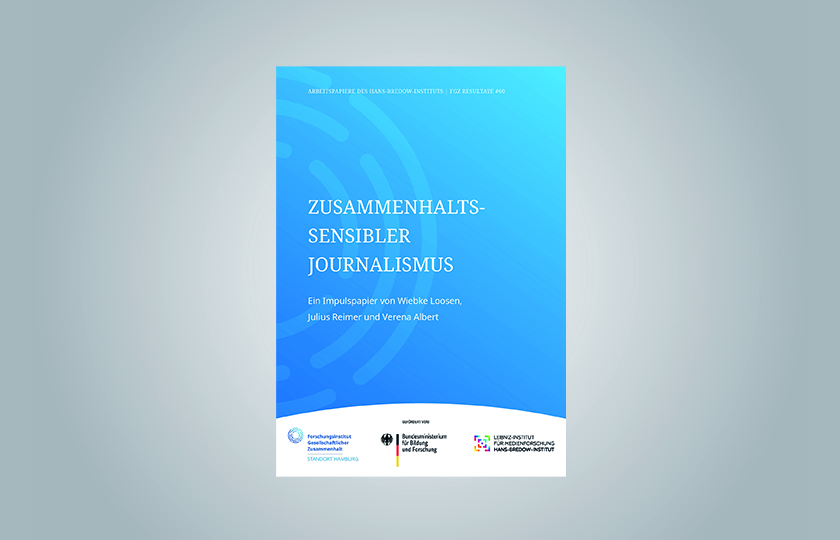
Cover des Arbeitspapiers Zusammenhaltssensibler Journalismus
Discussion Paper for Download

Cohesion-Sensitive Journalism

A research group at the HBI discussed the role of journalism in social cohesion with experts from the fields of journalism, academia, integration work, and NGOs.

Cover
Science Policy in Dialogue

Science Communication and Its Promotion from a Constitutional Perspective

In their article for “Science Policy in Dialogue,” a series published by the Berlin-Brandenburg Academy of Sciences and Humanities, Wolfgang Schulz and Keno C. Potthast discuss science communication in the context of legal protection and the need for regulation.

Empty rows of swivel chairs in a meeting hall or parliament chamber.
Platform Governance

Can Platforms Cancel Politicians?

An international study led by the HBI provides a first comparative overview of how societies and governments in 15 countries react to private power over political actors.

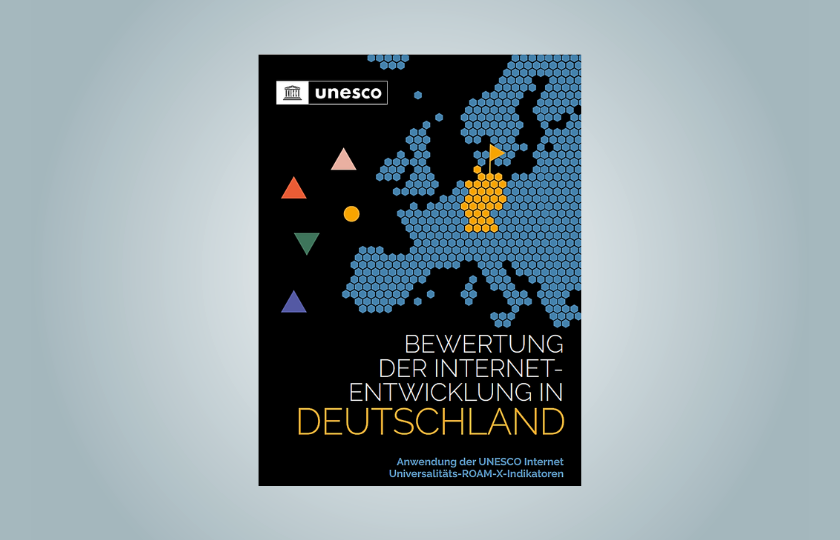
Cover der UNESCO-Publikation "Bewertung der Internetentwicklung in Deutschland"
Study commissioned by UNESCO

Assessing Internet Development in Germany

Overall, the state of the Internet in Germany can be assessed as good. This is one of the findings of a study on Internet development conducted by a team led by Prof. Dr. Wolfgang Schulz and Prof. Dr. Matthias C. Kettemann on behalf of the German National Commission for UNESCO.

Sticker showing a smiling man's face with the text 'MISS ME YET?' against a green background with yellow graffiti.

Twitter, Trump and The Taliban – The Need for Better Rules for Online Speech Governance

How come the Taliban have access to social media while former President Trump does not? The short answer is that Trump has deliberately violated the internal speech rules of social media companies before being banned while certain Taliban and Taliban-affiliated accounts have not done so recently or consistently. They are, however, often banned and/or suspended. But things are complicated.

Foto von Markus Spiske auf Unsplash: HTML-Codes
Article in the Journal of Legal Policy

Claim and Reality of Platform Regulation

In the Zeitschrift für Rechtspolitik (Journal of Legal Policy), Matthias C. Kettemann, Wolfgang Schulz, and Martin Fertmann ask whether the digital legal acts planned by the European Commission can live up to their own standards. The article is available to registered members in the beck-online database.

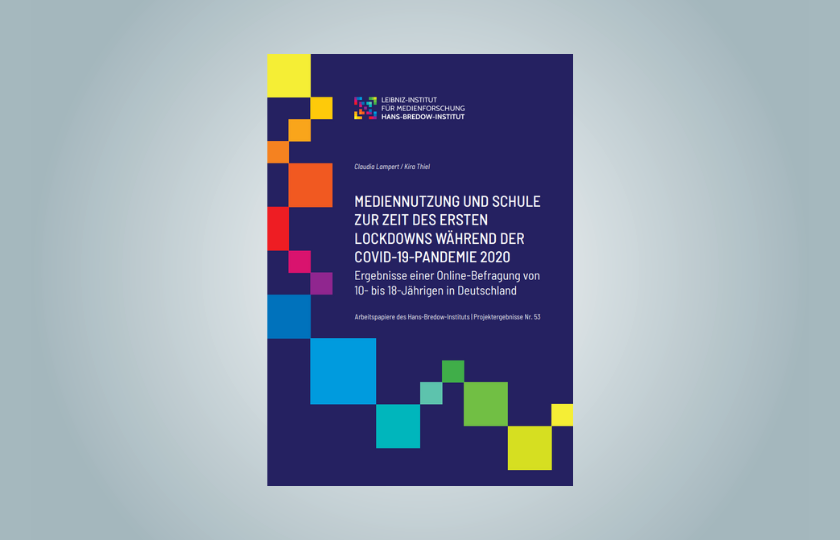
Cover des Arbeitspapiers Nr. 53
Working Paper No. 53

Media Use and School at the Time of the First Lockdown during the 2020 Covid-19 Pandemic

This report by Claudia Lampert and Kira Thiel provides an overview of how families in Germany experienced the lockdown period—particularly the transition from in-person to remote learning—and to what extent this changed their media usage.

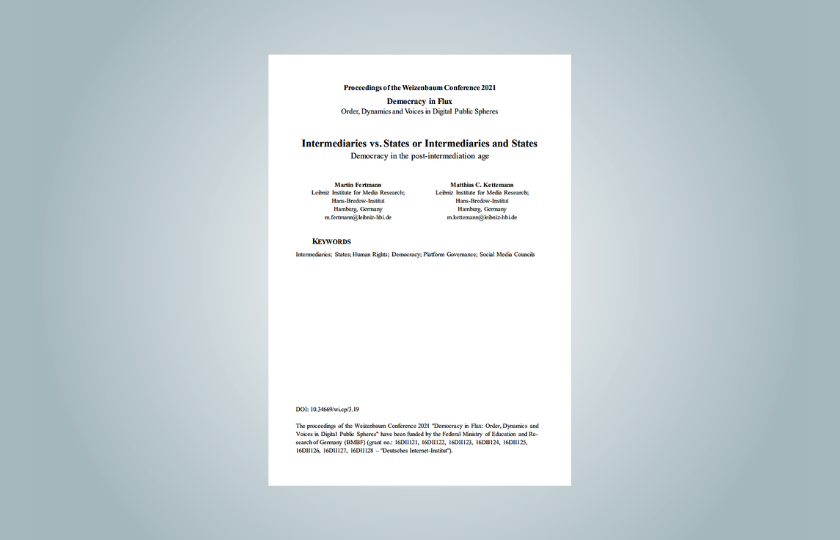
Cover: Intermediaries vs. States or Intermediaries
Intermediaries and Freedom of Expression

Intermediaries vs. States or Intermediaries and States: Democracy in the Post-Intermediation Age

In their conference paper for the 2021 Weizenbaum Conference, Martin Fertmann and Matthias C. Kettemann write about intermediaries and freedom of expression. The conference paper was published as an open-access publication.

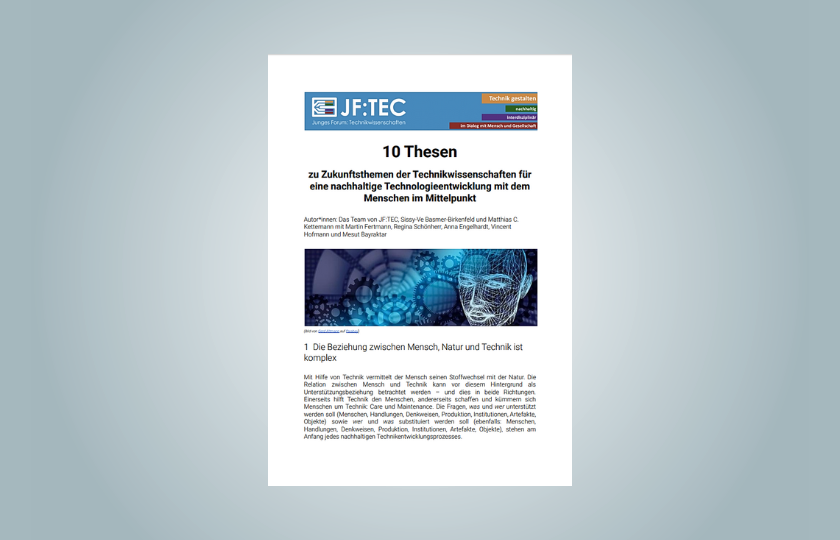
Publikation JF:Tech 10 Thesen zu Zukunftsthemen der Technikwissenschaften
People and Technology

10 Theses on Future Topics in the Technical Sciences for Sustainable Technology Development with a Focus on People

Matthias C. Kettemann, Martin Fertmann, Vincent Hofmann, and Mesut Bayraktar, together with Sissy-Ve Basmer-Birkenfeld, Regina Schönherr, and Anna Engelhardt, have authored “10 Theses on Future Topics in the Technical Sciences for Sustainable Technology Development with a Focus on People.” The article is available via open access.

1 … 31 32 33 34 35 … 44

Page 33 from 44

Newsletter

Information about current projects, events and publications of the institute.

Subscribe now