Team Agile Formats

The Agile Formats team within Program Area 3—Science Communication, Agile Formats, and Library Services—started in 2026 as part of the institute’s strategic development. As a service- and knowledge-transfer-oriented unit, the team develops and supports innovative working formats that combine scientific expertise, interdisciplinary exchange, and societal knowledge transfer.

Working closely with the scientific program areas, the team designs and organizes formats such as Research Clinics, Sprints, and other collaborative and innovative working and knowledge-transfer settings. The goal is to make our scientific findings accessible to various target groups, including the scientific community as well as stakeholders from politics, the (media) industry, civil society, and professional practice.

The team is responsible for planning, facilitating, implementing, and following up on agile formats. This includes engaging external experts, developing working materials, and documenting and synthesizing the results. A particular focus is on communicating insights from these formats in a way that is tailored to the target audience and making them accessible through various media and knowledge transfer formats.

Through evaluation, feedback, and continuous improvement, the team helps to sustainably embed agile working methods at the institute and create new spaces for interdisciplinary collaboration, knowledge transfer, and societal impact.

Overview

Last update: 24.09.2026

Blog Articles, News, Projects, Publications, Podcast Episodes

Cover
New Book

Navigating Normative Orders

Matthias C. Kettemann has published the book Navigating Normative Orders: Interdisciplinary Perspectives within the series Normative Orders. It will be published by Campus Verlag in July 2020.

Cover der Fachzeitschrift "Journalism Studies"
Artikel Journalism Studies

What Journalists Want and What They Ought to Do

In their article in the academic journal *Journalism Studies*, Wiebke Loosen, Julius Reimer, and Sascha Hölig analyze how journalists view themselves. Their analysis focuses not only on journalists’ own perceptions of their roles, but also on their audience’s expectations—that is, on what journalists want and are expected to do.

Cover
Editorial in Medienkorrespondenz

From the Jury of the War Blinded Audio Play Prize

In his article in Medienkorrespondenz, Hans-Ulrich Wagner, as a member of the jury of the 69th Hörspielpreis der Kriegsblinden [War Blinded Audio Play Prize], describes the challenges the jury faced in making its decision and how they ultimately determined the winners.

Cover
Article in the textbook

Media Law in Hamburg

Wolfgang Schulz and Keno Potthast have written a chapter on media law for the Nomos book "Landesrecht Hamburg".

Placeholder
Presidency of the European Council

Mapping the Media-Relevant European Legislative Acts and Identification of Dependencies, Interface Areas and Conflicts

In advance of Germany’s presidency of the European Council in the second half of 2020, the HBI prepared a number of reports and investigative studies intended to serve as a basis for discussions for the EU Media Conference in July 2020 and the subsequent Focus Sessions. The aim of the HBI investigations was to identify opportunities for medium- and long-term improvement regarding the coherence of the European legislation regulating information and communication.

Cover
Contribution to Anthology

Internet Governance

In his article for the anthology "IT-Recht [IT Law]", Matthias C. Kettemann describes the instruments and actors of Internet Governance.

Cover der ZEitschrift
Book Article

What Is Your Problem? Online Experiences from the Perspective of Children and Parents

In the anthology "Family Culture: Smart and Digital—Findings, Concepts, and Strategies in Media Education", Claudia Lampert, Kira Thiel, and Uwe Hasebrink write about online experiences from the perspectives of children and parents.

Cover Arbeitspapier
Report for Download

Reuters Institute Digital News Report 2020

For the ninth consecutive year, the Reuters Institute Digital News Report, which provides an international comparison of news consumption, has been published. The German component of the study was conducted by Sascha Hölig and Uwe Hasebrink, with the assistance of Julia Behre.

Cover Reuters Institute Digital News Report - Ergebnisse für Deutschland. 2019
Report for Download

Reuters Institute Digital News Report 2019

The international comparison of news consumption was published on June 12, 2019. In 2019, approximately 2,000 people were surveyed in each country. In total, this eighth edition of the study is based on 75,749 respondents from 38 countries.

Cover
Expert Opinion

Human Rights and Political Participation in the Digital Age

At the invitation of the Committee on Human Rights and Humanitarian Aid of the German Bundestag, Matthias C. Kettemann addresses in this statement twelve questions of the Bundestag factions concerning human rights and political participation.

Cover
What Rights Do Users Have?

Back Up: Can Users Sue Platforms to Reinstate Deleted Content?

In their article published in Internet Policy Review, Matthias C. Kettemann and Anna Sophia Tiedeke ask under what conditions users can sue providers to reinstate deleted content on social media platforms.

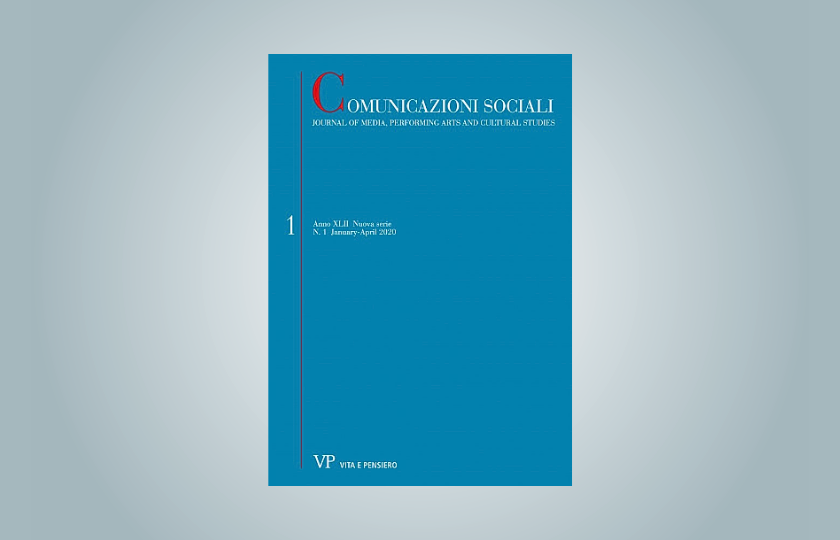
Cover: Zeitschrift "Comunicazioni Sociali"
Media Repertoires of Internet Users

Combining Old and New: Patterns of Media Use across Legacy and Online Media in Germany

Julia Behre, Sascha Hölig, and Uwe Hasebrink have published an article in the journal *Comunicazioni Sociali* on the media repertoires of adult Internet users in Germany.

1 … 37 38 39 40 41 … 44

Page 39 from 44

Newsletter

Information about current projects, events and publications of the institute.

Subscribe now