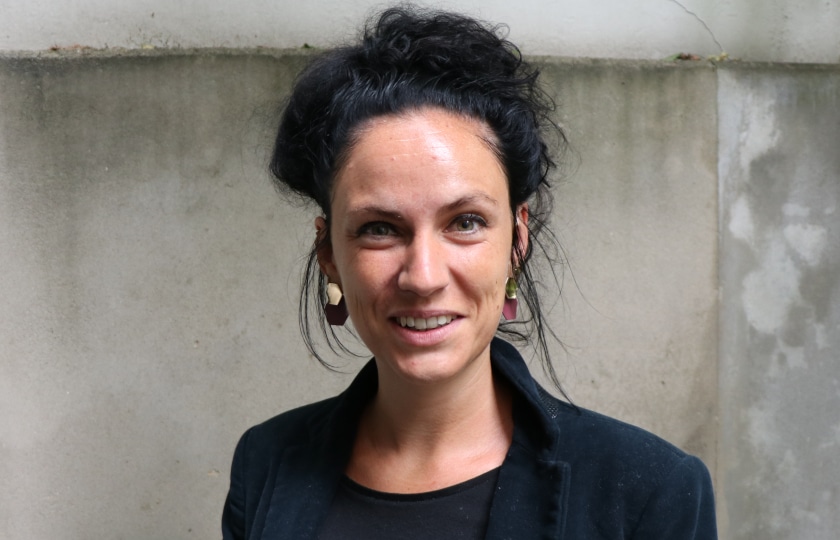
Team Agile Formats

The Agile Formats team within Program Area 3—Science Communication, Agile Formats, and Library Services—started in 2026 as part of the institute’s strategic development. As a service- and knowledge-transfer-oriented unit, the team develops and supports innovative working formats that combine scientific expertise, interdisciplinary exchange, and societal knowledge transfer.

Working closely with the scientific program areas, the team designs and organizes formats such as Research Clinics, Sprints, and other collaborative and innovative working and knowledge-transfer settings. The goal is to make our scientific findings accessible to various target groups, including the scientific community as well as stakeholders from politics, the (media) industry, civil society, and professional practice.

The team is responsible for planning, facilitating, implementing, and following up on agile formats. This includes engaging external experts, developing working materials, and documenting and synthesizing the results. A particular focus is on communicating insights from these formats in a way that is tailored to the target audience and making them accessible through various media and knowledge transfer formats.

Through evaluation, feedback, and continuous improvement, the team helps to sustainably embed agile working methods at the institute and create new spaces for interdisciplinary collaboration, knowledge transfer, and societal impact.

Overview

Last update: 24.09.2026

Blog Articles, News, Projects, Publications, Podcast Episodes

Open Access Publication

Assessing Age Assurance Technologies: Effectiveness, Side-Effects, and Acceptance

In the article “Assessing Age Assurance Technologies: Effectiveness, Side-Effects, and Acceptance,” Dr. Wouter Lueks, Dr. Stephan Dreyer, Prof. Dr. Hannes Federrath, and Prof. Dr. Judith Simon analyze existing age verification methods.

Test Your Knowledge!

Quiz on Public Broadcasting

How long has public broadcasting existed in Germany? How long has commercial television been around? What is the current monthly broadcasting license fee in Germany? Dr. Hans-Ulrich Wagner asks and answers these and other questions on "Ten Questions, One Expert — The Science Quiz," the quiz series produced by the Leibniz Association and t-online.

Rulings against Meta and Alphabet

Meta and Alphabet Are Liable for Addictive Design

Following two significant court rulings against Meta and Alphabet in the U.S. (March 25 and 26, 2026), media law expert Matthias C. Kettemann explains in various interviews the implications of the decisions and what specific changes the platforms might face in the future.

Preisverleihung
Congratulations!

Award for Jan Rau

Jan Rau won first prize in the 2026 Young Scholar Award at this year's annual conference of the German Communication Association (DGPuK). He received the award for his German-language article on "Algorithmic Visibility of Election Campaign Communication on TikTok: Personalization, Conflicts, and Politainment in the 2025 Federal Election Campaign".

Call for Papers

Digitalisation Research Seminar (DigiSem) 2026

The theme of this year's Digitalisation Research Seminar (DigiSem) is "Balancing Digital Safety between Risks, Rights, and Regulation." The seminar will take place in Berlin on September 21–22. Early-career researchers are invited to present their work at the event. Abstracts can be submitted as of April 1.

Katharina Mosene
Digital Violence Against Women Online

Katharina Mosene on the Proposed Law on Protection against Digital Violence

Minister of Justice Stefanie Hubig wants to quickly introduce legislation against digital violence. However, that alone is not enough. On the program @mediasres, Sebastian Wellendorf speaks with Katharina Mosene about digital violence against women online, addressing it as a structural problem and discussing the proposed legislation and social responsibility.

Eine Fernbedienung zeigt auf einen Bildschirm mit unscharfen bunten Bildern
Transparency Regarding Ownership Structure

Who Owns Europe’s Media?

Hamburg, March 17, 2026: The new Euromedia Ownership Monitor (EurOMo) maps 1,400 media companies and their controlling entities. A search engine allows journalists, regulatory authorities, and the public to track media ownership and control across borders. A public webinar in March will introduce the new features.

Matthias C. Kettemann
Expert Opinion for the SMC

EU Proceedings Against X: Platform Submits Proposal for Remedial Measures

In December 2025, the European Commission imposed its first-ever fine for violations of the Digital Services Act (DSA): X must pay a fine of 120 million euros and rectify the issues in question. In his statement to the Science Media Center, Matthias C. Kettemann clarifies: “The DSA is an important and, by now, credible instrument of European platform regulation.”

Portrait Siegried Lenz vor Hafenkulisse
Congratulations!

On the 100th Birthday of Siegfried Lenz

March 17, 2026 would have been the 100th birthday of Siegfried Lenz (1926–2014), one of the most significant postwar German authors. Dr. Hans-Ulrich Wagner offers his congratulations and points out that Lenz was extremely productive and successful in the media industry as well, working as a writer, journalist, editor, and radio playwright.

Portrait Stephan Dreyer vor Bauzaun
Podcast "Tonspur Wissen"

Would a Social Meda Ban Make Sense?

Following Australia's decision to ban social media for children under 14, Germany has also begun discussing whether teenagers should be granted access to platforms such as TikTok and Instagram at a later age. In the podcast 'Tonspur Wissen', media researcher Stephan Dreyer discusses what the scientific community knows about the risks, benefits and potential regulations.

Review of a Dissertation

Government Public Relations in New Media

For years, the democratic legitimacy of government public relations has been a topic of discussion in academic literature and constitutional jurisprudence. Tobias Mast reviews a recently published dissertation on the subject, exploring the untapped potential of interdisciplinary legal scholarship in relation to commonly accepted empirical assumptions.

Article for Friedrich-Ebert-Stiftung

Platform Badges for Civic Communication

Digital platforms have become central infrastructures for political communication and social negotiation processes. In his article, Jan Rau examines platform badges, which are tools that platforms use to fulfill their obligation to mitigate risk by creating positive incentives for users to adhere to certain communicative norms.

1 … 5 6 7 8 9 … 44

Page 7 from 44

Newsletter

Information about current projects, events and publications of the institute.

Subscribe now