Team Library Services

The Library Services team offers a comprehensive range of services designed to facilitate open access to information as the foundation for transparent, efficient, and high-quality research processes, as well as for the transfer of research findings from academia to society and policy-making. It combines the management and expansion of the library collection with new information science services, such as research data management and support for open-access publications at the HBI.

Although the HBI Library is one of the smaller libraries, its collection focus on media and communication research continues to set it apart in northern Germany. Its facilities not only serve as a repository of up-to-date knowledge but also offer attractive learning spaces, which it provides—in cooperation with other institutions—as a venue for generating knowledge for students and researchers.

The Open Access Office within the Library team also serves as the central point of contact for all publication-related matters—ranging from the administration of transformation agreements, publication funds, and licensing issues, to advising on publication pathways, license selection, and third-party funding applications for open access, as well as publication monitoring, reporting, secondary publication services, maintenance of the OA and Open Science policies as well as the information budget, and AI-supported assistance with bibliometric analyses.

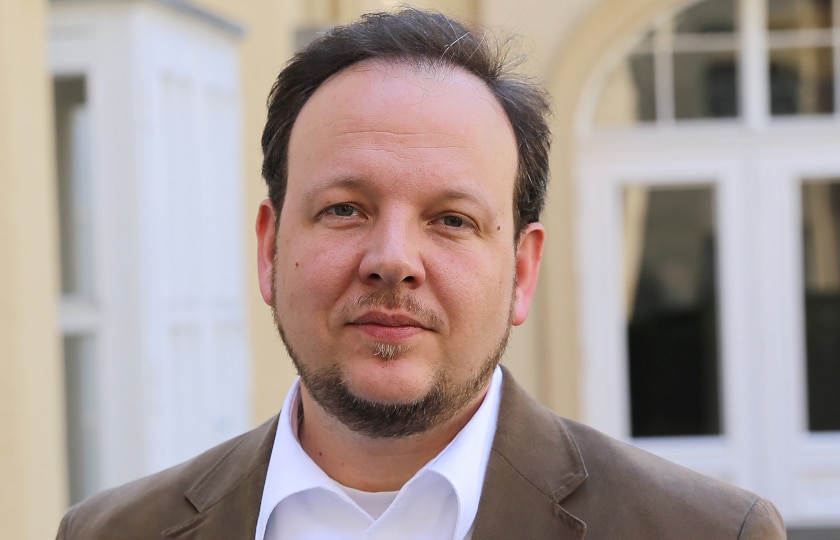
Contact Person: Cindy Hesse

Overview

Leaders

Last update: 24.09.2026

Blog Articles, News, Projects, Publications, Podcast Episodes

Cover des Arbeitspapiers
Working Paper for Download

Responsibility in the Platform Quadrangle

This working paper by Tobias Mast comments on the European Court of Justice's recent Russmedia ruling and sets out the premises for a relationship between EU legal acts in the digital single market that respects fundamental rights.

Matthias C. Kettemann
Honorable New Role

Matthias C. Kettemann New Chairman of the First Senate of the Austrian Press Council

Matthias C. Kettemann, a Professor of Innovation, Theory, and Philosophy of Law at the University of Innsbruck, and the Head of Program Area 2, "Communication Structures and Their Governance," at the HBI, was unanimously elected as the Chair of the First Senate of the Austrian Press Council.

ein Kabel führt in ein Smartphone
Project with Helmut Schmidt University

Data Collection and Analysis on TikTok and YouTube

In order to develop the best practices for collecting and analyzing data on short video platforms, Gregor Wiedemann's Media Research Methods Lab at the HBI is participating in a Helmut Schmidt University project examining the German Armed Forces' representation on TikTok and YouTube.

Eine Fernbedienung zeigt auf einen Bildschirm mit unscharfen bunten Bildern
International Cooperation Project

Euromedia Ownership Monitor

The Euromedia Ownership Monitor provides policymakers and the general public with in-depth insights into the extent of media ownership transparency in the EU. It was updated in 2025.

Cover of the special issue on datafication, 1/2026, M&K
M&K Issue 1/2026 Published Open Access

On the Datafication of Communication

The special issue of M&K titled "The Datafication of Communication: New Methodological Approaches and Challenges" has been published as Issue 1/2026. The guest editors are Julia Niemann-Lenz, Tim Schatto-Eckrodt, Emese Domahidi, and Merja Mahrt.

Portrait Judith Möller
Statement for the Science Media Center

Does the X-Feed Influence Political Opinions?

The posts that people see on platform X could influence their attitudes toward certain political issues. This was the conclusion reached by a European research team. In her statement for the Science Media Center (SMC), Judith Möller explains that, while the study confirms that media content impacts how issues are assessed, it cannot demonstrate that it fundamentally alters political attitudes.

Cover of the book
Article Published in Handbook

Growing Up in Data-Intensive and Automated (Media) Environments

Dr. Claudia Lampert examines changing usage practices and possible implications for socialization research in the chapter “Growing Up in Data-Intensive and Automated (Media) Environments” of the handbook “Media Socialization in ‘Smart’ Environments. Self- and Social Development in the Context of Datafication and Automation,” edited by Laura Sūna and Wolfgang Reißmann.

Anna von Garmissen
“Läuft” – Podcast by epd medien and Grimme Institute

Journalism between Burnout and Vocation

Media researcher and journalist Anna von Garmissen talks to host Alexander Matzkeit about the state of journalism in Germany in the podcast “Läuft” produced by epd medien and the Grimme Institute. The discussion is based on the results of three studies, which she considers alarming, and which she summarized in a guest article for epd medien.

KI generiertes Symbolbild: Straße mit vielen Hürden
Opinions on the Social Media Ban

Why Banning Social Media Is Not the Solution

In Australia, children under the age of 16 will no longer be allowed to create social media profiles as of December 2025. More and more European countries are also planning to introduce age limits for social media. Dr. Stephan Dreyer, an expert on legal issues at the intersection of youth protection and data protection, explains that a ban would actually weaken youth protection and be disproportionate.

Tastatur mit einer goldfarbenen Taste, die ein weißes Abzeichen zeigt
Media Research Blog Post

Algorithmic Amplification of Negative Discourse as a Systemic Risk

How does attention-economy-driven algorithmic amplification of conflict-driven and negative-emotional communication distort public discourse? And does this distortion constitute a systemic risk under the Digital Services Act (DSA)? This blog article refers to our previous blogpost on "Platform Badges for Civic Communication", explains why such interventions are needed, and outlines how they could address these systemic risks.

Stephan Dreyer
Protection of Minors in the Media

Stephan Dreyer Appointed to Expert Commission

As part of a pilot project, the German Association for Voluntary Self-Regulation of Television (FSF) and the German Association for Voluntary Self-Regulation of Digital Media Service Providers (FSM) are developing quality standards for automated and AI-supported evaluation systems, overseen by the Commission for the Protection of Minors in the Media (KJM). Dr. Stephan Dreyer is developing and conducting tests on automated and AI-supported evaluation systems for youth media protection.

Mehrere Hände halten Smartphones, darüber stilisierte Symbole für KI, Uhr, Glühbirne und Weltkugel
Safer Internet Day 2026

“He Just Does Everything Right. He’s Simply Smart” – Young People’s Perspectives on AI

AI applications are no longer used just for homework, but also as advisors and conversation partners. This blog post takes a look at young people's experiences with AI and shows that schools and parents often lack opportunities to discuss the role of AI in our daily lives. Safer Internet Day offers a good opportunity to start this conversation.

1 … 6 7 8 9 10 … 44

Page 8 from 44

Newsletter

Information about current projects, events and publications of the institute.

Subscribe now