
Team Science Communication

The Science Communication Team bridges the gap between research at the HBI and the society for which this research is conducted. It makes scientific findings visible and accessible, brings them into public debates, and creates spaces for exchange between academia, the media, politics, the professional community, and the general public.

The team adapts research topics and findings for different target audiences and formats and supports the institute’s researchers in communicating their work. It is responsible for the HBI’s press and public relations work, as well as for communication via the institute’s website and social media channels.

The team’s responsibilities include providing editorial support for the journal “Medien & Kommunikationswissenschaft” and the HBI’s publication series “Working Papers”, as well as conceptualizing and organizing public events such as the Lunch Talks, the Media Lectures, and the Hamburg Media Symposium. With our podcast BredowCast and the Media Research Blog, the team offers additional formats in which research topics are addressed, contextualized, and made accessible to different target audiences.

Overview

Leaders

Last update: 24.09.2026

Blog Articles, News, Projects, Publications, Podcast Episodes

Mit Dall-E generierte Illustration eines Newsrooms, den ein Roboter und ein Mensch betreten
Project of the DFG Research Group ComAI

Automation of News and Journalistic Autonomy

The project, which is part of the DFG research group ComAI, investigates communicative AI in journalism by analyzing the associated challenges for journalistic autonomy at the interactional, organizational, and societal levels.

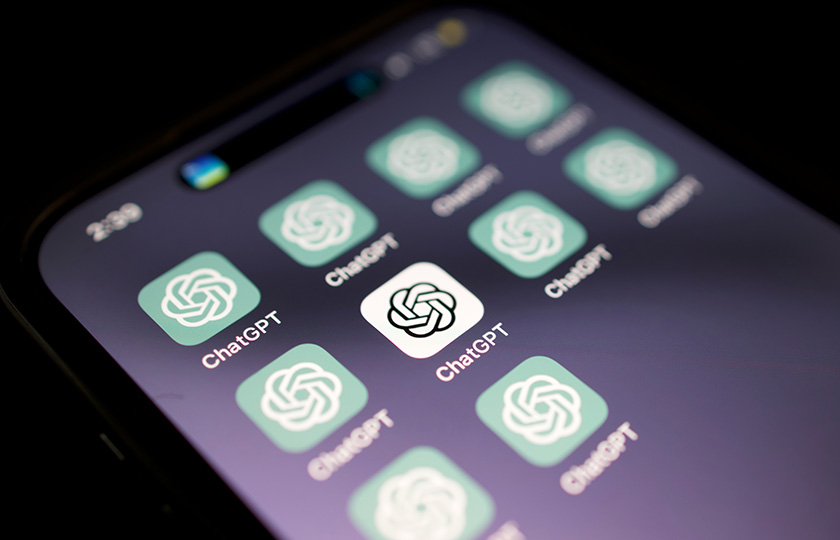
Handydisplay mit mehren App-Icons Chat GPT
Project of the DFG Research Group ComAI

The Juridification of Communicative AI

The project, which is part of the DFG research group ComAI, is investigating the legal framework for communicative bots (in particular ChatGPT) and social bots (in particular X and Facebook) – on the one hand from the perspective of communication law, and on the other hand from the perspective of emerging AI regulation.

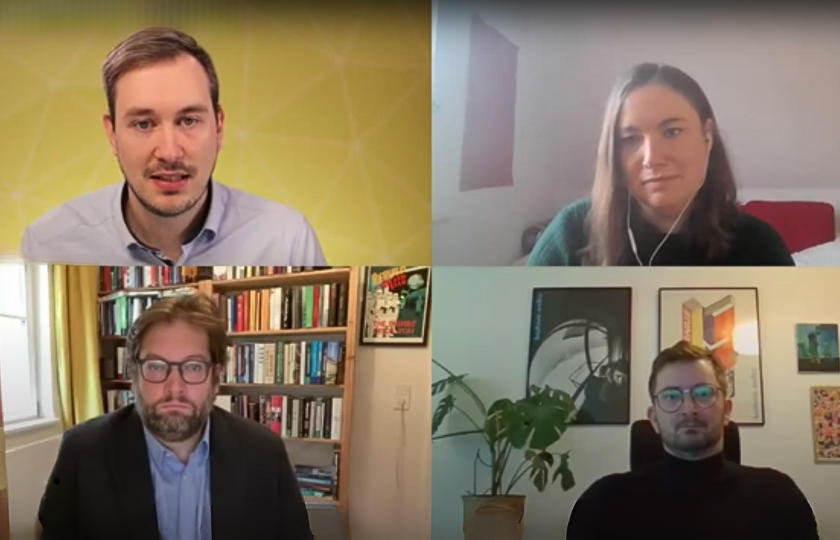
Screenshot: Vier Personen diskutieren virtuell.
Press Meeting of the Science Media Center

The Impact of Social Media on Election Campaigns

With a view to the German federal election on 23 February 2025, communication scientists discussed the influence of social media on the election campaign and the outcome of the election. In a virtual press meeting held in German by the Science Media Center on 8 January, Prof. Dr. Judith Möller from the HBI was joined by Prof. Dr. Andreas Jungherr (University of Bamberg) and Dr. Philipp Müller (University of Mannheim). Bastian Zimmermann from the Science Media Center moderated the discussion.

Illustration eines Schiebereglers An/Aus mit Gesicht
International Long-Term Comparative Study

EU Kids Online

How do children and young people in different European countries use the internet, what challenges and risks do they face when using it, and how do they deal with them? The international research network EU Kids Online addresses these questions.

Cover des Impulspapiers
Discussion Paper for the Friedich-Ebert-Stiftung

How Can the Resilience of the German Media System Be Strengthened?

Tobias Mast has published a paper in the Friedrich-Ebert-Stiftung's ‘FES Impuls’ series. The paper examines the legal and structural foundations of public broadcasting and makes it clear that reforms are necessary to ensure its independence in the long term.

Auf grünen Grund gezeichnetes Megafon, aus dem Nachrichten kommen
Overview of the Campaign's First Year

Year of the News Well Received

The “Year of the News” has received a remarkable response in Germany: almost one million accounts reached on Instagram and TikTok, over 4,000 teenagers and young adults at nationwide news camps, and a successful advertising campaign under the motto “News that is true instead of stirring up sentiment”. Together, media houses and civil society have successfully worked to promote news literacy among young target groups.

Cover des Arbeitspapiers Nr. 74 "Jahr der Nachricht"
Working Paper No. 74 Available for Download

Experiences with Hands-On Actions in the Year of the News 2024

The "Year of the News 2024" project, part of the #UseTheNews initiative, aims to reach young people with a range of journalistic content and activities and get them involved in journalism. Leonie Wunderlich and Dr. Sascha Hölig researched how young people engage with the campaign and these activities.

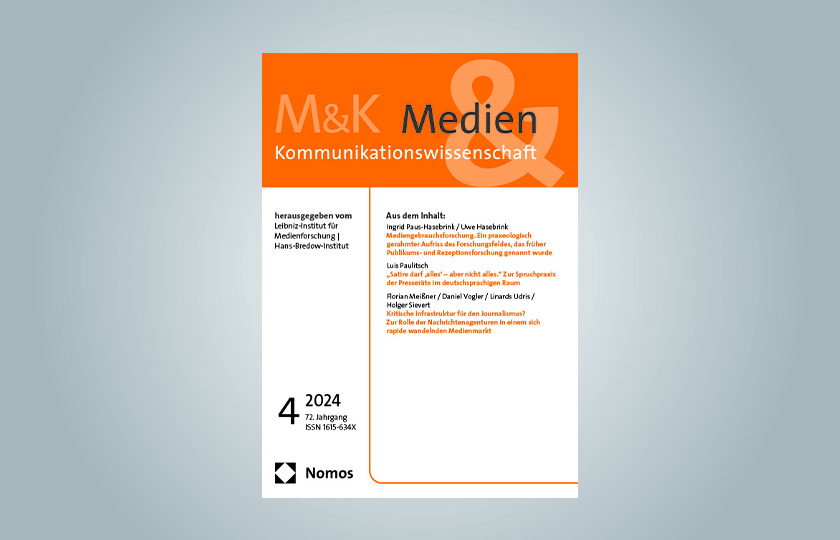
Cover of issue 4 of the journal "Medien & Kommunikationswissenschaft"
Available as Open Access

M&K 4/2024 Published

The articles in M&K 4/2024 focus, among other things, on the topics of media use research, satire and the role of news agencies. All content is available in open access via the eLibrary of the Nomos publishing house.

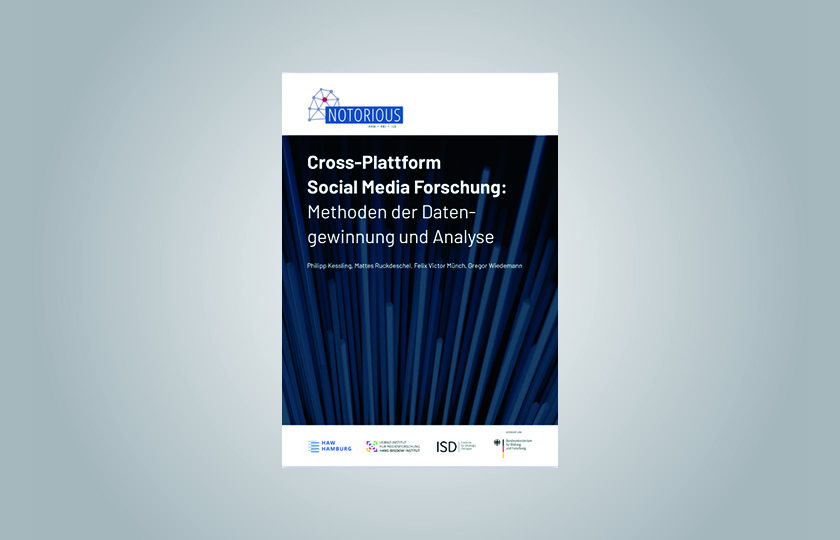
Cover des Berichts "Cross-Plattform-Forschung"
Report Available for Download

Cross-Platform Research: Methods of Data Collection and Analysis

Philipp Kessling, Mattes Ruckdeschel, Dr. Felix Victor Münch and Dr. Gregor Wiedemann developed methods and strategies for analyzing cross-platform social media data as part of the NOTORIOUS project, which focused on the role of celebrities in disinformation campaigns.

Junger Mann hält ein Handy in seinem Schoß
Interview with the Online Magazine LEIBNIZ

When the War Gets Too Close

How do young people process social media posts about the Middle East war? In an interview with the online magazine LEIBNIZ, Kira Thiel talks about her research on the experiences of children and young people in the digital world, as well as the opportunities and risks associated with them.

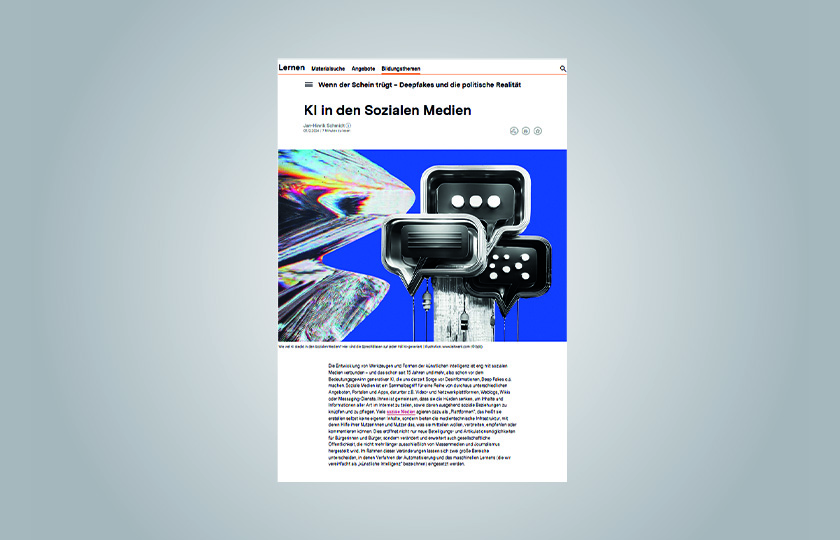
first page of the online article
Dossier of the Federal Agency for Civic Education

AI in Social Media

In the online dossier ‘When Appearances Are Deceiving – Deepfakes and Political Reality’ from the Federal Agency for Civic Education (bpb), Jan-Hinrik Schmidt explains how social media platforms have been using machine learning technologies for some time now to curate and moderate content.

Cover of Working Paper No. 73 SIKID
Working Paper Available for Download

Regulations for Empirical Research with Children

No data processing without the informed consent of the persons concerned. This is one of the conclusions of Sünje Andresen, Stephan Dreyer and Neda Wysocki, who have looked at the legal issues and imponderables in empirical research with children.

1 … 15 16 17 18 19 … 43

Page 17 from 43

Newsletter

Information about current projects, events and publications of the institute.

Subscribe now