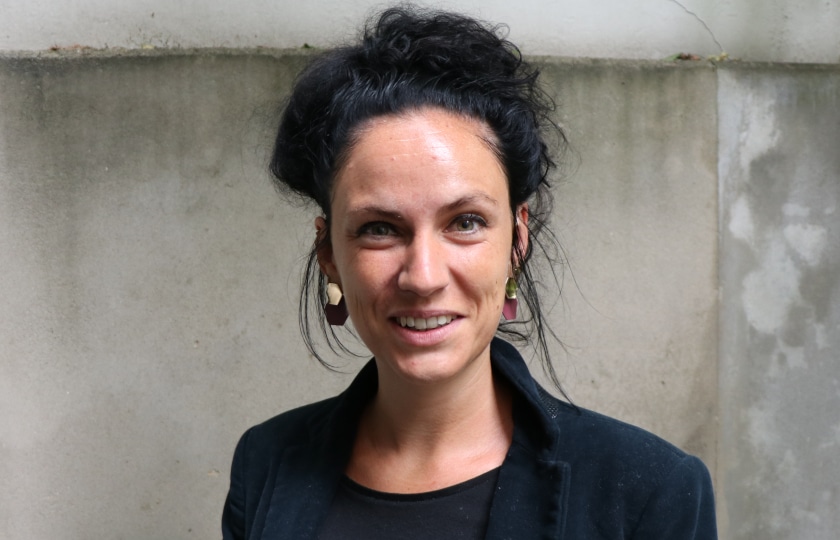

Team Science Communication

The Science Communication Team bridges the gap between research at the HBI and the society for which this research is conducted. It makes scientific findings visible and accessible, brings them into public debates, and creates spaces for exchange between academia, the media, politics, the professional community, and the general public.

The team adapts research topics and findings for different target audiences and formats and supports the institute’s researchers in communicating their work. It is responsible for the HBI’s press and public relations work, as well as for communication via the institute’s website and social media channels.

The team’s responsibilities include providing editorial support for the journal “Medien & Kommunikationswissenschaft” and the HBI’s publication series “Working Papers”, as well as conceptualizing and organizing public events such as the Lunch Talks, the Media Lectures, and the Hamburg Media Symposium. With our podcast BredowCast and the Media Research Blog, the team offers additional formats in which research topics are addressed, contextualized, and made accessible to different target audiences.

Overview

Leaders

Last update: 24.09.2026

Blog Articles, News, Projects, Publications, Podcast Episodes

Open Access Publication

Determinants of Verification Behavior in Generative Search

Generative AI is being increasingly integrated into search engines, but it has been criticized for producing content that sounds plausible yet is sometimes inaccurate. Little is currently known about the factors that prompt users to verify these responses. The study by Eva-Luise Knor, Michael V. Reiss, Judith Möller, and Lisa Merten addresses this knowledge gap.

Recently Published

Platforms, Online Surveillance, and the European Union: The Digital Services Act (DSA)

In their open-access article, Prof. Dr. Judith Möller, Ronan Ó Fathaigh, Bengi Zeybek, and Rocco Bellanova explore how the DSA facilitates public and private surveillance practices regarding content disseminated on online platforms.

Cover of issue 2/2026 M&K
Open Access Publication

M&K 2/2026 Has Been Published

The February 2026 issue of M&K features articles that explore the understanding of roles and the transformative potential of peripheral actors in the DACH region. Other articles examine developments in sports coverage in German daily newspapers from 2011 to 2021 and the usage patterns of ChatGPT, as well as anthropomorphic role attributions. You can download all of these articles free of charge.

Front Page of the Working Paper
Working Paper Available for Download

Babies and Toddlers in Family Influencing

In what ways and how often are babies and young children (ages 0–5) depicted on commercially oriented German-language social media profiles on Instagram, TikTok, and YouTube? Stephan Dreyer, Claudia Lampert, Kira Thiel, and others analyze this question using qualitative and quantitative methods. They also critically discuss the findings in light of the applicable legal framework and media ethics considerations.

Open Access Publication

Assessing Age Assurance Technologies: Effectiveness, Side-Effects, and Acceptance

In the article “Assessing Age Assurance Technologies: Effectiveness, Side-Effects, and Acceptance,” Dr. Wouter Lueks, Dr. Stephan Dreyer, Prof. Dr. Hannes Federrath, and Prof. Dr. Judith Simon analyze existing age verification methods.

Test Your Knowledge!

Quiz on Public Broadcasting

How long has public broadcasting existed in Germany? How long has commercial television been around? What is the current monthly broadcasting license fee in Germany? Dr. Hans-Ulrich Wagner asks and answers these and other questions on "Ten Questions, One Expert — The Science Quiz," the quiz series produced by the Leibniz Association and t-online.

Rulings against Meta and Alphabet

Meta and Alphabet Are Liable for Addictive Design

Following two significant court rulings against Meta and Alphabet in the U.S. (March 25 and 26, 2026), media law expert Matthias C. Kettemann explains in various interviews the implications of the decisions and what specific changes the platforms might face in the future.

Preisverleihung
Congratulations!

Award for Jan Rau

Jan Rau won first prize in the 2026 Young Scholar Award at this year's annual conference of the German Communication Association (DGPuK). He received the award for his German-language article on "Algorithmic Visibility of Election Campaign Communication on TikTok: Personalization, Conflicts, and Politainment in the 2025 Federal Election Campaign".

Call for Papers

Digitalisation Research Seminar (DigiSem) 2026

The theme of this year's Digitalisation Research Seminar (DigiSem) is "Balancing Digital Safety between Risks, Rights, and Regulation." The seminar will take place in Berlin on September 21–22. Early-career researchers are invited to present their work at the event. Abstracts can be submitted as of April 1.

Katharina Mosene
Digital Violence Against Women Online

Katharina Mosene on the Proposed Law on Protection against Digital Violence

Minister of Justice Stefanie Hubig wants to quickly introduce legislation against digital violence. However, that alone is not enough. On the program @mediasres, Sebastian Wellendorf speaks with Katharina Mosene about digital violence against women online, addressing it as a structural problem and discussing the proposed legislation and social responsibility.

Eine Fernbedienung zeigt auf einen Bildschirm mit unscharfen bunten Bildern
Transparency Regarding Ownership Structure

Who Owns Europe’s Media?

Hamburg, March 17, 2026: The new Euromedia Ownership Monitor (EurOMo) maps 1,400 media companies and their controlling entities. A search engine allows journalists, regulatory authorities, and the public to track media ownership and control across borders. A public webinar in March will introduce the new features.

Matthias C. Kettemann
Expert Opinion for the SMC

EU Proceedings Against X: Platform Submits Proposal for Remedial Measures

In December 2025, the European Commission imposed its first-ever fine for violations of the Digital Services Act (DSA): X must pay a fine of 120 million euros and rectify the issues in question. In his statement to the Science Media Center, Matthias C. Kettemann clarifies: “The DSA is an important and, by now, credible instrument of European platform regulation.”

1 … 3 4 5 6 7 … 43

Page 5 from 43

Newsletter

Information about current projects, events and publications of the institute.

Subscribe now