New Intermediaries in Science Communication

Using the example of the Science Media Center Germany, a new organization at the interface between science and journalism, research is being conducted into how the field of science communication is changing.

This PhD project looks at changing actor constellations and gatekeeping practices in science communication. Special focus lies on the Science Media Center Germany: a new organisation that functions as an intermediary between science and journalism.

In a rapidly developing media environment, both science and journalism seem to be losing their standing as unchallenged purveyors of knowledge and truth (buzzwords: “post-truth age”, “fact-free society”). A set of qualitative and quantitative empirical components explore how media trends and the arrival of new intermediary organisations affect the interrelation of key actors and their gatekeeping practices in science communication.

Using participatory observation, several newsroom ethnographies will be carried out among the editors of the Science Media Center Germany, the science journalists of a news medium, and the PR department of an academic journal. An online survey among science journalists in Germany will provide quantitative data on occasions, sources and selection criteria for journalistic coverage of scientific topics.

Findings

In June 2021, Irene Broer and co-author Louisa Pröschel published a working paper with the findings of several months of field research at the Science Media Center Germany. It has been published as No. 57 in the series “Working Papers of the Hans-Bredow-Institut” and is available for download. In episode 65 of the BredowCast, the authors talk about the findings in detail.

In a special issue of the Journal of Science Communication that dealt exclusively with communication in connection with COVID-19, Irene Broer also wrote about the inter-editorial response of the Science Media Center Germany (SMC) to the outbreak of the pandemic.
Project Details

Overview

Project start: 2018; Project end: 2021

Programme Area: Program Area 1 Social Functions of Communication and Media

Persons involved

Contact information

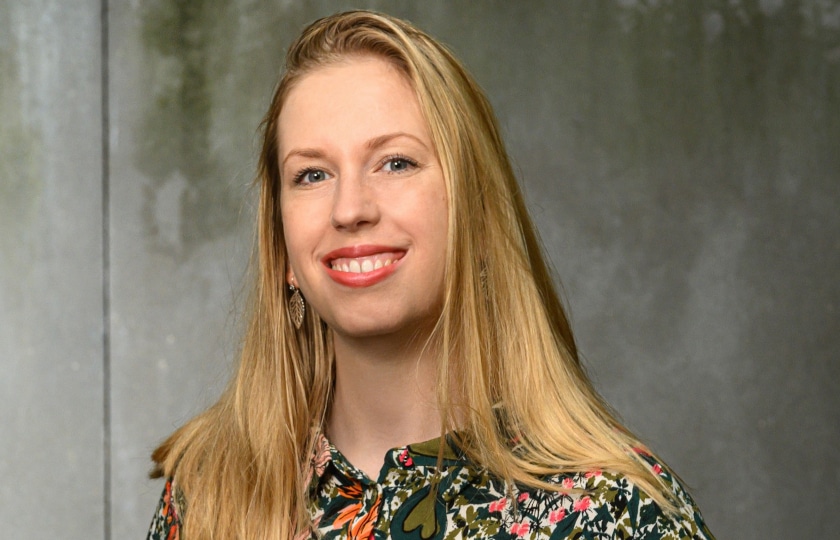
Dr. Irene Broer

Dr. Irene Broer

Associated Researcher Science Communication & Social Cohesion

Technische Universität Braunschweig
Institute for Communication Science
Bienroder Weg 97
D-38106 Braunschweig

Similar projects & publications

Zwei Jugendliche, zu sehen von hinten oben, sitzen auf einer Mauer und blicken auf ein Handy
New DFG Research Project

Safeguarding Epistemic Trust in Adolescents: Conceptual Approaches and Policy Options

The interdisciplinary DFG project, “SETA: Protecting the Epistemic Trust of Adolescents: Conceptual Approaches and Policy Options,” conducted in collaboration with the Weizenbaum Institute, examines the state’s obligation to protect the epistemic trust of 13- to 17-year-olds without infringing on freedom of expression and information.

Cover des Arbeitspapiers Reuters-Bericht 2021
Report for Download

Reuters Institute Digital News Report 2021

The Reuters Institute Digital News Report, which provides an international comparison of news consumption, is being published for the tenth consecutive year.

Cover der Zeitschrift der Leibniz Gemeinschaft - Ausgabe 2/2026 zum Thema "Medizin"
Click Consultation

Consultation with Dr. Insta

The latest issue of the Leibniz Association’s magazine, which is part of the Science Year 2026, focuses on the topic of “Medicine.” Claudia Lampert, head of the Health Communication research group at the HBI, is interviewed about health influencers.

Cover
Open Access Publication

German Public Broadcasting Corporations in the Age of Streaming Platforms and AI

In her Friedrich Ebert Foundation publication project, Magdalena Stratmann describes how public service broadcasting in Germany addresses the challenge of fulfilling its legal mandate amid drastically changed conditions in the digital information ecosystem.

Cover der Studie
Recently Published!

Exploring GPT Representation of Journalistic Culture

The study by Prof. Dr. Wiebke Loosen et al. examines how large language models (LLMs) such as ChatGPT can reflect journalistic value systems. To this end, the GPT-4o model was asked to answer questions from the “Worlds of Journalism Study,” which explores perceptions of journalistic roles, theories of knowledge, and ethical principles.

Historische Aufnahme des hr-Funkhauses am Dornbusch aus den 50ern
Media History Project

The History of the Regional Public Broadcasting Corporation of the Federal State of Hesse in the Postwar Period

In January 2029, the Regional Public Broadcasting Corporation of the Federal State of Hesse (Hessischer Rundfunk) will celebrate its 80th anniversary. To mark the occasion, Dr. Hans-Ulrich Wagner is conducting scholarly research on its origins. His research focuses specifically on corporate history, personnel decisions, and programming policy in the postwar period.

Cover Arbeitspapier Nr. 84
Brief Report in English

Babies and Toddlers in Monetised Social Media Profiles

Stephan Dreyer, Claudia Lampert, and Kira Thiel published an English summary of their study on babies and toddlers in family-influencing content. They present their findings on how babies and toddlers (ages 0–5) are depicted in German-language, commercially oriented social media profiles on Instagram, TikTok, and YouTube.

Cover der Zeitschrift KIR
Published on Beck-online

Freedom of Expression in the Age of AI

In their article in a journal on artificial intelligence and law, Prof. Dr. Wolfgang Schulz and Moritz Wiechert analyze the first German case law on automatically generated content. In doing so, they highlight the fundamental challenges facing traditional freedom of expression law in the age of AI.

Cover der Publikation "Avoiding the News But Still Feeling Connected? The Role of News Use and Avoidance Practices in Different Public Connection Repertoires"
Recently Published!

Avoiding the News But Still Feeling Connected?

How are different forms of news avoidance related to various types of individual public connection? The article by Julia Behre, Lisa Merten, and Uwe Hasebrink suggests that avoiding the news does not necessarily mean turning away from public life.

Cover Organizational Research Methods Journal
Open Access Publication!

Argument Mining for Organizational Research

How do organizations justify their decisions, establish legitimacy, and engage with their environment through communication? This article introduces aspect-based argument mining (ABAM) as a new method for answering these questions. ABAM can identify patterns of argumentation in large text corpora, such as the Twitter debate on nuclear energy in Germany.

1 2 3 … 35

Page 1 from 35

Newsletter

Information about current projects, events and publications of the institute.

Subscribe now