
Media History

The “Media History” research group examines the role of communication and the media in social and societal processes from two perspectives within the history of media and communication – on the one hand, as communication in the past, and on the other, as communication about the past.

In the first case, media providers, communicators and communicative processes are examined in terms of their significance for historical processes of transformation. One example of this is the project on the history of Hessischer Rundfunk in the post-war period.

In the second instance, studies are being carried out on the valuation of the past, based on the fundamental changes in the constellation of actors and communicative practices in digital interactive media. This research into practices of remembrance and a ‘digital media history’ is being carried out in close collaboration with the Leibniz Research Network ‘Value of the Past’ in its 2nd phase (2025–2029) and Research Group 3 ‘Participation and Appropriation’, which is part of it.

Head of the research group: Dr. Hans-Ulrich Wagner

Photo by Pablo García Saldaña on Unsplash
Overview

Last update: 16.09.2026

Blog Articles, News, Projects, Publications, Podcast Episodes

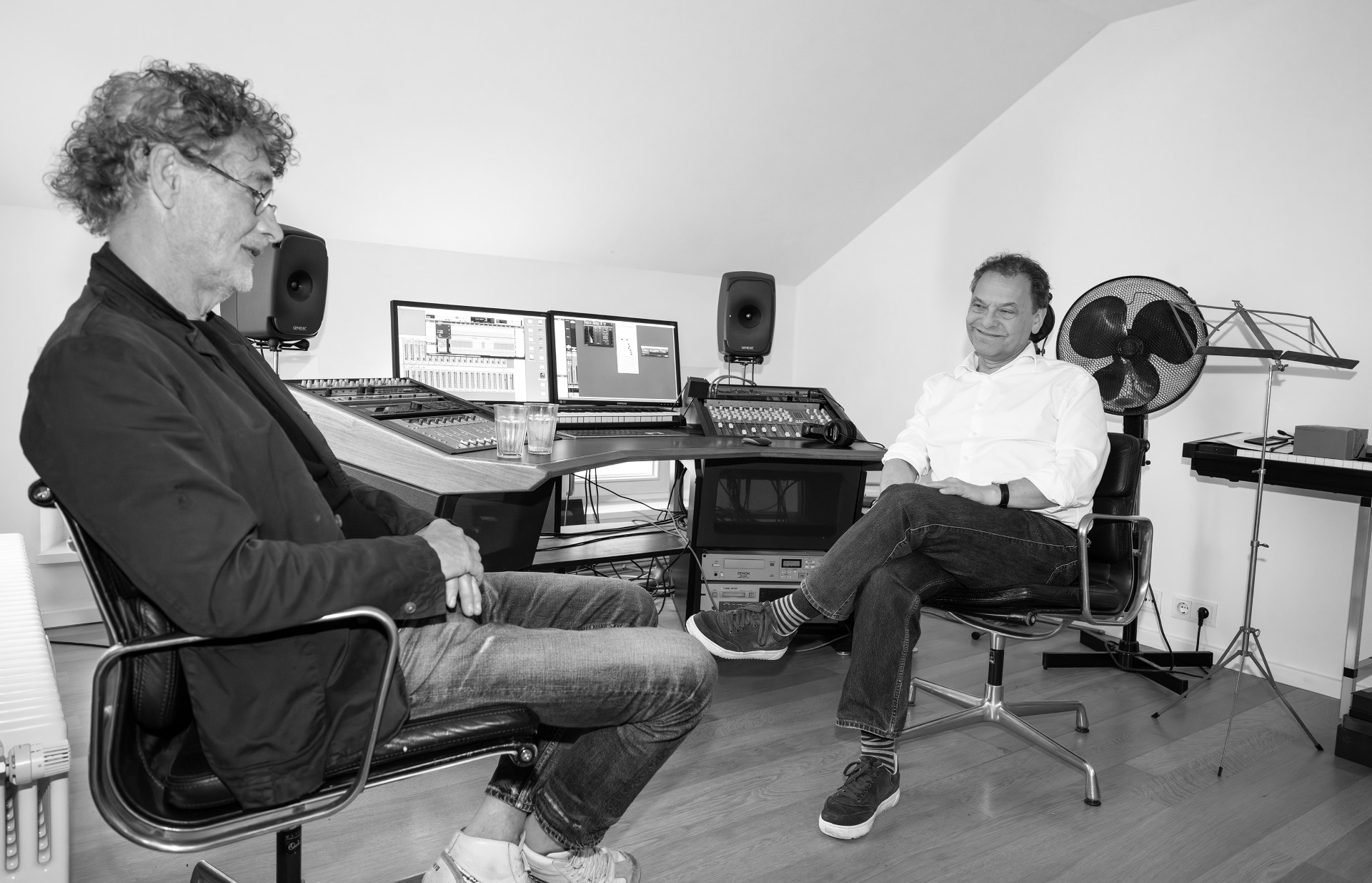
zwei Personen vor einem Mischpult
Interview in the online magazine LEIBNIZ

The Stage in Mind

In the online magazine LEIBNIZ, Dr. Hans-Ulrich Wagner and radio play producer Dr. Klaus Buhlert talk to Fabian Zapatka about 100 years of radio plays, how listening habits have changed and explain the extent to which they see sophisticated radio plays as “part of a cultural home”.

Leonie Wunderlich
New Episode of "Tonspur Wissen"

How Do Young Voters Inform Themselves?

Classic media such as radio and television continue to play a role in political education, but they are increasingly being supplemented – and in some cases replaced – by social media. What does this mean for the upcoming federal election? How do young voters inform themselves? Leonie Wunderlich discusses all of this in the new episode of “Tonspur Wissen – der Podcast von Rheinischer Post und Leibniz-Gemeinschaft".

Matthias C. Kettemann
Interview on Wissenschaftskommunikation.de

“We Do Not Have to Sound the Death Knell for Democracy”

How dangerous are disinformation campaigns? Legal expert Matthias Kettemann questions the often-invoked link between misinformation and the “threat to democracy”. In an interview with Anna Henschel on the Wissenschaftskommunikation.de portal, he refers to recently published research findings.

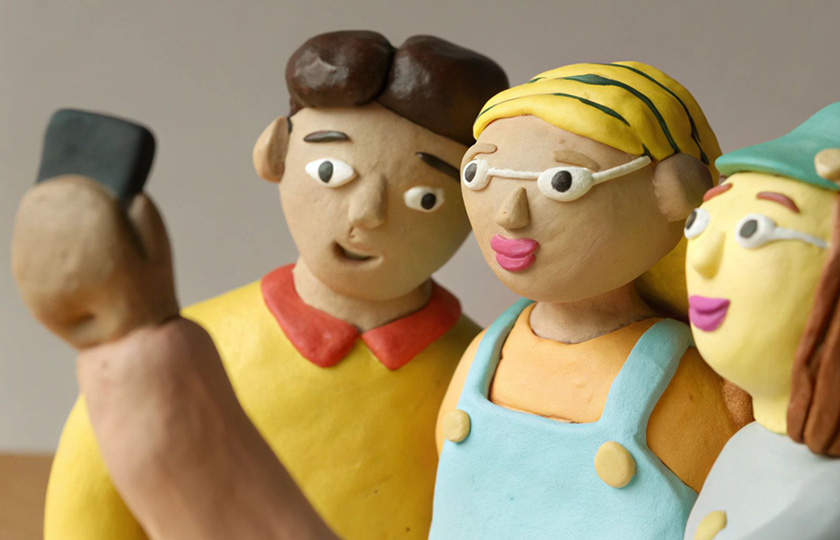
KI-generiertes Bild mit drei Knetfiguren, die ein Selfie von sich machen
Expert Opinion for the KJM

When Filtering Distorts Body Image

Due to beauty filters, young people are often confronted with unrealistic beauty ideals on social media. This can lead to body image disorders as well as eating disorders. So should edited images be labeled? Not a good idea, says an expert opinion by the HBI on behalf of the KJM: The legal requirements for an enforceable legal regulation are high, and the positive effects of labeling are controversial. Instead of a legal labeling requirement, the algorithms of the platforms could be adapted to promote more diverse and realistic body representations.

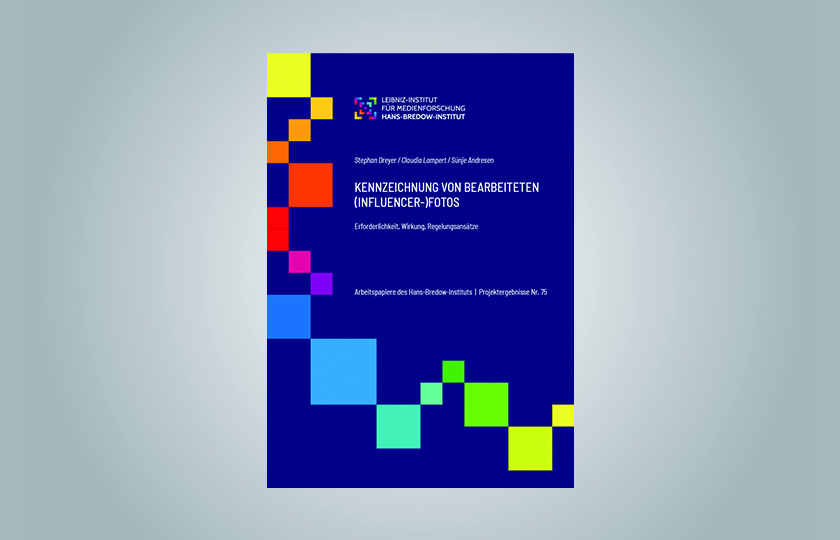
Cover of Working Paper No. 75
Working Paper Available for Download

Labeling of Edited (Influencer) Photos: Necessity, Effect, Regulatory Approaches

Do digitally edited photos in social media have to be labeled? On behalf of the Commission for the Protection of Minors in the Media (KJM), the HBI investigated the necessity of a legal labeling requirement for edited photos and videos. The expert opinion was presented to the public on 5 February 2025 and is available for download here as a working paper.

Stolpersteine mit leuchtenden Kerzen und Rosen drum herum.
Blog Series of the Leibniz Research Alliance “Value of the Past”

How German-Speaking Memorial Sites Engage with TikTok to Preserve Remembrance

How are concentration camp memorials using the platform TikTok for remembrance work? Liv Ohlsen and Dr. Hans-Ulrich Wagner take a look at the so-called Historytoks for Generation Z and show in a three-part blog series how concentration camp memorials are taking up this new form of digital remembrance work on their TikTok accounts.

Jan Rau
Expertise in "Le Monde"

Influence of Extreme Right-Wing Accounts on Elon Musk’s View of Europe

How much influence do far-right accounts have on Elon Musk's perception of Europe? Quite a lot, as the French newspaper Le Monde has pointed out in a recent article. Jan Rau was interviewed as an expert on the topic of “the extreme right and social media”.

Illustration: ein oranger Roboter sitzt inmitten schwarzer Figuren, die Menschen darstellen
Project of the DFG Research Group ComAI

Communicative AI and Deliberative Quality

What impact do social bots that use Large Language Models (LLMs) have on the quality of political discourse? The project investigates communicative AI in the social domain of political discourse using discourse monitoring and discourse intervention and thus with a largely experimental approach. The case studies are debates in German on the topic of climate change on X, Mastodon and Bluesky.

Cover of the online article on “Mediendiskurs”
Article on the Platform mediendiskurs

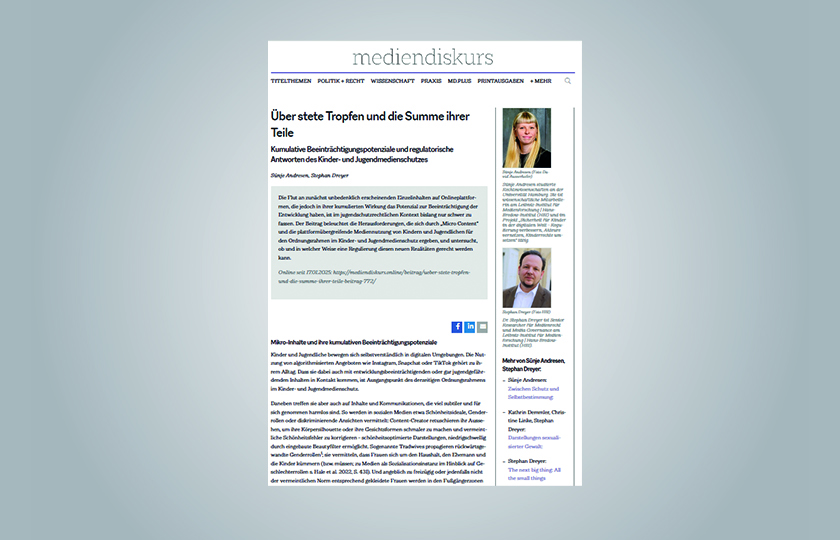
About Constant Dripping and the Sum of Its Parts

The article by Stephan Dreyer and Sünje Andresen examines the challenges that arise for the regulatory framework of child and youth media protection as a result of “micro content” and the cross-platform media use of children and young people, and investigates whether and how regulation can do justice to these new realities.

Auf einen leeren Stuhlkreis fällt ein Lichstrahl vom hoch angebrachten Fenster
New Event Format at HIIG

Spotlight: Community Notes Instead of Fact-Checking

The first edition of the new online discussion series “Spotlight” at HIIG focused on Mark Zuckerberg's decision to end the cooperation with external fact-checkers on all of Meta's platforms (Facebook, Instagram and Threads) in the US and to rely on “Community Notes” instead. The guest was Matthias C. Kettemann, and Katharina Mosene moderated the discussion.

Cover of a publication
Conversational Atmosphere Report

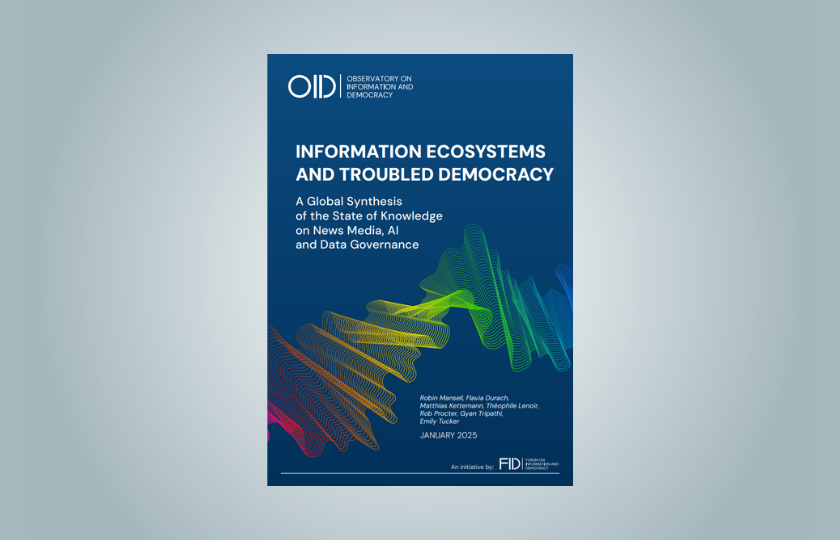
Information Ecosystems and Troubled Democracy

Do information ecosystems weaken democracy and promote the viral spread of mis- and disinformation? In the report “Information Ecosystems and Troubled Democracy: A Global Synthesis of the State of Knowledge on New Media, AI and Data Governance”, an international team of researchers assesses the role of information ecosystems.

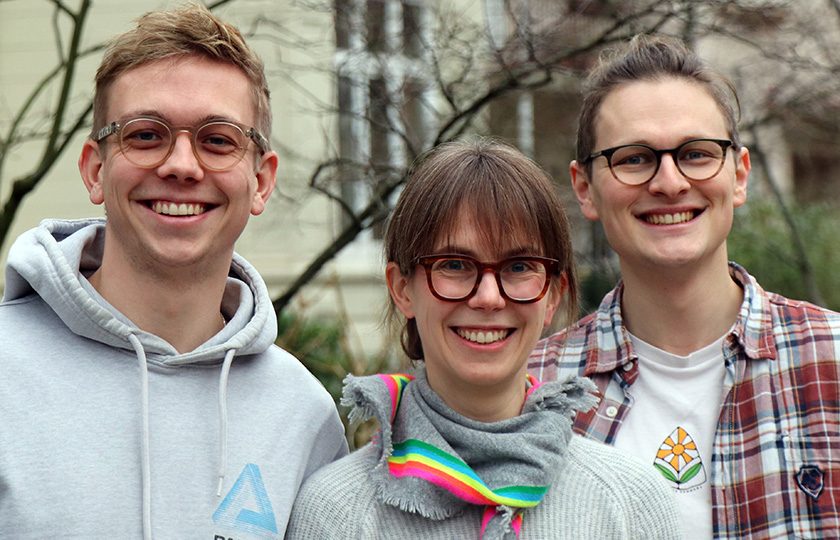
Gruppenbild von Moritz Wiechert, Antonia Eichenauer und Jonah Wermter
Welcome to the Institute!

New to DFG Research Group ComAI

In early 2025, Antonia Eichenauer, Jonah Wermter and Moritz Wiechert joined the team of the DFG-funded research group “Communicative AI (ComAI) – The Automation of Societal Communication” at the Leibniz Institute for Media Research | Hans-Bredow-Institut (HBI) as junior researchers.

1 … 14 15 16 17 18 … 43

Page 16 from 43

Newsletter

Information about current projects, events and publications of the institute.

Subscribe now