
Order Formation

Communication spaces do not emerge on their own. They are shaped—by law, technology, social practices, economic interests, and institutional decisions. The “Order Formation” research group examines how rules emerge in such communication spaces, who is involved in shaping them, and how responsibility, power, and legitimacy are distributed.

The starting point is the observation that communication today takes place within complex ecosystems. Platforms set rules for content and behavior. Governments establish legal frameworks. Users develop their own practices. Companies design technical infrastructures. Civil society, academia, and the media play a role in monitoring, critiquing, and shaping these spaces.

The research group asks how order emerges from this interplay—and how this order can be aligned with democratic values, fundamental rights, and the common good.

In doing so, it combines three perspectives.

  • First, it focuses on structures: What legal, technical, and social frameworks shape communication spaces?
  • Second, it focuses on processes: How do rules emerge, how are they enforced, and how do they change?
  • Third, it concerns actors: Who makes decisions, who is affected, who bears responsibility, and who holds power?

These questions are examined at the national, European, and global levels. A key focus is on European platform regulation, particularly the Digital Services Act and the Digital Markets Act.

Photo by Sasun Bughdaryan/Unsplash
Overview

Leaders

Last update: 24.09.2026

Blog Articles, News, Projects, Publications, Podcast Episodes

Cover der ZEitschrift
Book Article

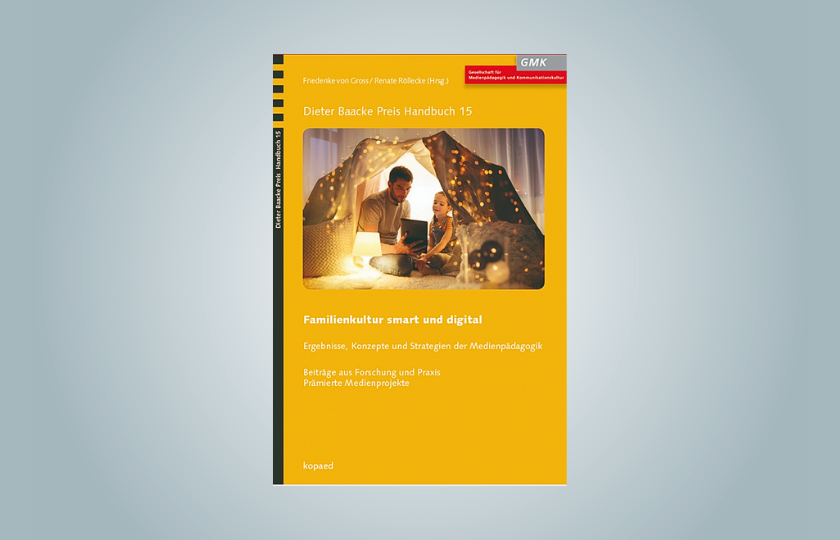
What Is Your Problem? Online Experiences from the Perspective of Children and Parents

In the anthology "Family Culture: Smart and Digital—Findings, Concepts, and Strategies in Media Education", Claudia Lampert, Kira Thiel, and Uwe Hasebrink write about online experiences from the perspectives of children and parents.

Cover Arbeitspapier
Report for Download

Reuters Institute Digital News Report 2020

For the ninth consecutive year, the Reuters Institute Digital News Report, which provides an international comparison of news consumption, has been published. The German component of the study was conducted by Sascha Hölig and Uwe Hasebrink, with the assistance of Julia Behre.

Cover Reuters Institute Digital News Report - Ergebnisse für Deutschland. 2019
Report for Download

Reuters Institute Digital News Report 2019

The international comparison of news consumption was published on June 12, 2019. In 2019, approximately 2,000 people were surveyed in each country. In total, this eighth edition of the study is based on 75,749 respondents from 38 countries.

Cover
Expert Opinion

Human Rights and Political Participation in the Digital Age

At the invitation of the Committee on Human Rights and Humanitarian Aid of the German Bundestag, Matthias C. Kettemann addresses in this statement twelve questions of the Bundestag factions concerning human rights and political participation.

Cover
What Rights Do Users Have?

Back Up: Can Users Sue Platforms to Reinstate Deleted Content?

In their article published in Internet Policy Review, Matthias C. Kettemann and Anna Sophia Tiedeke ask under what conditions users can sue providers to reinstate deleted content on social media platforms.

Cover: Zeitschrift "Comunicazioni Sociali"
Media Repertoires of Internet Users

Combining Old and New: Patterns of Media Use across Legacy and Online Media in Germany

Julia Behre, Sascha Hölig, and Uwe Hasebrink have published an article in the journal *Comunicazioni Sociali* on the media repertoires of adult Internet users in Germany.

Cover der Zeitschrift "merz", Ausg. 64 (3), 2020
EU Kids Online

Online Experiences of Children and Young People in Europe

What are the experiences of children and adolescents in Europe when they are online? The international comparative study “EU Kids Online” examines this question. In the journal "medien+erziehung", Claudia Lampert, Kira Thiel, and Uwe Hasebrink provide an overview of the study and the experiences of 9- to 16-year-olds.

Cover des Arbeitspapiers Nr. 49
Working Paper Nr. 49 for Download

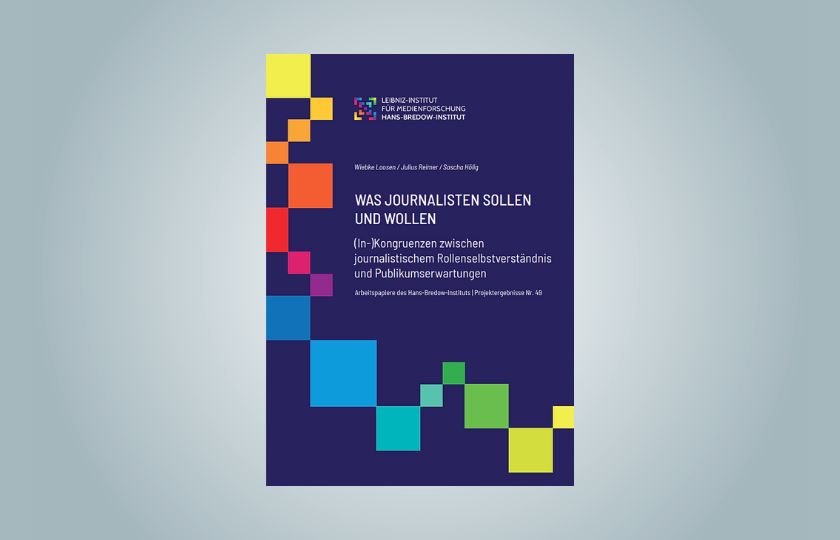
What Journalists Ought to Do and What They Want to Do

In this working paper, Wiebke Loosen, Julius Reimer, and Sascha Hölig examine the relationship between journalists’ self-perception of their role and the public’s expectations of journalism in Germany.

Matthias Kettemann und Stephan Dreyer
Expert Statement for the SMC

SMC Statements on Trump’s Twitter Decree

In the "Rapid Reactions" section on the website of the Science Media Center Germany, Stephan Dreyer and Matthias Kettemann give their views on a new executive order by the US government that is intended to restrict the protection of social media in the United States.

Cover
Researching News Use

Contextualized Repertoire Maps: Exploring the Role of Social Media in News-Related Media Repertoires

In this paper, Lisa Merten presents a qualitative method for researching the patterns of news use: the Contextualized Repertoire Maps.

Wolfgang Schulz und Stephan Dreyer
Youth Protection Act

Written Statement on the Draft Youth Protection Act

Stephan Dreyer and Wolfgang Schulz have written a statement on the draft Youth Protection Act.

Portrait Matthias C. Kettemann
Publication

Cross-Pollination in Cyberspace and the Internet Governance “Spaghetti-Ball”

Together with Wolfgang Kleinwächter (University of Aarhus), Max Senges (Google Germany) and Jörg Schweiger (DENIC), Matthias C. Kettemann has made proposals for the reform of the Internet Governance Architecture, which is currently being discussed under UN aegis.

1 … 36 37 38 39 40 … 43

Page 38 from 43

Newsletter

Information about current projects, events and publications of the institute.

Subscribe now