Team Agile Formats

The Agile Formats team within Program Area 3—Science Communication, Agile Formats, and Library Services—started in 2026 as part of the institute’s strategic development. As a service- and knowledge-transfer-oriented unit, the team develops and supports innovative working formats that combine scientific expertise, interdisciplinary exchange, and societal knowledge transfer.

Working closely with the scientific program areas, the team designs and organizes formats such as Research Clinics, Sprints, and other collaborative and innovative working and knowledge-transfer settings. The goal is to make our scientific findings accessible to various target groups, including the scientific community as well as stakeholders from politics, the (media) industry, civil society, and professional practice.

The team is responsible for planning, facilitating, implementing, and following up on agile formats. This includes engaging external experts, developing working materials, and documenting and synthesizing the results. A particular focus is on communicating insights from these formats in a way that is tailored to the target audience and making them accessible through various media and knowledge transfer formats.

Through evaluation, feedback, and continuous improvement, the team helps to sustainably embed agile working methods at the institute and create new spaces for interdisciplinary collaboration, knowledge transfer, and societal impact.
Overview

Last update: 24.09.2026

Blog Articles, News, Projects, Publications, Podcast Episodes

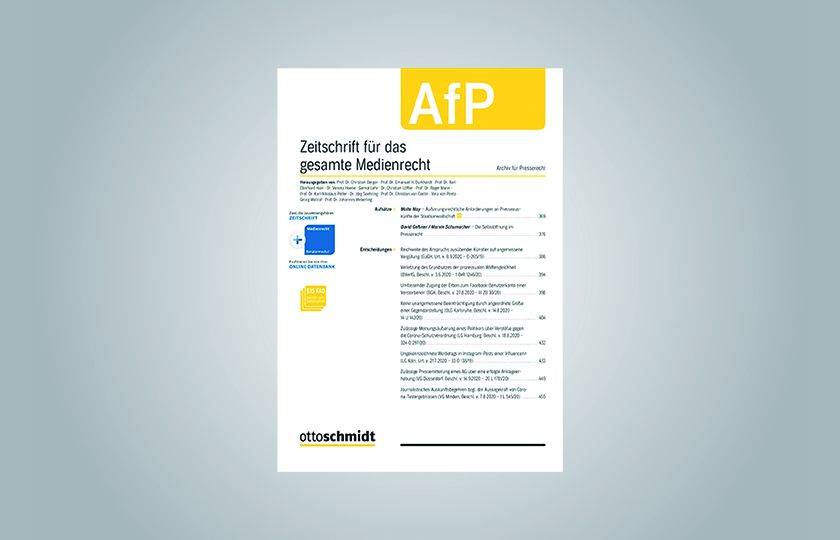
Cover of the journal AfP
Published in AfP

State Media Treaties Under Pressure

In an article published in the journal AfP 6/2024, Tobias Mast discusses state media treaties in a climate of polarized and fundamentally opposing politics.

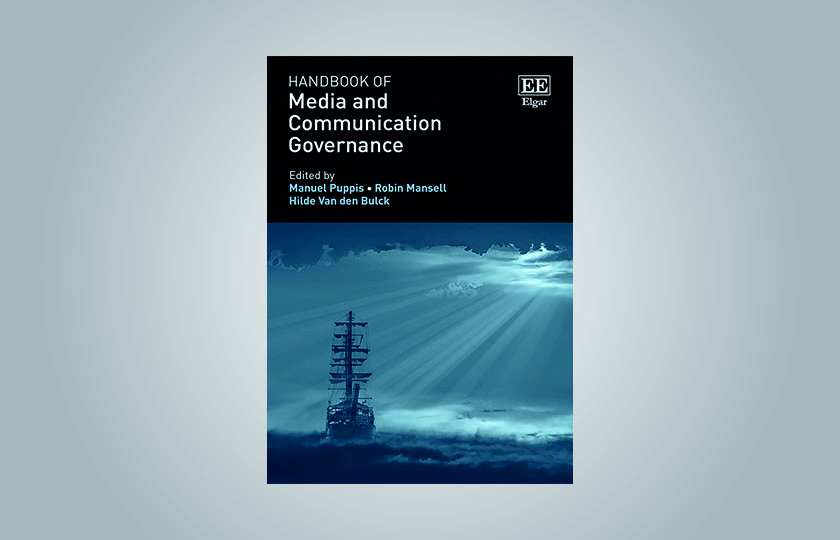
Cover of the Handbook Media and Communication Governance
accessible open access

Private Ordering of Media

In a handbook article, Tobias Mast, Matthias C. Kettemann and Wolfgang Schulz address the question of how media organizations and platform operators setprivate law through, for example, their terms and conditions.

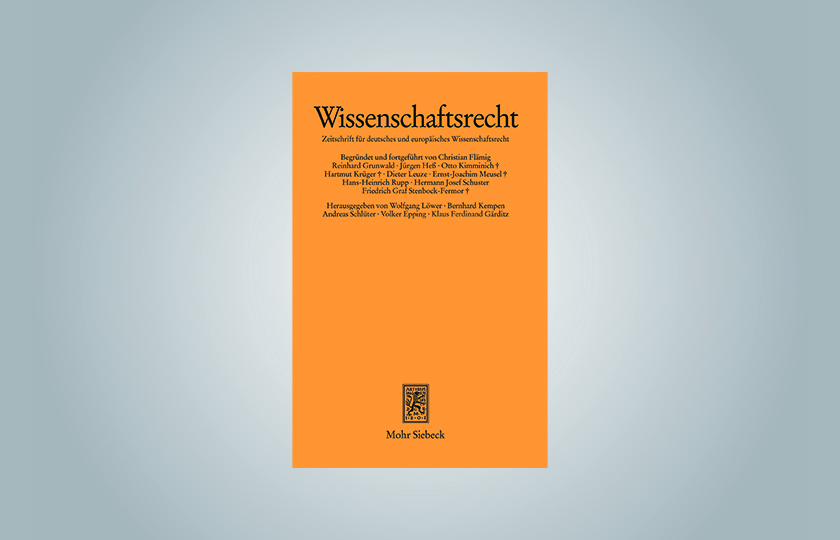
Cover of the journal Wissenschaftsrecht
Open Access Publication

Research Data Access and Technology Regulation

In their article, Tobias Mast and Martin Fertmann examine the growing inclusion of access to research data in digital regulatory legislation at the national and European levels (e.g., NetzDG, UrhDaG, and DSA). You can access the article free of charge.

Portrait Kristina Kobrow
New Appointment

A Warm Welcome to Kristina Kobrow!

Since October 2024, Kristina Kobrow has been the new host of our BredowCast and a member of the HBI's science communication team. Thank you for joining us!

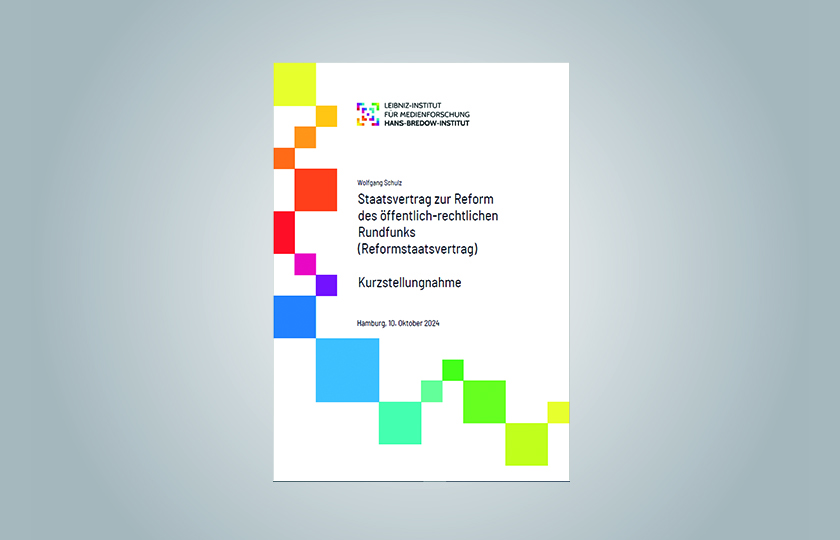
Cover of the brief expert opinion on the Reform State Treaty
On the Future of Public Broadcasting

Brief Expert Opinion on the Reform Treaty

Prof. Dr. Wolfgang Schulz has written a brief expert opinion on the state treaty on the reform of public broadcasting (Reform State Treaty), which is available here as a PDF file. The heads of government of the federal states had requested feedback on their draft state treaty by October 11, 2024.

Matthias C. Kettemann
Appointed to Task Force “Internet Governance”

Matthias C. Kettemann Advises BMDV

Prof. Dr. Matthias C. Kettemann has been appointed to the Internet Governance Task Force by the German Federal Ministry of Digital Affairs and Transport (BMDV). The task force has six months to develop future scenarios for the development of German digital policy up to the year 2040.

Symbolbild von rotunde

Coding Public Value

How can we develop software that is not only oriented towards business models, but also towards the common good, user interests, and media regulation? Coding Public Value (CPV) translates questions on media law into approaches and methods for a responsible software engineering.

Auf einem weißen Schreitisch liegen Tastatur, Handy und ein Kameraobjektiv
Pilot Project Computational Social Science

Journalistic Use of Information Environments Influenced by Algorithms

The pilot project in the field of computational social science used browser data donations to investigate how relevant the offerings of individual search engines and social media are in the everyday work of journalists.

Wandbild von Menschen mit Gepäck und Schriftzug "Made in Crisis"
BMBF Project

Communication in Times of Crisis

How do communications change in a crisis like the COVID-19 pandemic? What role do actors from science, politics and the media take over? How do they deal with uncertainty from this situation? A project that reviewed existing studies and interviewed experts provided answers to this question.

Digitaler ahmmer au
Funded by Stiftung Mercator

Platform Democracy

How could "platform councils" or other institutions for integrating public interests into platform rule-making processes ensure that public interests and democratic values are taken into account? A new project is embarking on a search for global best practice models.

Mann auf Rolltreppe
BMBF Project

Media and Science Communication

How do scientific findings about journalistic media and social media get into the world? What criteria do science editors use to select topics? And what impact can scientific content have with it?

Blick vom Weltraum auf die nächtliche Erde mit Lichtspots
International Cooperation Project

Global Media and Internet Concentration

The international Global Media & Internet Concentration Project (GMICP) analyses communication, internet and media markets in nearly 40 countries. The HBI is responsible for collecting and reporting the data for Germany.

1 … 17 18 19 20 21 … 43

Page 19 from 43

Newsletter

Information about current projects, events and publications of the institute.

Subscribe now