
Here, researchers from the Leibniz Institute for Media Research blog on topics from communication science and media law.
Published on: 02.07.2024

Here, researchers from the Leibniz Institute for Media Research blog on topics from communication science and media law.
Published on: 02.07.2024

In a current project by Leonie Alatassi, students explore what political participation means to them, how it can be encouraged, and what barriers stand in the way. The first workshops show that many young people are eager to get involved. However, they need not only information, but also concrete support and opportunities to try things out and gain experience.

Public debates about AI often oscillate between technological utopianism and dystopian visions of the future. How can journalists report on a topic that is both ubiquitous and difficult to grasp in a nuanced and balanced way? A Research Clinic at the HBI explored the challenges of reporting on AI and discussed possible ways to address them.

Whether at a family dinner or during a lunch break, differing opinions are a part of everyday life. But what happens when people continue to engage in conversation despite holding controversial views? This article introduces the dialogue formats “What Unites Germany” and “Context Collapse” and shows how such spaces for interaction can contribute to the formation of shared opinions and social cohesion.

On the ARD talk show “What Unites Germany,” people from a wide variety of backgrounds engage in conversation with one another. As part of the project, the HBI is conducting research to determine how these discussions influence the participants’ attitudes. The initial findings are now available.

Doubt serves as an interface between knowledge, trust, and action: it points to structural problems in information and regulatory systems while simultaneously constituting a key resource for critical judgment in a complex digital public sphere. As part of the HBI Open House, we conducted a Research Clinic on the topic of doubt. The findings are summarized in this blog post.

How does attention-economy-driven algorithmic amplification of conflict-driven and negative-emotional communication distort public discourse? And does this distortion constitute a systemic risk under the Digital Services Act (DSA)? This blog article refers to our previous blogpost on "Platform Badges for Civic Communication", explains why such interventions are needed, and outlines how they could address these systemic risks.

AI applications are no longer used just for homework, but also as advisors and conversation partners. This blog post takes a look at young people's experiences with AI and shows that schools and parents often lack opportunities to discuss the role of AI in our daily lives. Safer Internet Day offers a good opportunity to start this conversation.

How can platforms address distortions in the digital attention economy without restricting free expression excessively? This blog post explores how new incentive structures can promote constructive communication on digital platforms and the potential of the Digital Services Act to facilitate such interventions.
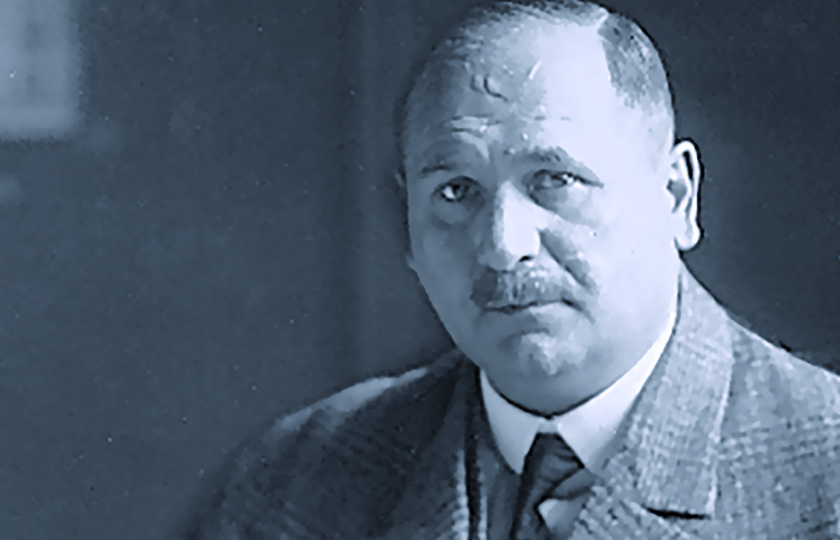
Research by Clara Schütze and Hans-Ulrich Wagner in the digital archives of the German newspaper portal shows how quickly Hans Bredow’s image shifted from that of the “father” to the “unfit father” of broadcasting during the so-called Broadcasting Trial, which was brought against him in 1934/35.

On May 30, 1950, the Hans Bredow Institute was founded by the former Northwest German Broadcasting Corporation (the predecessor of NDR and WDR) and the University of Hamburg. This blog post describes the history of its founding and explains how the institute got its name.
The article explains how Elon Musk's communication interventions increase the media presence of Alice Weidel and the AfD, and how these dynamics are driven by the mechanisms of the digital attention economy.

A rainbow holds not only scientific significance but also rich symbolism. In many cultures and myths, the rainbow represents hope, peace, and a connection between heaven and earth.

An international study led by the HBI provides a first comparative overview of how societies and governments in 15 countries react to private power over political actors.

How come the Taliban have access to social media while former President Trump does not? The short answer is that Trump has deliberately violated the internal speech rules of social media companies before being banned while certain Taliban and Taliban-affiliated accounts have not done so recently or consistently. They are, however, often banned and/or suspended. But things are complicated.

Technological change poses new challenges for courts, while their decisions and the quasi-judicial structures of digital platforms increasingly shape the rules of digitality.

Trump’s ban from social media, while gaining significant media attention, does not represent an isolated case. Preventing individuals from accessing social media platforms or parts of them is a common phenomenon today. Edoardo Celeste terms it ‘social media exclusion’ and argues that it is possible to distinguish three types of this phenomenon on the basis of the actors and specific underlying factors determining the users’ exclusion.

The attack on the institutional heart of one of the oldest democracies of the world was a major shock, for the United States and democracies all over the world. How were social media conducive to the Capitol siege and what should we learn from it?

Why Engaging in Content Governance is Not a Good Idea for the Successful Video Conferencing Platform.