How Politically Empowered Do Young People Feel? Findings from Participatory Workshops

Many young people feel that they are not represented in the media or in politics and doubt their own ability to make a difference, as studies have shown (e.g., the 2022 Listen to Us! survey and the 2025 survey conducted as part of the YoungUP! project). At the same time, a great deal is expected of them. But how do young people themselves experience and assess their own political agency? In a recent project conducted as part of the #UseTheNews initiative, high school students explored the barriers to and enabling factors of political participation- while also developing their own understanding of political self-efficacy.

Political agency does not begin with voting in an election or joining a political party. It starts much earlier: in a social media feed, in the classroom, in conversations with friends, and with the question of whether one’s own voice matters at all. At the same time, the conditions for becoming informed, forming opinions, and participating in public debate have changed considerably. Political information is constantly available to young people, appearing alongside entertainment, advertising, and everyday communication, and can be shared with just a few clicks. However, algorithmic curation and misinformation make it increasingly difficult to establish a shared and reliable basis for political information and discussion.

If young people are to become politically empowered, it is therefore not enough simply to explain the electoral system or introduce them to party platforms. But what skills and resources do they need to understand political processes and feel capable of influencing them through their own actions? This is precisely the question addressed by a participatory workshop project within the #UseTheNews initiative. What makes this approach distinctive is that young people are not only asked for their views but are also actively involved in developing and interpreting the findings. Each participating school class takes part in two workshops, each consisting of two double periods. Dr. Leonie Alatassi first piloted the concept with 25 tenth-grade students at a secondary school in Hamburg.

What Young People Understand by Political Agency
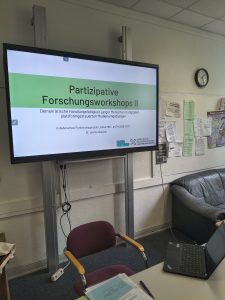
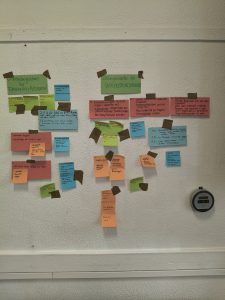
Whiteboard displaying the opening slide titled "Participatory Research Workshops II" Collection of colorful sticky notes on a wall, photographed during the workshop

During the first workshop, the students jointly explored the different ways in which people can become politically or socially active. It quickly became clear that they viewed participation as much broader than simply voting in elections. Many spoke about their own experiences of political engagement, particularly taking part in demonstrations, including Fridays for Future protests, protests against the AfD, and other political actions. Some also mentioned forms of participation through social media, such as sharing content or creating their own TikTok videos.

Most students closely associated political agency with the ability to bring about change. At the same time, however, they believed that their chances of actually being heard—both socially and politically—were limited. They perceived themselves as somewhat better represented in the media than in politics.

Working in small groups, the students discussed statements relating to political self-efficacy, such as: “I feel confident actively participating in conversations about political issues” or “I am able to understand and assess important political questions.” The groups identified the challenges associated with these statements and considered which skills they would need to answer “yes” with confidence. The results were then analyzed and presented back to the students during the second workshop. This follow-up session focused on validating the key themes and interpretations and building on the findings. Each group then developed concrete proposals for solutions and support measures.

The Greatest Obstacles: Misinformation, Distance, and a Lack of Connection

When discussing what it takes to stay informed, form an opinion, and participate in political discussions, all six groups identified three major challenges.

  • The most significant challenge was the prevalence of false, misleading, or contradictory information on social media. Students also noted that when issues are presented in ways that are difficult to understand or seem overly abstract, they become less willing to engage with them.
  • Individual factors also played an important role. A lack of motivation, limited interest, and the feeling that political issues have little relevance to everyday life can all make participation more difficult.
  • A third area concerned young people’s immediate social environment. They need not only access to information but also supportive environments that provide guidance, encourage discussion, and help them navigate uncertainty.

Accordingly, the groups identified courage, self-confidence, critical thinking, research skills, and access to reliable and trustworthy sources as essential prerequisites for political agency. In other words, political agency is not simply a matter of individual motivation. It also depends on whether young people learn how to evaluate information, have confidence in their own abilities, and find spaces where they can articulate, develop, and test their perspectives.

More Guidance, Better Communication, and Genuine Participation as Solutions?

Sheets of paper and colorful sticky notes showing the results of the work completed by Group 4, Group 2, and others
Participants work in small groups to identify challenges to political participation and explore ways to support it.

The solutions proposed by the six groups in response to these challenges revealed remarkably consistent patterns.

  1. Almost every group stressed the importance of being able to identify trustworthy information and verify information across multiple sources—for example, by following reputable accounts, comparing different sources, and engaging consciously with misinformation.
  2. The discussions also highlighted that news and information literacy should be actively taught and supported, for example by helping young people recognize unreliable sources, presenting complex issues in accessible ways, and providing educational opportunities through school instruction or children’s news programs.
  3. The groups also emphasized the importance of creating opportunities for discussion and expression, providing spaces where young people can voice their opinions and overcome uncertainty.
  4. Finally, they argued that political issues should be communicated in ways that are more understandable, more closely connected to everyday life, and more participatory—for example, through current examples, direct encounters with politicians, and genuine opportunities to help shape political processes.

A Desire for Support in Navigating Information Confidently

The workshops showed that the students primarily want more practical support in developing information literacy and forming informed opinions, both in and outside school. For example, they suggested skills workshops and classroom formats in which they could practice evaluating trustworthy sources, fact-checking information, conducting research, and identifying arguments and counterarguments.

The students also identified the need for face-to-face spaces where young people can encounter different perspectives, defend their own positions, and develop presentation and debating skills. In addition, trusted individuals—such as teachers, parents, and friends—were seen as playing an important supportive role. Overall, the groups expressed a desire for more guidance, more opportunities to practice, better orientation, and more accessible programs and spaces that would help them become more confident and independent in navigating information.

Looking Ahead

The first workshops make one thing clear: many young people want to get involved. But turning this willingness into genuine political agency requires more than simply providing information. Young people also need support in their personal development, along with opportunities to practice and strengthen their skills.

As part of the free educational program for Hamburg schools, WasserWetterWaterkant2026, school classes can apply to participate in a two-part workshop between 21 September and 2 December 2026. Applications open after the Hamburg summer holidays on Wednesday, 19 August 2026. The program is available online.

Images: Workshop photographs: Leonie Alatassi/HBI.

Hype vs. Doom – How Can AI Reporting Become More Nuanced?

Artifical Intelligence (AI) has become a cross-cutting topic that oscillates in public debate between technological promises of salvation and dystopian visions of the future. It is precisely this tension that makes reporting on AI so challenging. How do you report on a topic that is both ubiquitous and difficult to grasp? A Research Clinic at the Leibniz Institute for Media Research | Hans-Bredow-Institute (HBI), led by Mercator Fellow and technology journalist Svea Eckert, explored the challenges of AI reporting – and what needs to change to make it more nuanced.

By Milena Braun and Svea Eckert

Group photo of all participants seated in a circleThe Research Clinic is an interactive, research-oriented format. It brought together journalists from a range of media organizations specializing in AI and technology to collaboratively examine how – and under what conditions – reporting on AI is produced in German newsrooms. The format created a space for reflection where different journalistic perspectives – from reporters and section editors to and editors-in-chief – could come together.

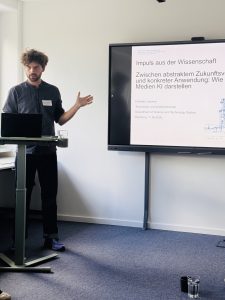
The first discussion was based on concrete examples and experiences from editorial practice that illustrated both the conditions under which AI reporting is produced and the challenges currently facing it. The discussion was complemented by a research presentation by Dominic Lammar from the Technical University of Munich. He summarized how AI is portrayed in the German media and how these portrayals simultaneously shape expectations of AI in the present and the future. His presentation served as a mirror fro journalistic practice and as a starting point for reflecting on editorial routines. Participants then developed future visions for AI reporting. The aim was to use a utopian framework to move beyond existing resource constraints and structural limitations.

AI Reporting at the Intersection of Journalistic Organization

Blurry side view of people listening

The first part of the Research Clinic made it clear that the challenges of AI reporting begin with the basic question of how the topic is framed. Several participants emphasized that AI should no longer be understood as an isolated technological phenomenon, but rather as a cross-cutting societal issue that affects a wide range of domains. Nevertheless, many newsrooms continue to treat AI primarily as a standalone topic, typically assigning it to technology or digital desks. This editorial classification has a direct impact on reporting. In practice, in-depth AI coverage often depends on the specialization of individual journalists, as subject-matter expertise is usually developed through personal areas of focus and independent professional development. At the same time, participants explained that external perspectives from academia and professional practice have so far only been integrated to a limited extent. Where such resources are lacking, journalistic assessments of AI often remain superficial.

Traditional News Values and Limited AI Expertise Hinder Critical Contextualization

Another point of discussion was that AI reporting continues to be strongly shaped by traditional news values. Coverage is produced primarily when new, unexpected, or problematic developments emerge—for example, when publicly debated failures occur or when AI is introduced into areas of public administration. In day-to-day newsroom practice, this event-driven focus leaves little room for longer-term analysis and critical contextualization.

Participants also noted that it is difficult to communicate the technical complexity of AI in journalistic reporting. This sometimes results in oversimplified and highly generalized portrayals. Against the backdrop of the limited specialist expertise already described, AI is therefore often used as an umbrella term encompassing a wide range of different technologies and applications. However, this conceptual vagueness makes nuanced reporting more difficult and encourages narratives that oscillate between technological promises of salvation and dystopian visions of the future.

Generalized Reporting and Algorithms Fuel the AI Hype

Dominic Lammar from the Technical University of Munich during his research presentation

In this context, Dominic Lammar’s research presentation highlighted that the AI hype makes certain visions of the future appear particularly plausible, while other perspectives receive less public attention. Participating journalists observed that this dynamic is driven less by journalistic news values alone than by algorithmic logics of attention and distribution. They argued that the media have a responsibility to contextualize the different forms, manifestations, and power structures surrounding AI and make them understandable to a broader audience.

This leads to another key challenge: communicating with audiences that possess widely differing levels of knowledge and experience. While AI has already become part of the professional or personal lives of some people, it remains abstract and difficult to grasp for others. Several participants expressed concern that parts of the audience had already been left behind—or risked being left behind in the future.

Drawing on similar experiences from climate reporting, participants discussed how fundamental concepts are often assumed to be common knowledge, even though this is by no means the case. Good AI reporting must therefore do more than simply monitor technological developments or provide practical guidance. It must explain broader contexts, take different levels of knowledge into account, and highlight the societal implications of AI. The crucial question is not only what AI is technically capable of doing, but above all where and how it is already shaping society.

Utopias for AI Reporting

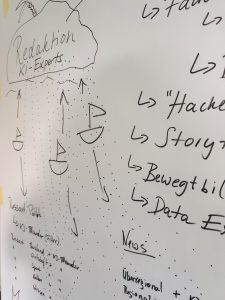
Notes on a whiteboard showing smalls boats traveling between AI experts and other stakeholders

The second part of the Research Clinic focused on an intentionally open-ended question about the future: What would journalism—and AI reporting in particular—look like if resources were unlimited? The utopian scenarios developed by four groups served to identify concrete areas for future development and action.

One key outcome was the shared vision of integrating AI as a cross-cutting topic throughout newsroom structures. Under this approach, AI would no longer be confined to rigid editorial beats but would instead be systematically incorporated into all areas of reporting. Closely connected to this was the idea of building multidisciplinary teams that would bring together journalistic, technical, and subject-specific expertise in a closer and more dynamic way. In addition to journalists and data reporters, participants specifically identified data scientists, software developers, video specialists, and subject-matter experts as integral members of editorial teams. Closer collaboration among these different groups of actors was seen as highly desirable. Participants also emphasized that greater transparency of algorithmic systems and data infrastructures would be a key prerequisite for more critical and reflective reporting.

AI Reporting Should Also Be Enjoyable

Two cheerful participants (Anja and Simon) take part in the discussion

The utopian scenarios also addressed the structures of journalism itself. Participants repeatedly expressed a desire for more time and organizational resources for professional development—for example, through AI coaching—as well as for professional exchange and in-depth background discussions. At present, they noted, most continuing education and deeper engagement with the topic take place during journalists’  free time.

Closely linked to this was the vision of a workplace culture shaped less by publication pressure and more by opportunities for experimentation, stronger professional networks, and a more developed culture of learning from mistakes. Participants also discussed how the targeted use and further development of AI-supported tools could help journalists identify topics and make research processes more efficient.

Finally, questions of audience engagement and storytelling came into focus. Participants emphasized the importance of building closer connections with diverse audiences and of experimenting more boldly with new ways of communicating AI-related topics. The central idea was a form of reporting that not only explains complex technological developments but also translates them into different everyday contexts, thereby making them accessible to a wide range of audiences. AI reporting can, should, and is allowed to be enjoyable.

Conclusion

The Research Clinic demonstrated that the conditions for nuanced AI reporting do not depend solely on individual editorial decisions but are fundamentally shaped by the structural conditions under which journalism operates. Closer collaboration across editorial desks, additional resources for developing expertise, and stronger networks extending beyond individual newsrooms and publishing houses are therefore essential. It became clear that these conditions directly influence how AI is represented in the public sphere and which interpretive frameworks come to dominate. Through nuanced reporting on AI, journalism can help foster a better understanding of both technological and societal transformation while illuminating the space between narratives of hype and doom.

Photos: (c) Leibniz-Institut for Media Research / Milena Braun

Staying in Conversation Despite Different Opinions? Two Examples

Whether at the family dinner table, among friends, or during a lunch break, differing opinions are part of everyday life. Yet controversial topics are often avoided to prevent conflict. But what happens when people remain in conversation despite holding different views? This question is becoming increasingly important in light of societal debates and perceived polarization. This blog post presents the dialogue formats “Was Deutschland verbindet” [What Connects Germany] and “Context Collapse” and explores how such spaces for encounter can contribute to the formation of shared opinions and to social cohesion. 

By Yana Novitskaya 

There are often too few opportunities today to encounter people with different experiences and perspectives. In the past, clubs, neighborhoods, and other social spaces provided more opportunities for spontaneous conversations. Today, many people move primarily within social environments where they encounter others who hold similar views. As a result, conversations with people who have different experiences or perspectives occur less frequently. Against this backdrop, opportunities for dialogue are becoming increasingly important. 

84 People in Dialogue: The ARD Initiative “What Connects Germany” 

As part of the ARD dialogue initiative “Was Deutschland verbindet” [What Connects Germany], 84 people from across Germany discussed societal issues over the course of two days. Topics included democracy, migration, equality, and the culture of complaining (Tagesschau, May 10, 2026). The dialogue sessions were recorded and incorporated into various ARD reports and other television formats (ARD Mediathek). 

The project was accompanied by researchers from the Leibniz Institute for Media Research | Hans-Bredow-Institut (HBI). Two HBI researchers, including the author of this article, attended the dialogue sessions and distributed questionnaires before and after the conversations. The aim was to determine whether participants’ attitudes changed over the course of the weekend. The accompanying research focused on expectations regarding dialogue, ideas about how society should live together, and perceptions of other people’s opinions. 

Openness as a Prerequisite, Surprising Common Ground as a Result 

According to PD Dr. Jan-Hinrik Schmidt, who oversees the accompanying research, the project demonstrated that “we are still capable of talking to one another” (NDR Info, May 11, 2026). It also showed that constructive dialogue on controversial issues is possible when people have sufficient time and space to engage in it (for more on the findings, see the Media Research Blog). 

Openness also plays an important role in fostering understanding within society—both openness about expressing one’s own opinion and openness toward other perspectives. When participants found a topic particularly engaging, they often continued their conversations even after the cameras stopped rolling. Participants were especially likely to continue such conversations when they felt that the other person was genuinely listening to them rather than simply “debating” them. The aim was not to change one’s own opinion or convince others of one’s position. Rather, it was about listening and understanding why people hold certain views. This attitude helped foster mutual understanding among people from different backgrounds. 

When the conversations ended, many participants were surprised to realize that they had more in common than they had differences. Some also took something from the project into their everyday lives. One participant, for example, said that he wanted to express his opinion more often in the future because he had realized that his voice mattered (NDR 2 Spezial, May 22, 2026). A participant from the younger generation emphasized that the project had given her a sense that she had a voice of her own. She had realized that she wanted to express her opinion and channel more of her energy into civic engagement (NDR Info, May 11, 2026). 

RISC Provides Spaces for Societal Exchange 

The Research Institute Social Cohesion (RISC) also focuses on developing dialogue initiatives. As early as late 2024, RISC Hamburg organized a networking meeting that brought together different initiatives and formats to promote exchange and mutual learning (“The Paradox of Those Willing to Talk”). In late 2025, it brought together guests from academia, politics, the media, and civil society for a discussion on whether and to what extent social media can facilitate constructive debate (“Unavoidable but Problematic: Social Media as Limited Spaces for Debate”). 

With the “Context Collapse” discussion series, RISC Hamburg also regularly creates spaces in which people can share their perspectives and experiences and reflect together on key societal questions. In the most recent edition, held on May 28, 2026, in cooperation with Bücherhallen Hamburg, guests discussed the limits of democracy, changes in the media landscape, societal polarization, and the formation of shared opinions. Following introductory contributions from Jan Rau (RISC Hamburg) and Hannah Göppert (Initiative Offene Gesellschaft, Faktor D), participants exchanged views in small groups. The aim of the format is to create a space in which people can share their perspectives and experiences and reflect together on key societal questions. 

The discussion made clear that the collective formation of political opinions is an important task of democratic societies, the conditions for which have changed in recent years. Whereas political interests were previously represented more strongly by institutions and established social groups, society has become more diverse. 

The Limits of Dialogue in Digital Spaces 

At the same time, social networking platforms play a central role as spaces for communication. This raises the question of why social media often fail to provide a suitable environment for constructive exchanges between people with different opinions. Provocative and emotional content frequently attracts more attention than nuanced arguments and can therefore create the impression of a more polarized society. At the same time, digital spaces often reinforce the tendency for users to primarily encounter opinions similar to their own and have fewer opportunities to engage with different perspectives. Another question is how disrespectful or insulting behavior in digital spaces can be addressed. A lack of moderation, or inadequate, moderation can result in substantive discussions being displaced by personal attacks or provocations. At the same time, the challenge remains of finding a balance between moderation and freedom of expression. 

The Importance of Dialogue Formats and Ways to Foster More Dialogue 

Interestingly, many of the issues and concerns raised during the ARD initiative “Was Deutschland verbindet” [What Connects Germany] also emerged in the “Context Collapse” format. This raises the question of whether societal differences may actually be less pronounced than they are often perceived to be. Moreover, the impression of deep societal division can arise when people do not express their opinions openly, causing certain positions to appear more visible than others. Against this backdrop, dialogue formats can help reduce prejudice, foster mutual understanding, and encourage people to reflect together on societal challenges and possible solutions. They create spaces in which people with different life experiences and perspectives can engage in conversation. 

Observations from both dialogue formats made clear that people are fundamentally capable of talking to one another—and that they want to do so. However, they need spaces in which different opinions can be expressed without fear of exclusion or personal attacks. Responsibility for creating such spaces does not lie solely with individuals. Media organizations, civil society organizations, educational institutions, and political institutions can also help create spaces for encounter and foster exchange between different groups within society. 

 In everyday life, it is often difficult to engage strangers in conversations about social or political issues. This makes it all the more important to remain open to such conversations and to approach other perspectives with curiosity rather than jumping to conclusions. Dialogue does not mean that everyone has to end up sharing the same opinion. What matters is the willingness to listen to one another, tolerate different perspectives, and remain in conversation. It is precisely through this process that mutual understanding and trust can emerge. 


Image: ARD dialogue initiative “What Connects Germany,” (c) hr/ARD/Ben Knabe 

How Conversations with People Who Think Differently Can Make a Difference

The ARD talk show “What Unites Germany” features conversations among people from a wide variety of backgrounds. As part of the project, the HBI is conducting research to determine how these discussions influence the participants’ attitudes. The initial findings are now available.

By Jan-Hinrik Schmidt and Fenja De Silva-Schmidt

A large majority of citizens view the growing polarization of opinions in society as a problem, as the MIDEM Polarization Barometer 2025 recently demonstrated. At the same time, there is strong evidence that this concern is primarily based on the perception of “communicative polarization” (Nils Kumkar). We perceive society as divided because we see how opinions align along opposing poles in politics and the media, especially on social media. Without opportunities to exchange different views, worldviews, and values with others beyond our immediate social circle, we can quickly get the impression that we, as a society, are no longer capable of constructive debate.

The Experiment: Two Days of Dialogue in Front of the Camera

For the two-day “What Unites Germany” experiment, ARD invited 84 people to engage in open discussion in front of the camera, transcending differences in age, background, and political views. The goal of this dialogue project was to bring the participants together as a symbolic representation of Germany’s diverse population of 84 million. The event and its broadcast (in German only) on ARD channels are intended to help people understand different perspectives. The HBI, which has studied for years—particularly through its involvement in the “Research Institute Social Cohesion“—how media and communication influence social interaction, is providing scientific support for the initiative.

A Unique Opportunity for Research

At the heart of this research project is a three-part survey of 84 participants. The survey aims to shed light on their expectations and evaluations and determine if the unique discussion format changes their attitudes toward dialogue and perceptions of coexistence in the short or long term. To this end, participants completed a questionnaire before the first discussion and immediately after the two-day event. A total of 83 questionnaires from Saturday and 77 from Sunday were included in the analysis. A third and final survey is planned after the summer break. The interim results are not representative of the general population and should not be generalized beyond the context of the discussion group.

The Debates Worked!

Before the discussion session, the prevailing view was that public debates are becoming increasingly polarized (83% somewhat or strongly agreed) and that constructive conversations between people with differing views are rare (85% somewhat or strongly agreed). Nearly half of the participants (49%) believed that society was divided into irreconcilable factions. At the same time, two-thirds of the participants (63%) expressed a desire to learn about other perspectives, and nearly 45% stated that they wanted to build bridges between different viewpoints.

In the follow-up survey, respondents gave very positive feedback. All respondents agreed that they had met interesting people and that the discussion created an opportunity for different groups to listen to each other. Nearly all agreed that they were able to contribute their opinions to the dialogue (94%) and that the discussion was open and free of prejudice (92%).

These findings suggest that it is possible to bring people from different backgrounds together for conversation and constructive debate within a supportive framework and with a few basic rules for interaction.

Minor but Generally Positive Short-Term Changes

The survey includes a unique identifier that links each questionnaire to a specific individual while preserving the respondents’ anonymity. This makes it possible to identify changes in both the average across all respondents and at the individual level. Thus, it is possible to examine dialogue-related attitudes more closely between the first and second surveys. The third survey will provide further opportunities for comparison, such as regarding perceptions of social polarization. The analysis shows that, for most participants (between 50% and 68%, depending on the statement), there has been no change. They rated the statements on a four-point scale (strongly agree, agree, somewhat agree, or strongly disagree) in the same way before and after the discussion round. However, there are certainly interesting shifts in individual attitudes:

  • “I have no trouble changing my mind when I hear convincing counterarguments”: After the discussion, 19 people became more aligned with the original opinion, while eight became more aligned with the opposing opinion.
  • “When people have a different opinion than I do, I prefer to avoid lengthy discussions”: Twenty-one people across all age groups moved more toward agreement, while 14 moved more toward disagreement. The latter group tended to be people over 50.
  • “When people with differing opinions clash, someone needs to make a clear decision one way or the other”: Twenty-two people leaned toward agreement, primarily those under 50, while seven people leaned toward disagreement.
  • “Part of democracy is accepting all opinions, no matter how strange or controversial they may be”: Fourteen people leaned more toward agreement and eight people leaned more toward disagreement.

These responses were given while the participants were still under the influence of the lively, unmoderated discussions. They demonstrate that some participants are more open to other viewpoints, which may influence how they form their own opinions. At the same time, some participants clearly left the session feeling that lengthy discussions with people holding different views are exhausting, especially when they do not lead to a conclusion or decision. However, it remains to be seen whether these shifts in attitude will endure. This will only become clear after the final survey in September.

Contact

Project team at the Leibniz Institute for Media Research: PD Dr. Jan-Hinrik Schmidt, Milena Braun, Yana Novitskaya

Image: hr/ARD/Silviu Guiman

The Productive Power of Doubt

Doubt serves as an interface between knowledge, trust, and action: it points to structural problems in information and regulatory systems while simultaneously constituting a key resource for critical judgment in a complex digital public sphere. As part of the HBI Open House, we conducted a Research Clinic on the topic of doubt. The findings are summarized in this blog post.

By Katharina Mosene, Matthias C. Kettemann, Leonie Alatassi, and Judith Möller

Background and Aim

At the beginning of the year, the Leibniz Institute for Media Research | Hans-Bredow-Institut (HBI) established a team for agile formats. The team plans and implements academic and knowledge-transfer formats that are used both to generate knowledge and to disseminate it more widely.

These new formats include so-called Research Clinics: interactive, research-oriented formats in which participants from different disciplines or with diverse backgrounds work together on a specific question. The focus is on exchanging perspectives, discussing theses, and developing new insights or approaches to solutions. Unlike conventional workshops, a Clinic combines academic input with collaborative working phases, enabling a focused, practice-oriented engagement with complex topics.

As part of the HBI Open House, we invited neighbors and colleagues from academia, politics, and civil society to engage in a productive process of “doubting” with us as part of a mini-Clinic. Dr. Leonie Alatassi, Prof. Dr. Judith Möller, and Prof. Dr. Matthias C. Kettemann contributed very different disciplinary insights and perspectives on doubt to the discussion. Our guests and participants received input from the perspectives of media-use research, legal studies, and communication studies. This interdisciplinary Clinic explored what (young) people doubt and what these doubts reveal about current information and social orders.

The aim of the Clinic was to sharpen our institute’s perspective on the topic of doubt and, together with citizens and relevant stakeholders, to consider what role the HBI as a research institution can play in the future in the tension between doubt and facts.

Findings

The findings of the Clinic make clear that doubt is not a marginal phenomenon but a structuring element of digital public spheres.

From the perspective of communication studies, doubt is increasingly directed at media information environments. Opaque sources, algorithmic selection processes, and platform logics make it difficult to assess relevance: Who actually decides what becomes visible, and what role does journalism still play? Trust is not fundamentally abandoned in this process but rather negotiated situationally.

The legal perspective additionally shows that doubt is also directed at institutional structures. Many perceive a gap between technological development and legal regulation. It often remains unclear who bears responsibility—states, platforms, or individuals. This gives rise not only to skepticism about the effectiveness of the law but also to a broader question: Is there perhaps even a right, or even a duty, to doubt and to express one’s doubts, particularly in complex digital environments?

Research on young people’s media use, in turn, makes clear that doubt is a central component of everyday orientation. Young people navigate “between facts and feelings,” shaped by social media, peers, and individual experiences. Here, doubt functions not merely as uncertainty but as an active practice of making sense of information. At the same time, new competency requirements are emerging: in the context of generative AI, certain skills are being eroded (deskilling) while new competencies are being developed (upskilling). At the same time, growing competency gaps are emerging.

Across all perspectives, four central themes emerged from the discussions:

  • Trust: Doubt about institutions is widespread, but not absolute—the crucial question is how trust can be reestablished.
  • Relevance: The question of who determines visibility and significance is becoming central to the formation of public opinion. Marginalized groups in particular are more likely to doubt information because their perspectives are too rarely represented; this finding also applies to young people with lower levels of formal education and an immigration background and is closely linked to the question of social relevance.
  • Basic research: Understanding doubt requires analyses of the underlying dynamics, including individual dispositions.
  • Competence: Dealing with uncertainty is itself becoming a key competence in digital knowledge systems.

One point became particularly clear: doubt is not merely a problem but can also be understood as a productive force. It acts as a disruptive force by challenging existing orders, while at the same time opening up spaces for reflection and critique. This gives rise to a new challenge: rather than reducing doubt, we should consciously encourage and shape it—as a technique that can be learned and taught.

The central question, therefore, is not how doubt can be overcome, but rather: How can we foster a reflective, informed, and empowered form of doubt?

Background

From 2027 onwards, the HBI plans to make doubt a guiding theme for the Institute and to explore connections from a range of academic perspectives. The findings from the mini-Clinic serve as one starting point.


Photo: (c) Leibniz Institute for Media Research / Jann Wilken

Algorithmic Amplification of Negative Discourse as a Systemic Risk

How does attention-economy-driven algorithmic amplification of conflict-driven and negative-emotional communication distort public discourse? And does this distortion constitute a systemic risk under the Digital Services Act (DSA)? This blog article refers to our previous blogpost on Platform Badges for Civic Communication, explains why such interventions are needed, and outlines how they could address these systemic risks.

by Jan Rau

Digital platforms shape political communication through ranking, recommendation, and engagement-based optimization; these systems do not merely mirror public debate but actively determine which forms of political expression receive attention at scale. Within this environment, conflict-driven and negative-emotional communication tends to occupy a structurally advantaged position. In our recent paper Platform Badges for Civic Communication, we argue that, under the DSA, this dynamic gives rise to systemic risks to civic discourse as understood in Articles 34 and 35.

Systemic Risk under Articles 34 and 35 DSA

Articles 34 and 35 DSA require very large online platforms to identify, assess, and mitigate systemic risks arising from the functioning and design of their services. Particularly relevant is the systemic risk outlined in Art. 34(1)(c) DSA, which covers “any actual or foreseeable negative effects on civic discourse and electoral processes, and public security.” This is the provision we primarily refer to when outlining the harmful impact of the structural overrepresentation of conflict-driven, negative-emotional communication and its societal effects.

The Digital Attention Economy

Central to this argument is the intensification of the digitally mediated attention economy, in which communicators – both established and emerging – compete for limited human attention amid an ever-increasing volume of information. To maximize engagement, communicators and platforms employ digital tracking and analytics systems that fine-tune content to align with user behavior and algorithmic preferences.

Antagonism and Outrage as Structurally Privileged Forms of Communication

Empirical research shows that content emphasizing group identity, emotional conflict, and antagonism – “us versus them” framing rather than solution-oriented debate – achieves especially high visibility online. Rather than echo chambers alone, sustained and often unmoderated confrontation across political groups, supported by interconnected digital spaces, underpins contemporary polarization.

Because conflict-laden, negative-emotional communication is effective at capturing attention and mobilizing support, many actors deliberately amplify hostile, antagonistic discourse. For authoritarian actors in particular, such styles are central to communicative success. In this context, digital platforms are especially problematic: driven by attention-maximizing logic, ranking and recommendation systems frequently reinforce engagement-generating, conflict-oriented discourse. Over time, this produces a structural bias in favor of antagonism, escalation, moral polarization, and emotional outrage.

Societal Implications

Although the amplification of emotionally charged and conflict-driven content has received comparatively little attention in platform governance debates, its implications for democratic societies are substantial. A growing body of evidence links its prevalence to hyperpolarization, including the erosion of democratic norms and mutual toleration. Hyperpolarization, in turn, can foster political gridlock, weaken collective responses to societal challenges, create openings for authoritarian encroachment, and escalate into political violence. Given these effects and the success of certain actors in exploiting digitally amplified antagonistic discourse, the amplification of such content poses a systemic risk to civic discourse, electoral integrity, and public security, as articulated under Article 34 DSA.

The Importance of Political Conflict

It is important to underline that political conflict, emotional expression, and polarization are not inherently harmful but are central to pluralistic democracy, particularly for marginalized groups seeking visibility and collective identity. Attempts to suppress conflict through enforced consensus risk obscuring underlying injustices rather than addressing them, and efforts to curb polarization without engaging its roots may simply mute legitimate dissent. However, while political conflict in itself is not problematic (quite the opposite, it is necessary and intrinsic to politics), its constant digital overrepresentation has become harmful, fostering hyperpolarization and opening the door to authoritarian actors, as outlined above.

Risk Mitigation Through Platform Badges

Overall, the structural overrepresentation of conflict-driven, negative-emotional communication – and its documented societal effects – can indeed be understood as constituting a systemic risk to civic discourse, electoral processes, and public security, thereby requiring appropriate risk-mitigation measures.

Measures such as the proposed platform badges for civic communication can serve as effective risk-mitigation mechanisms. These badges operate as governance-by-design interventions: they create positive incentives for communicators who adhere to democratic communication norms and, in return, receive increased visibility on platforms. Rather than restricting content, badges aim to rebalance attention distribution by selectively amplifying norm-compliant communication. This shifts the regulatory focus from isolated content-moderation decisions to the structural communicative effects produced by platform architectures and design choices – effects that ultimately shape which forms of political expression dominate the digital public sphere.

Conclusion

Conflict and emotion are not incompatible with democratic communication. However, when platform systems consistently privilege conflict-driven negative emotionality, they introduce a structural bias that reshapes civic discourse at scale and to a problematic degree. Recognizing this dynamic as a systemic risk under Articles 34 and 35 DSA and advocating for appropriate risk mitigation measures – such as platform badges – is therefore essential.

“He Just Does Everything Right. He’s Simply Smart” – Young People’s Perspectives on AI

“AI and Me – In an Artificial Relationship” is the motto of Safer Internet Day 2026. AI applications are no longer used just for homework, but also as advisors and conversation partners. This blog post takes a look at young people’s experiences with AI and shows that schools and parents often lack opportunities to discuss the role of AI in our daily lives. Safer Internet Day offers a good opportunity to start this conversation.

by Claudia Lampert & Kira Thiel

The use of generative AI, particularly ChatGPT, has become a common practice among young people online. According to the most recent EU Kids Online survey, which included 17 European countries, 72 percent of 13- to 17-year-olds have used generative AI within the past month (Staksrud et al., 2026). The JIM Study 2025 found that 91 percent of respondents use at least one AI application (62 percent in 2024) (Feierabend et al., 2025). Given these figures, the question is no longer whether young people use AI but how often, in what form, and for what purpose. (Feierabend et al., 2025, p. 61). While generative AI was initially tested out in a playful manner, it has now become an everyday tool for many, used in both school and leisure contexts (Feierabend et al., 2025).

As part of an international comparative study by the EU Kids Online research network, a closer look was taken at the role generative AI plays in young people’s everyday lives, the purposes for which they use generative AI applications, their knowledge and skills, and the extent to which their use is accompanied, supported, or regulated (Staksrud et al., 2026). For this purpose, qualitative interviews were conducted in 15 countries. At the Leibniz Institute for Media Research | Hans-Bredow-Institut (HBI), these interviews were conducted between April and August 2025 with 15 young people between the ages of 13 and 18 (Thiel et al., 2026).

AI Is an Integral Part of Young People’s Everyday Lives

For young people, generative AI is no longer an abstract topic of the future, but rather a part of their everyday lives. All of the young people surveyed had experience with AI-supported applications, either at school or through friends. However, it is clear that their usage is usually limited. The focus is primarily on ChatGPT, while other AI applications are used much less frequently. How often AI is used varies greatly and depends on the benefits that young people see for themselves.

In a school setting, AI is primarily used as a research tool and to create or revise texts and presentations. But even outside of school, young people are increasingly turning to generative AI to solve everyday problems and answer personal questions. In these situations, AI acts as a communication partner that is always available to provide feedback, develop ideas, and assist with decision-making.

“Like Google, Only More Precise”

For young people, generative AI differs significantly from previous digital offerings. Its interactive and communicative properties open up new forms of human-machine interaction, shaping how young people perceive AI and the properties they attribute to it. Ideas about AI are clearly linked to specific applications and contexts of use. They often arise in comparison with familiar technologies and in contrast to humans.

Chatbots like ChatGPT are often compared to search engines like Google. A particularly appreciated feature is that the answers are precisely tailored to the query, and the information is clearly provided without lengthy searches. The ability to respond directly to answers, ask follow-up questions, and refine results step by step is considered a key advantage of generative AI over traditional search engines.

“It’s Like Asking Someone for Help or Asking Your Teacher”

However, young people draw clear boundaries when comparing AI to humans. Unlike humans, AI has no body, feelings, personality, or experiences of its own. They see AI more as a technical system that is available 24/7 and knows “an abnormal amount,” but is not really present. At the same time, some describe AI as “omniscient” and more intelligent than humans.

“No, it doesn’t have feelings. What do you want with it? Besides, it’s not — what do you call it? Tangible. It doesn’t even have a face. You talk to your cell phone.” (Roxy, age 13)

It’s remarkable that young people are keenly aware of how closely AI mimics human communication. This behavior evokes various responses: some find it practical or helpful, while others find it irritating, alienating, or even slightly creepy. Regardless of how it is perceived, AI is seen as a communication partner who listens, responds, and assists with minor or major decisions.

“Artificial intelligence doesn’t judge you, so it will never do that. And […] I think it just understands you better. And besides, as I said, it will never judge you and is always so nice to you and stuff.” (Nayla, 16 years old)

In some cases, relationships resembling friendships are even described, especially where young people receive little attention in everyday life and feel understood by AI.

Little Consideration of Risks

The interviews with young people show that generative AI is perceived as a hybrid offering whose significance and function vary depending on the context of use and individual needs. Some young people seem more capable than others of exploiting the potential of AI technologies. However, it remains unclear how they address potential risks, such as disinformation, deepfakes, and false or incorrect information. Their reports suggest that they are exploring AI’s possibilities largely on their own and that neither home nor school provides a space to discuss the importance of AI in our everyday lives. Safer Internet Day is a good opportunity to discuss this issue together.

References

Feierabend, S., Rathgeb, T., Gerigk, Y., & Glöckler, S. (2025). JIM-Studie 2025: Jugend, Information, Medien: Basisuntersuchung zum Medienumgang 12- bis 19-Jähriger [JIM Study 2025: Youth, Information, Media: Basic Study on Media Use Among 12- to 19-Year-Olds]. https://mpfs.de/studie/jim-studie-2025/

Staksrud, E., Mascheroni, G., Milosevic, T., Ní Bhroin, N., Ólafsson, K., Şengül-İnal, G., & Stoilova, M. (2026). European Children’s Use and Understanding of Generative AI. EU Kids Online 2026. https://doi.org/10.21953/researchonline.lse.ac.uk.00137132

Thiel, K., Lampert, C., & Memis, E. (2026). Generative KI aus Sicht von Jugendlichen. Eine qualitative Studie im Rahmen des Projekts „EU Kids Online“  [Generative AI from the Perspective of Young People. A Qualitative Study as Part of the EU Kids Online Project]. Hamburg: Verlag Hans-Bredow-Institut, February 2026. https://doi.org/10.21241/ssoar.108066

Weitere Links

To the research network EU Kids Online

To the German website of the research network

To the project website at HBI

Image: AI-assisted, created by Kira Thiel

Platform Badges for Civic Communication. Addressing Distorted Attention Distribution Logics on Digital Platforms

How can platforms address distortions in the digital attention economy without restricting free expression excessively? This blog post explores how new incentive structures can promote constructive communication on digital platforms and the potential of the Digital Services Act to facilitate such interventions.

by Tobias Mast, Jan Rau and Jan-Ole Harfst

Digital platforms have become essential infrastructures of contemporary public communication. Their algorithmic systems determine which actors and messages gain visibility and shape the conditions of democratic discourse.

However, due to incentives within the digital attention economy and the maximization of engagement, current platform architectures often favor content that is conflict-oriented, emotionally polarizing, or misleading. As a result, communication that aligns with democratic norms – such as accuracy, reciprocity, respect, and a problem-solving orientation – faces an uphill battle to achieve comparable levels of salience.

The Digital Services Act (DSA) introduces a risk-based governance framework that requires very large online platforms (VLOPs) to identify and mitigate systemic risks to civic discourse (Art. 34, 35 DSA). While discussions often focus on restrictive measures such as content removal or account sanctions, the DSA also explicitly allows platforms to adapt recommender systems and interface design as mitigation strategies.

A promising approach in this direction is the introduction of platform badges for civic communication. Badges represent a governance-by-design mechanism that creates positive incentives for communicators who commit to democratic communication norms. Rather than restricting content, platforms can support a more balanced distribution of attention by selectively amplifying norm-compliant communication.

The Basic Concept

Civic communication badges would be voluntary, user-facing, and visibility-relevant. Users opting in would commit to defined duties of care, for example:

  • avoiding the intentional or negligent dissemination of disinformation and misinformation,
  • adopting deliberative communication standards such as rationality, reciprocity, respect, and constructiveness.

These commitments are modest but meaningful. They reflect established norms in existing media self-regulation regimes (e.g., the German Press Code) and are adaptable to different platform environments.

In exchange, the platform integrates the badge as a ranking signal: users with badges receive increased visibility in feeds, recommendations, or replies. Visibility advantages remain proportionate and must not override all other ranking criteria.

Schematic representation of the quality badges for civil communication described in the text

Illustration: A governance-by-design mechanism to shape the attention distribution logic on digital media platforms and increase the salience of civic communication

Why Visibility Matters

Visibility is a central resource in digital communication. Current platform architectures often prioritize content that maximizes engagement regardless of communicative quality. This leads to:

  • disproportionate reach for disinformation;
  • high amplification of antagonistic and negatively emotion-charged content;
  • a fundamental disadvantage for communicators who aim for accuracy or deliberation.

The badge mechanism aims to partially offset this structural distortion by establishing an alternative logic of attention grounded in civic norms. Rather than countering harmful communication solely through deletion or demotion, platforms create a parallel approach that actively supports constructive content.

This does not eliminate political conflict – a normal and necessary aspect of democratic life – but helps prevent its escalation into persistent antagonism and hyperpolarization. Constructive communicators gain greater access to attention, whereas polarization-dependent strategies lose some of their algorithmic advantage.

Acquisition, Compliance, and Enforcement

To obtain a badge, users complete a brief onboarding process that explains the underlying norms. This may include short explanations, examples, and consequences of non-compliance. Access criteria (e.g., minimum account age or verification procedures) can reduce abuse from spam or coordinated manipulation.

Compliance with the duties of care can be assessed by building on and extending existing moderation processes. Platforms already rely on combinations of automated detection, human review, and user reports; these systems can be expanded to evaluate badge compliance. Assessments should be based on a user’s overall communication rather than individual posts to minimize false positives and reduce overenforcement.

Violations would result in a tiered response: warnings, temporary suspension of badge status, or, in severe or repeated cases, loss of the badge. All outcomes would fall under the DSA’s complaint and review mechanisms, ensuring procedural safeguards.

A Non-Repressive Intervention for a Distorted Attention Landscape

The badge mechanism does not seek to eliminate problematic communication, nor does it impose censorship-like restrictions on individual users or content. Instead, it introduces a corrective to the structural imbalance that currently favors antagonistic, sensational, or misleading communication. It offers an opportunity space for communicators who align with civic norms and introduces incentives for others to adopt similar standards.

In a digital environment where platforms’ architectures deeply shape public discourse, inaction would implicitly preserve the current distortive dynamics. Civic communication badges offer a moderate, structurally oriented intervention that strengthens democratic resilience by rebalancing visibility – not by restricting speech, but by rewarding communicators who support a functional digital public sphere.

A Risk Mitigation Measure Consistent with Fundamental Rights

The badge system proposed here can be understood as a risk mitigation measure under Articles 34 and 35 DSA, because it addresses the changes outlined there regarding algorithm design and moderation practices and counteracts the systemic risks mentioned: negative impacts on civic discussion, elections, public safety, and fundamental rights. However, as a risk mitigation measure, it must also adhere to fundamental rights considerations.

Unlike public authorities, platforms are not directly bound by fundamental rights. Nonetheless, Art. 35(1) DSA requires them to consider fundamental rights when implementing risk mitigation strategies. Therefore, the design must limit self-censorship or unfair effects while encouraging democratic communication. At the same time, platforms have their own rights (e.g., the freedom to operate a business), which generally give them more regulatory flexibility than public entities – supporting, from a legal perspective, the use of a badge as a way to handle “awful but lawful” content.

Four factors are especially important from a fundamental rights perspective:

  1. User autonomy: It is essential that users can make an informed choice, free from pressure, about whether they want the badge. The more de facto coercion – such as significant disadvantages or social pressure – the weaker the legitimacy of the user’s decision, because the opt-in is not truly voluntary.
  2. Neutrality toward opinions: It becomes especially problematic if badges are linked to specific views. Conversely, the level of fundamental rights protection is significantly weaker for clearly false statements of fact, particularly regarding affected third-party rights. Generally, it is better to focus on style and tone (e.g., aggressive, demeaning) rather than on content or positions.
  3. Equality of communicative opportunities: A visibility boost creates inequality between users with and without a badge. However, the badge is, in principle, accessible to everyone. It can also be argued that the badge compensates for existing algorithmic disadvantages affecting calmer and more factual (i.e., supposedly more “boring”) content.
  4. Proportionality: The badge is designed as a soft intervention because users can choose. At the same time, there is a trade-off: more autonomy (easy switching, quick reinstatement) may be less effective; greater strictness may be more effective but interfere more strongly with freedom rights. These tensions are typical of fundamental rights balancing.

This blogpost is based on the peer reviewed journal article Rau, J., Harfst, J.-O., & Mast, T. (2025). Platform Badges for Civic Communication: An Interdisciplinary Discussion of a Risk Mitigation Measure Pursuant to Art. 35 DSA. Internet Policy Review, 14(4). https://doi.org/10.14763/2025.4.2054

It was partially funded by the German Federal Ministry of Education and Research (BMBF) under grant number 01UG2450IY (“RISC – Hamburg”) and by the Mercator Foundation (“DSA Research Network”).

From the “Father” of Broadcasting to the “Unfit Father”: How the Press Covered Hans Bredow During the 1934–35 Broadcasting Trial

A search of the digital archives of the German Newspaper Portal reveals how quickly Hans Bredow’s image shifted from the “father” to the “unfit father” of broadcasting during the trial brought against him in 1934/35.

An article by Clara Schütze and Hans-Ulrich Wagner

Hans Bredow, the namesake of the Leibniz Institute for Media Research, resigned as Reich Broadcasting Commissioner on January 30, 1933, when the National Socialists came to power. At the time, many newspapers praised his achievements and referred to him as the “father of broadcasting.” Just a few months later, however, he was arrested, and in 1934/35, he stood trial alongside former directors and executives in the so-called “Great Broadcasting Trial.” The public prosecutor accused them of corruption and favoritism. The new National Socialist rulers sought to justify their actions against leading figures of the Weimar Republic’s broadcasting system, which they dismissed as “system radio”—and for them, Hans Bredow had already become the “unfit father” of radio. A search of the digital archives of the German Newspaper Portal provides insight into media coverage of broadcasting policy during the early years of the Nazi dictatorship.

Around 120 relevant articles on Hans Bredow—drawn from more than 3,000 search results—were examined in press archives from across Germany that have been digitized in the German Newspaper Portal. While these sources represent only a small portion of the newspapers published at the time, they nevertheless provide valuable insight into media coverage during this period.

Although the press could not be controlled as easily as radio during the early years of Nazi rule, due to its decentralized organizational structure, the Reich Ministry of Public Enlightenment and Propaganda, established in March 1933, sought to enforce and disseminate the policies of the National Socialist government. This included introducing new professional licensing requirements for journalists and publishers in October 1933, as well as increasing restrictions on and control over accessible sources of information through decrees and instructions issued in May 1933. As a result, it became increasingly difficult for opposition voices to be published.

Four distinct phases can be identified in media coverage of former State Secretary Hans Bredow—from his resignation and the scandal that led to his arrest, to the propaganda-driven staging of the opening of the broadcasting trial, which ultimately ended far less dramatically than expected.

Resignation as a Statement?

The historic turning point marked by the National Socialists’ seizure of power in January 1933 also had a profound impact on the life of Hans Bredow, who resigned from his influential position at the end of that month. Several newspapers reported on the news and, for the most part, expressed appreciation for his work. The Stadtanzeiger für Castrop-Rauxel (February 13, 1933) wrote that with his departure, “German radio loses a personality who has had a decisive influence on the development of radio broadcasting in Germany and throughout the world,” referring to Bredow’s long career in building the German broadcasting system.

While most reports cited “personal reasons” for his resignation, Buerische Volkszeitung (February 10, 1933) interpreted the move as “a demonstration by Bredow against the political instrumentalization of broadcasting.” According to the newspaper, he had “always endeavored to prevent personnel policy and programmingfrom becoming dependent on certain parties or ideologies” and, by resigning, showed that he was “not willing to work closely with the National Socialists.” These reports illustrate both the appreciation for Bredow’s achievements and the concern over attempts by Nazi officials to reshape broadcasting according to their own ideological vision.

Caught in the Crossfire of Corruption Allegations

>A few months later, in August 1933, newspapers were flooded with outraged reports of alleged corruption and embezzlement involving former broadcasting executives. The language used was strikingly harsh. Reports spoke of a “ cesspool of corruption” (Hamburger Tageblatt, August 2, 1933), “scandalous abuse” (Langenberger Zeitung, August 4, 1933), and “wasteful mismanagement” (Buersche Zeitung, August 4, 1933).

Hans Bredow was frequently mentioned alongside former colleagues accused of similar offenses as one of the “despicable profiteers and swindlers of the German people” (Biberacher Zeitung, August 21, 1933). They were said to have approved exorbitant salaries for one another, favored artists with whom they had personal connections, and financed private expenses with broadcasting funds. According to the Biberacher Zeitung, they were all part of a “community of crooks who blatantly and selfishly exploited listeners’ licence fees for their megalomaniacal taste for luxury.”

However, in many of these publications, Bredow himself became the target of direct personal attacks. The daily newspaper Aufwärts! (August 5, 1933), for example, claimed that he had “abused his position of power, built up under the Marxist regime, for his own irresponsible gain.”

The articles repeatedly invoked Bredow’s well-known designation as the “father of broadcasting” and turned it into a source of ridicule. Newspapers published scornful remarks such as “the child had to provide for the father” (Buersche Zeitung, August 4, 1933) and “the ‘father’ enriched himself from the achievements of the ‘child’” (Langenberger Zeitung, August 4, 1933).

These publications closely reflected the enforced conformity and “purge” campaigns initiated by Joseph Goebbels, the new Minister of Public Enlightenment and Propaganda. He was quoted as saying that he intended to “clean up ruthlessly, so that not even the smell remains in the radio stations” (Hamburger Tageblatt, August 2, 1933). This statement illustrates the marked escalation in tone that characterized all of the articles examined during this second phase.

Even editorial offices that had spoken favorably of Bredow at the time of his resignation – such as the Bergedorfer Zeitung and Buersche Zeitung – now adopted similar rhetoric. Bredow himself protested this treatment, demanding either the release of his arrested broadcasting colleagues or his own arrest. This demand appeared in several short reports under the headline “Bredow Also Wants to Go to the Concentration Camp,” including in the Deutsche Reichzeitung on August 9, 1933. His arrest at the end of October 1933 is likewise reported, with some newspapers describing him the “main person responsible in the radio affair” (Bergedorfer Zeitung, October 25, 1933).

A Grandly Stages Opening of the Trial

Although his name appeared only rarely in the analyzed press during the following year, interest in the alleged corruption does not seem to have subsided. When the “great broadcasting criminal trial” against Bredow and his colleagues—including Kurt Magnus, the former managing director of the Reich Broadcasting Corporation, and Hans Flesch, the former director of Berlin’s Funk-Stunde –began on November 5, 1934, public attention was considerable. Not only was there “a large audience” in the courtroom, but microphones were also installed on site, and parts of the proceedings were recorded on phonograph records. There were also plans to broadcast an edited compilation of these recordings on the radio—a propaganda measure, as the Pariser Tageblatt (December 14, 1934), published in France, speculated.

Accordingly, reporting on the first days of the trial was often highly detailed, even though it rarely made the front pages. The actual content of the proceedings, however, offered less material for sensational reporting than might initially have been expected. The trial focused primarily on economic and organizational aspects of the broadcasting organizations; political discussions appear to have played a lesser role or were explicitly excluded by the prosecution in some cases (Kölnische Zeitung, January 19, 1935). Bredow and his defense team emphasized and defended his achievements in building up broadcasting. He also continued to advocate the political neutrality of broadcasting: “My work is possible, especially in these difficult times, only if I can operate completely independently of any political party organization” (Kölnische Zeitung, January 19, 1935).

Assessments of Bredow as a person varied. Some publications alleged that he had “lined his own pockets, because [his] personal advantage was more important to him than the dutiful administration of his office” (Der Führer, November 3, 1934); others, by contrast, raised the question of how someone with such distinguished achievements could possibly have become involved in the dealings of which he was accused (Sächsische Volkszeitung, November 7, 1934).

In mid-December 1934, Reich Broadcasting Director Eugen Hadamovsky intervened, publishing an article under the headline “I Indict the System!” that was reprinted in numerous newspapers, including the Langenberger Zeitung (December 12, 1934). In an overtly aggressive and propagandistic tone, he condemned the “Bredow system”—the system “of political degeneration and the distribution of patronage, of Jewish intermarriage and cultural Bolshevism, of profiteering and a dividend mentality, of sabotage of the National Socialist uprising.” The “unfit fathers of broadcasting,” as Hadamovsky described Bredow, Flesch, and Magnus, had “ruined broadcasting in Germany for a decade.” The Pariser Tageblatt (December 14, 1934) again commented on these developments from exile, interpreting Hadamovsky’s article as an attempt, in response to the “failure of the broadcasting trial,” to belatedly create the propaganda effect of the show trial that had so far failed to achieve, by influencing public opinion and thereby putting pressure on the court.

A Surprisingly Quiet Conclusion

Nevertheless, public interest in the trial, which was still ongoing, waned over the following months. The microphones were removed, and, according to current knowledge, the recordings were never broadcast as an edited compilation, as originally planned. There was likewise considerably less reporting during this fourth phase, beginning in spring 1935, although shorter updates on milestones such as the prosecution’s sentencing request appeared from time to time. At the end of April, an article by NSDAP member and broadcasting commentator Heinz von Fehrentheil criticized the fact that the trial was proceeding too much according to the old “people-detached, liberal legislation” rather than according to National Socialist law. The article accused Bredow of sabotaging the National Socialists in broadcasting, although it attributed this primarily to economic rather than political motives (Unterschwäbische Tagespost, April 25, 1935).

The verdicts were published in mid-June 1935. Hans Bredow was sentenced to six months in prison and a total fine of 5,000 Reichsmarks for “public breach of trust, committed in four cases, as well as aiding and abetting the betrayal of a client by an attorney.” His entire sentence was deemed served by his time in pretrial detention.

According to press reports, the prosecutor in charge once again explicitly acknowledged Bredow’s achievements, while criticizing his positive relationship with Hans Flesch, who had Jewish roots. Bredow should have known that “in Flesch he was dealing with a personality who possessed all the makings of a swindler” (Hallische Nachrichten, April 25, 1935). In addition, the Kölnische Zeitung (June 14, 1935) devoted a paragraph to the stated aim of refuting the view expressed in the foreign press “that politically undesirable persons were to be put on trial here over nothing, solely for political reasons.” These statements suggest that corresponding reports about the broadcasting trial had appeared in foreign publications, although these could not be accessed through the sources used here.

Thereafter, the press fell silent about Hans Bredow. His name was mentioned only occasionally, for example to contrast the old “broadcasting system of corruption of Magnus, Bredow, Flesch and their associates” with the principles of the new National Socialist broadcasting system (Hakenkreuzbanner, December 17, 1935). Yet even such secondary references to the “old” broadcasting system disappeared in the following years. The partial overturning of the verdict in an appeal before the Reich Court in Leipzig in spring 1937 was reported only sporadically (Nationale Rundschau, March 1, 1937).

Between 1938 and 1944, the digitized holdings of the German Newspaper Portal contain no further reporting on Hans Bredow. The first evidence following the end of National Socialist rule dates from May 22, 1945. In Wiesbaden, where Hans Bredow had withdrawn, the US military government was overseeing the reconstruction of the administration: according to the report, Hans Bredow was appointed Regional President of Wiesbaden (*Eibenstocker Tageblatt*, May 22, 1945). Now 66 years old, he assumed political responsibility for a short time. Above all, however, he provided advice on the democratic reconstruction of broadcasting and was celebrated as the “father of broadcasting.”


Founding History: How the Institute Got Its Name

Seventy-five years ago, on May 30, 1950, the Hans-Bredow-Institut was founded by the former Northwest German Broadcasting Corporation (the predecessor of NDR and WDR) and Universität Hamburg. This blog post recounts the events surrounding the institute’s establishment and sheds light on the origin of its name.

By Hans-Ulrich Wagner.

The minutes are short and concise. On August 13, 1948, Professor Emil Dovifat, doyen of newspaper research since the 1930s and pioneer of the discipline of journalism, suggested the name ‘Hans Bredow’ in his capacity as a specialist at the University of Berlin and as a member of the administrative board of the newly founded public Northwest German Broadcasting Corporation (NWDR).

The name for the planned “Institute for Broadcasting Research” in Hamburg was uncontroversial from the beginning. Hans Bredow (1879-1959), who had played a decisive role in shaping the organization of broadcasting until the Nazis came to power, was celebrated in the post-war years as the “father of broadcasting.”Radio broadcasting began in Germany in October 1923, and in 1948, the 25th anniversary was celebrated with great fanfare, with the former state secretary, who had been forced out of office by the Nazi regime, being hailed as the “pacesetter of German broadcasting.”

However, virtually all other issues are contentious. Much remains to be clarified before Universität Hamburg and NWDR can establish the Hans-Bredow-Institut as a foundation under public law in May 1950. This is because the two organisations initially had conflicting interests. Universität Hamburg reopened in the winter semester of 1945/46. The continuity of the journalism institute during the Third Reich had been severed. Hans Wenke, an energetic professor of education appointed to the Faculty of Philosophy in spring 1947, set about establishing the field of media studies. He gave a lecture on “Young Academics and Academic Training for Broadcasting” to the cultural policy committee of the Zone Advisory Council, offering his “Broadcasting Working Group at Universität Hamburg”, which he had already established at the university.

Northwest German Broadcasting, the central broadcaster in the British occupation zone, which was taking on an ever-increasing range of programming tasks, initially had different interests. Following the closure of the ‘NWDR Broadcasting School’, the question of further academic training for young journalists arose. Furthermore, those responsible for programming wanted to build on the NWDR’s offerings based on research results. Until then, there had only been tentative attempts at systematic audience research, and questions about a possible television program were already pressing.

Negotiations on the financial resources, composition and chairmanship of the board of trustees took many months. Although the NWDR provided the economic foundation, Universität Hamburg wanted to exert decisive influence over the “affiliated institute.” It was not until the 23rd meeting in February 1950 that an agreement was reached. “The Administrative Board approves the Board of Trustees of the Bredow Institute, which now consists of seven members: three NWDR representatives, three university representatives including the rector as chairman, and one higher education department representative from the school administration.” On May 30, 1950, the foundation with legal capacity was established with the “intention of promoting scientific research into the problems of radio and television.”Section 1, paragraph 1 of the statutes states: “In honor of the pioneer of German broadcasting, the foundation bears the name ‘Hans-Bredow-Institut for Radio and Television at Universität Hamburg’.”

Image: Former State Secretary Dr. h. c. Hans Bredow (center) with Dr. Werner Nestel, Technical Director of NWDR (left), and Professor Dr. Hans Wenke, Universität Hamburg (right), shortly before a lecture by Hans Bredow to the Working Group for Broadcasting Studies at Universtität Hamburg in 1948. (Photo: DPD).

Newsletter

Information about current projects, events and publications of the institute.

Subscribe now