Growing Up in Digital Media Environments

How are the advancing digitalisation and deep mediatisation changing the way children and young people grow up? What role do social media, online platforms, and artificial intelligence play in identity development, education and social participation? And how can safe online spaces in which young people gain experiences be designed for young people?

The Research Area “Growing Up in Digital Media Environments” investigates how young people use digital and AI-powered media in their everyday lives, what opportunities and risks arise from this use, how they cope with the challenges of the digital world, and what implications this has for media education, children’s rights, and the protection of children and young people in digital media environments. A key characteristic of the research group is its interdisciplinary approach that brings together perspectives from communication studies, the social sciences and legal studies.

The research group pays particular attention to the changes brought about by data-driven systems and artificial intelligence and their implications for growing up in increasingly digitalised societies. In the Youth Lab (Y-Lab), it works together with children and young people in a participatory way: together, they explore new technologies and analyse experiences, expectations and patterns of use. Combined with established research methods, this approach provides a deeper understanding of the significance of digital media and AI-powered technologies for young people.

The planned Observatory for Young People in Digitised Societies will be designed to establish a long-term framework for research and monitoring, enabling the analysis of digital transformation and their consequences for young people. It draws together interdisciplinary findings from relevant studies and projects, including the group’s own research, identifies emerging developments and trends, and provides scientifically grounded knowledge for policymakers and society, supporting the further development of media education and the protection of children and young people in digital media environments.

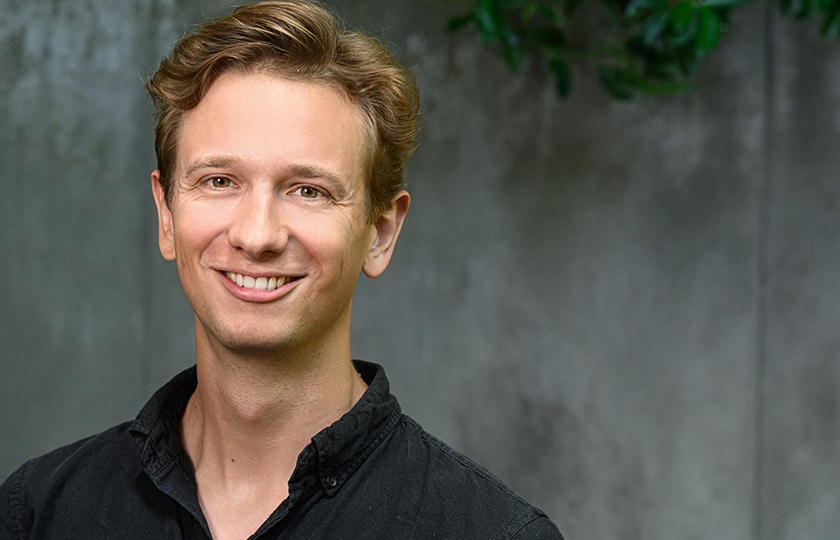
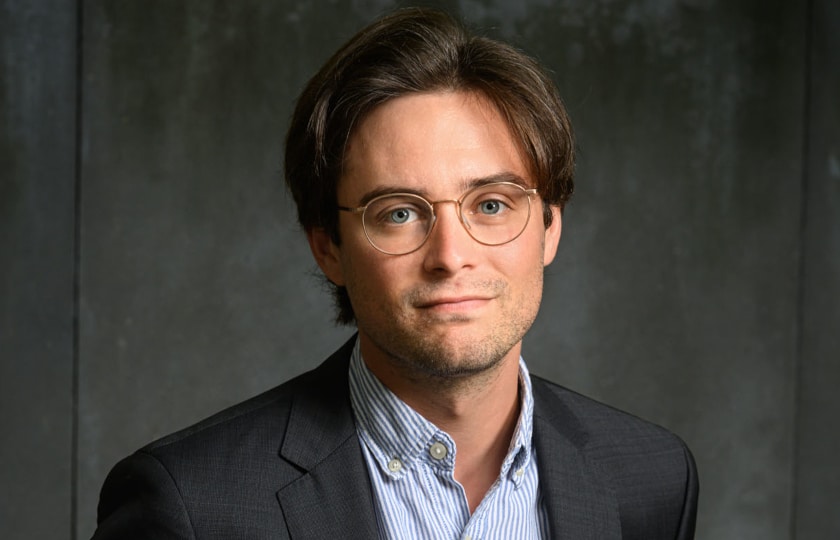
Research group leaders: Dr. Stephan Dreyer and Dr. Claudia Lampert

Overview

Last update: 16.09.2026

Blog Articles, News, Projects, Publications, Podcast Episodes

Cover of the publication "Journalism under Duress"
Just Published!

Report of the Global Research Study “Worlds of Journalism”

The report of the Worlds of Journalism Study (WJS3) "Journalism under Duress" is now available open access. Based on responses from over 32,000 journalists in 75 countries, the report examines how journalists worldwide are dealing with risks, uncertainties, and changes in today's rapidly evolving media landscape.

Bundesminister Karsten Wildberger zusammen mit den Direktor*innen der Einrichtungen des "Netzwerks der Institute für Digitalisierungsforschung"
Focus on Digital Responsibility

Federal Minister Wildberger Visits Institutes for Digitalisation Research

Federal Minister for Digital Transformation and Government Modernisation, Dr. Karsten Wildberger, met with the directors and scientific managers of the Network of Institutes for Digitalisation Research (NIfD) at the Weizenbaum Institute on November 3, 2025, in Berlin. The discussion focused on the current research of the six institutes on the social impact of digitalization.

Portrait Christian Ollig
Interview in the Online Magazine LEIBNIZ

“Today Is the Best Time for Research”

In an interview with the online magazine LEIBNIZ, Dr. Christian Ollig talks about his research, his experiences as a young scientist, and his motivations. In the "30 around 30" section, the magazine asks young scientists about their attitudes toward life, their challenges, and their visions on the occasion of the 30th anniversary of the Leibniz Association.

Screenshot of the article by Dr. Gregor Wiedemann, AVISO, issue no. 81 (Fall 2025)
Article in aviso I Informationsdienst der DGPuK

AI and Research: Harnessing Potential, Understanding Risks

In his contribution, Gregor Wiedemann highlights the ambivalences that can arise from the use of AI tools in communication science research processes, as well as the necessity of precise risk assessment in this context.

Screenshot of an article on the Verfassungsblog. Title of the article: “Ein rundfunkrechtliches ‘Solange’?” [An “As Long As" in Broadcasting Law?]
Article on Verfassungsblog

An “As Long As” in Broadcasting Law?

In an article, Dr. Tobias Mast and Prof. Dr. Wolfgang Schulz discuss the Federal Constitutional Court's decision on the constitutionality of the broadcasting license fee. Their analysis is based on the press release published by the Federal Administrative Court on October 15, 2025.

Cover der Podcastfolge mit Matthias Kettemann - "Carls Zukunft"
Podcast "Carls Zukunft“

Ways Out of Digital Numbness

Matthias C. Kettemann is a guest on the podcast “Carls Future” by futurologist Michael Carl. During the interview, Kettemann discusses the challenges and opportunities of the digital information society. Kettemann observes a communicative overload that weakens our "cognitive immune system."

Cover of an expert opinion by Dr. Stephan Dreyer on the AI Regulation and children's rights
German Children's Fund

Expert Opinion on Children’s Rights and Artificial Intelligence (AI)

In his expert opinion, "The AI Regulation, Its Relationship to Children’s Rights in the Digital Space, and Options for Advocacy Approaches," media lawyer Stephan Dreyer examines how the children’s rights enshrined in the EU Charter of Fundamental Rights are addressed in the regulation.

Tobias Mast
Coordination Office for Digital Services at the Federal Network Agency

Tobias Mast Re-elected as Member of the Advisory Board

Tobias Mast has once again been elected by the German Bundestag to the advisory board of the Coordination Office for Digital Services (Digital Services Coordinators (DSC)) at the Federal Network Agency. He will advise the regulatory authority on issues relating to the application and enforcement of the Digital Services Act as a representative of academia.

Cover des Podcasts "Tonspur Wissen", der Rheinischen Post und Leibniz-Gemeinschaft
New Episode of "Tonspur Wissen"

Do We Still Need Public Broadcasting?

Jan-Hinrik Schmidt is a guest on the science podcast ‘Tonspur Wissen’ by Rheinische Post and Leibniz Association, where he talks with host Ursula Weidenfeld about the findings of the recently published cohesion study by ARD, ZDF and Deutschlandradio.

Logo der Sendung "DAS! Rote Sofa", NDR
Contribution to the Program "DAS! Rote Sofa"

Challenges Faced by Public Service Broadcasting

ARD is celebrating its 75th anniversary and looking back on the past and ahead to the future in the program "DAS! Rote Sofa" with ARD Chairman and hr Director Florian Hager. In a film clip, media historian Dr Hans-Ulrich Wagner illustrates the challenges that have shaped public broadcasting, and continue to do so today.

Einige futuristische Stühle stehen im Kreis auf einer grünen Wiese

Dialogue Formats in Public Service Media

What contribution can public service media make in the digital age as a platform for social dialogue? This future workshop will use scientific methods to develop scenarios and strategies for sustainable dialogue formats in digitalised societies.

Disputation Azade Kakavand. Von links nach rechts:

Congratulations, Azade Kakavand!

We are delighted for Azade Kakavand! On September 19, she successfully defended her dissertation, "Technology Affordances, Social Media Platforms, and the Networked Far Right," at the University of Vienna. Prof. Dr. Annie Waldherr and Prof. Dr. Nicola Righetti supervised the dissertation. Dr. Eva Mayerhöffer and Prof. Dr. Thorsten Quandt served as the examiners.

1 … 8 9 10 11 12 … 43

Page 10 from 43

Newsletter

Information about current projects, events and publications of the institute.

Subscribe now