Growing Up in Digital Media Environments

How are the advancing digitalisation and deep mediatisation changing the way children and young people grow up? What role do social media, online platforms, and artificial intelligence play in identity development, education and social participation? And how can safe online spaces in which young people gain experiences be designed for young people?

The Research Area “Growing Up in Digital Media Environments” investigates how young people use digital and AI-powered media in their everyday lives, what opportunities and risks arise from this use, how they cope with the challenges of the digital world, and what implications this has for media education, children’s rights, and the protection of children and young people in digital media environments. A key characteristic of the research group is its interdisciplinary approach that brings together perspectives from communication studies, the social sciences and legal studies.

The research group pays particular attention to the changes brought about by data-driven systems and artificial intelligence and their implications for growing up in increasingly digitalised societies. In the Youth Lab (Y-Lab), it works together with children and young people in a participatory way: together, they explore new technologies and analyse experiences, expectations and patterns of use. Combined with established research methods, this approach provides a deeper understanding of the significance of digital media and AI-powered technologies for young people.

The planned Observatory for Young People in Digitised Societies will be designed to establish a long-term framework for research and monitoring, enabling the analysis of digital transformation and their consequences for young people. It draws together interdisciplinary findings from relevant studies and projects, including the group’s own research, identifies emerging developments and trends, and provides scientifically grounded knowledge for policymakers and society, supporting the further development of media education and the protection of children and young people in digital media environments.

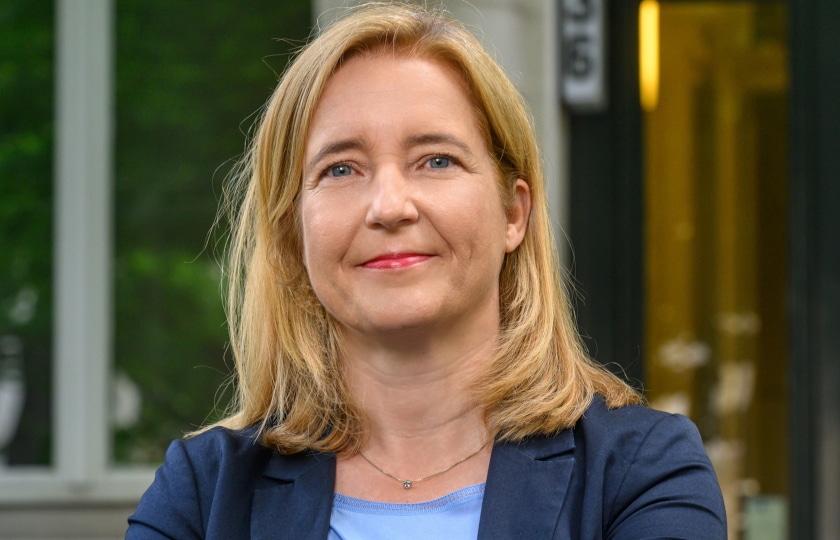
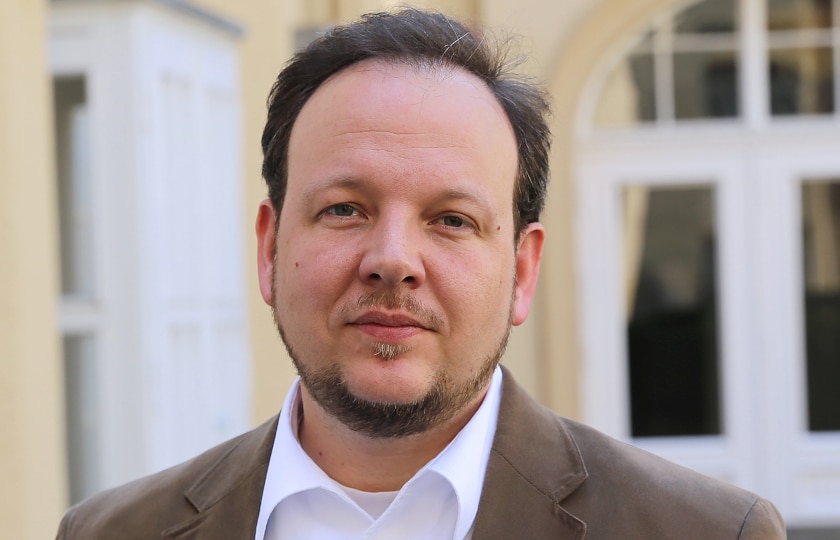
Research group leaders: Dr. Stephan Dreyer and Dr. Claudia Lampert
Overview

Last update: 16.09.2026

Blog Articles, News, Projects, Publications, Podcast Episodes

Stephan Dreyer
Podcast "Die Justizreporter*innen"

Social Media: Harmful Enough to Require a Minimum Age?

Stephan Dreyer was a guest on the ARD podcast Die Justizreporter*innen, where he discussed social media bans for children and young people with reporters Egzona Hyseni and Philip Raillon. He warns against disproportionate interventions and emphasizes the ambivalent role of parents and the danger of negative side effects.

Jan-Hinrik Schmidt mit einem Mikrofon in der Hand.
Cohesion Study by ARD, ZDF, and Deutschlandradio

Social Cohesion and the Role of Public Service Media

ARD, ZDF, and Deutschlandradio—with scientific advice from Jan-Hinrik Schmidt—conducted a study to examine how the population perceives social cohesion and what role public broadcasters play in this. One finding was that more than half of respondents see them as making an important contribution to cohesion.

Claudia Lampert
Protecting Children and Young People in the Digital World

Claudia Lampert Appointed to Expert Commission

Dr. Claudia Lampert will be part of the expert commission appointed by the German federal government to examine the steps necessary for effective protection of children and young people in the media.

Screenshot of the website diskursmonitor, entry “Social Bots” by Gregor Wiedemann
Online Portal for Strategic Communication

Glossary Entry on “Social Bots”

Dr. Gregor Wiedemann wrote a glossary entry on “social bots” for Diskursmonitor, a collaborative online platform that aims to educate and document strategic communication. This topic is marked by major controversy in academia, some of which has played out in public.

Cover of the M&K journal, issue 3/2025
M&K 3/2025 as Special Issue

Diversity, Intersectionality, and Gender in Journalism

The third issue of M&K in 2025 is a special edition on "Diversity, Intersectionality, and Gender in Journalism," edited by Margreth Lünenborg, Ana-Nzinga Weiß, Yener Bayramoğlu, and Bernadette Uth. The nine articles are available open access on the Nomos eLibrary.

Cover of an article by Judith Möller et al. in the journal
Article in Journal of Communication

Positioning and Presentation of Articles in News Aggregators

In the study “Nudges for News Recommenders,” Dr. Nicolas Mattis, Lucien Heitz, Dr. Philipp K. Masur, Prof. Dr. Judith Möller, and Prof. Dr. Wouter van Atteveldt examine how the placement and presentation of environmental news in news aggregators can influence user behavior.

Dartscheibe mit roten Pfeilen an einer Wand.
Media Quiz

Quiz: How Much Do You Know About Media and Freedom of the Press?

Matthias C. Kettemann developed a quiz for the Leibniz Association and t-online's "Ten Questions, One Expert — The Science Quiz" format. The quiz focuses on the key question: "How does the U.S. media landscape differ from that in Germany?"

Cover of the Oxford Handbook
Digital Orders of the Future

Digital Constitutionalism Rethought

In a chapter of the Oxford Handbook of Digital Constitutionalism, Matthias C. Kettemann and Anna Sophia Tiedeke explore digital constitutionalism from the perspective of various normativities. These are the diverse rules, values, and organizing principles that shape the digital space.

Stephan Dreyer
Interview with Evangelische Pressedienst

Social Media Ban Only Possible at EU Level

Media legal expert Stephan Dreyer explains the legal hurdles to banning social media for under-16s in Germany. According to Stephan Dreyer, German politicians have no regulatory authority in this area due to the primacy of the European Union's Digital Services Act (DSA), which came into force in 2024. A ban could therefore only be implemented at EU level.

Eine hübsche junge Familie aus Vater, Mutter Kind blicken strahlend in die Kamera, im Vordergrund links ein Ringlicht
Project for State Media Authorities

Babies and Toddlers as Family Influencers

The HBI is conducting a qualitative and quantitative study to examine how babies and young children under the age of five are portrayed on commercial German-language 'family influencing' profiles on Instagram, TikTok and YouTube. A team led by Dr. Claudia Lampert and Dr. Stephan Dreyer is discussing the findings in relation to the existing legal framework and media ethics considerations.

Martin Fertmann
Successfully Completed Doctorate

Congratulations, Martin Fertmann!

Martin Fertmann successfully defended his law doctoral thesis on the topic of “Human Rights Socialization on Online Platforms: On the Self-Description and External Description of the ‘Meta Oversight Board.” Congratulations!

Cover des Buchs "Recht der Digitalisierung"
Available Open Access

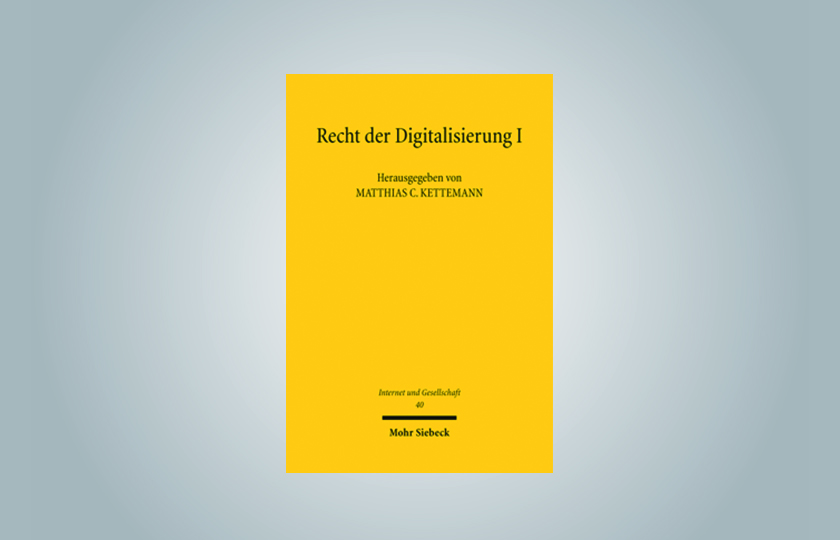
Law of Digitalization

Can the right legal framework meet the central challenges of digitization? This volume, edited by Prof. Dr. Matthias C. Kettemann, explores important new areas of law, the regulation of AI, the role of digital services, and the characteristics of effective technology policy and sensible innovation law.

1 … 9 10 11 12 13 … 43

Page 11 from 43

Newsletter

Information about current projects, events and publications of the institute.

Subscribe now