
Media Research Methods Lab

The Research Group “Media Research Methods Lab” (MRML) supports the application of computer-assisted methods both within and outside the HBI through collaborative projects, its own methodological research, and the collection, processing, and provision of datasets.

In particular, the collection, processing, and provision of datasets will be expanded as part of the Digital Media Ecosystem Index (DIMEX) project, which will be launched in 2027 as part of the institute’s strategic expansion. In DIMEX, the infrastructure for collecting communications by public figures on social media and online media—which was already initiated with the Social Media Observatory (SMO)—will be systematically expanded, consolidated, and supplemented with structured reporting. The goal is to provide a regular overview of developments in the German social media landscape. DIMEX is complemented by content-based studies conducted as part of the SMO, particularly on polarization dynamics in selected social contexts.

As part of the DFG-funded research group “Communicative AI” (ComAI), we are entering the field phase of the project “Political Discourse: Communicative AI and Deliberative Quality” to test AI-based moderation and intervention strategies.

As part of the BMBF-funded project “Systematic Observation of New Auditory Risks” (SONAR), we are investigating how misinformation and disinformation spread via podcasts and short-form video platforms, as well as whether and how counter-narrative strategies—in the form of comments or response videos/audio clips—can sow doubt about the supposed certainties of widely circulated conspiracy myths.

Overview

Last update: 24.09.2026

Blog Articles, News, Projects, Publications, Podcast Episodes

Martin Fertmann
Platform Regulation

Private Power and Private Separation of Powers

Who should decide what can be said on digital platforms? Martin Fertmann and Matthias Kettemann write in Tagesspiegel Background about how institutions can be structured to address this issue, where the risks lie, and what role the Facebook Oversight Board plays in this context.

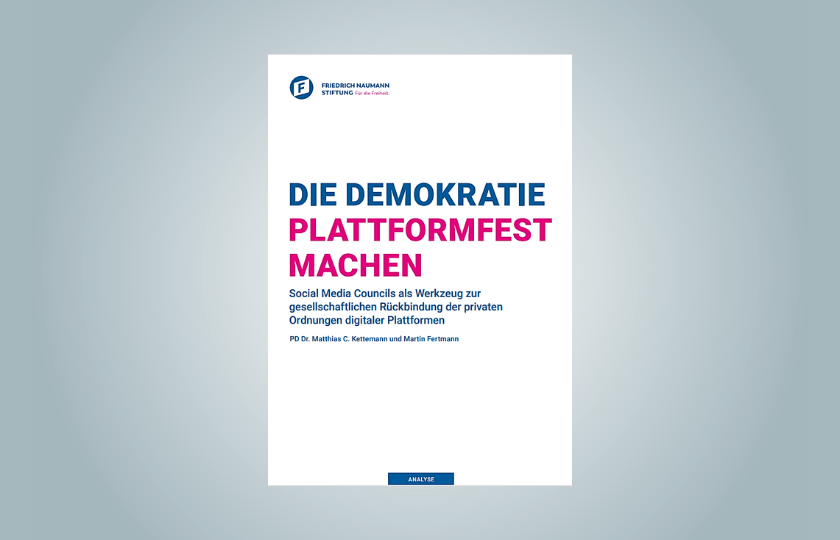
Cover der Publikation der Friedrich-Naumann-Stiftung "Die Demokratie plattformfest machen"
Brief Report

Making Democracy Platform-Proof

In their brief report, published by the Friedrich Naumann Foundation for Freedom, Matthias C. Kettemann and Martin Fertmann describe how social media councils can serve as a tool for fostering social accountability within the private governance structures of digital platforms.

Cover der Zeitschrift New Media & Society, Ausgabe Mai 2021
News Consumption Around the World

Online News Usage in China, The United States and Five European Countries

In their article, Sascha Hölig, Uwe Hasebrink, and Julia Behre provide insights into the use of online news in seven countries with different media systems.

Cover der Publikation "Aufwachsen in überwachten Umgebungen"
Open Access!

Safe Spaces for Children’s Stages of Development in the Digital Society

Stephan Dreyer writes about safe spaces for children’s developmental stages in the digital society in the anthology *Growing Up in Monitored Environments*, which has just been published as open access by Nomos.

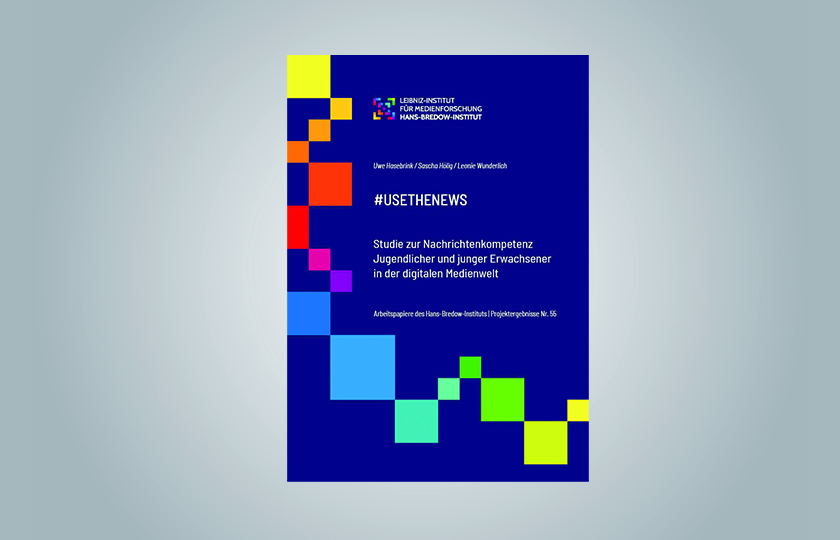
Cover of the working paper Use The News
Study Available for Download

#UseTheNews. Study on News Literacy Among Adolescents and Young Adults in the Digital Media World

#UseTheNews is the first scientific study to examine the news consumption habits of teenagers and young adults with such detail and precision.

Stephan Dreyer
Article in the Tagesspiegel

Youth Protection Act: New but Also Better?

The reform of the Youth Protection Act introduces several changes, but are they really an improvement over the previous version? In a piece for "Tagesspiegel Background", media law expert Stephan Dreyer shares his assessment of these changes.

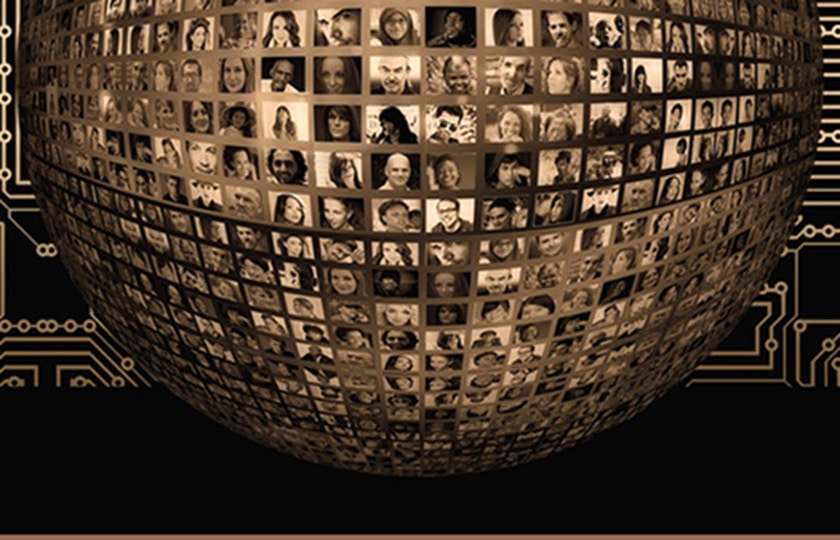
Kugel mit unzähligen Portaitfotos darauf. Im Hintergrund, die Verdrahtungen einer Festplatte.
World's Largest Journalism Study

Journalism under Duress

As part of the world's largest journalism study, "Worlds of Journalism", this representative survey examines the profession of journalism and explores the stresses and strains faced by professional journalists in Germany.

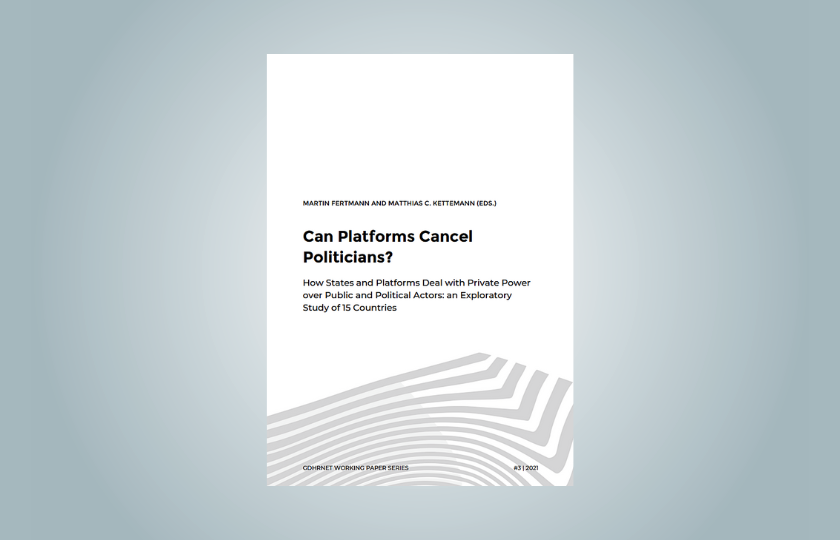
Cover: Can Platforms cancel Politicians?
Platform Regulation

Can Platforms Cancel Politicians?

This working paper examines how political actors are treated on private online platforms in 15 European countries. It was published by Martin Fertmann and Matthias C. Kettemann as part of the Global Digital Human Rights Network Paper Series and is available free of charge as open access.

Wooden judge's gavel against a dark background
Platform Governance

Making Courts Count in Global Content Governance

Technological change poses new challenges for courts, while their decisions and the quasi-judicial structures of digital platforms increasingly shape the rules of digitality.

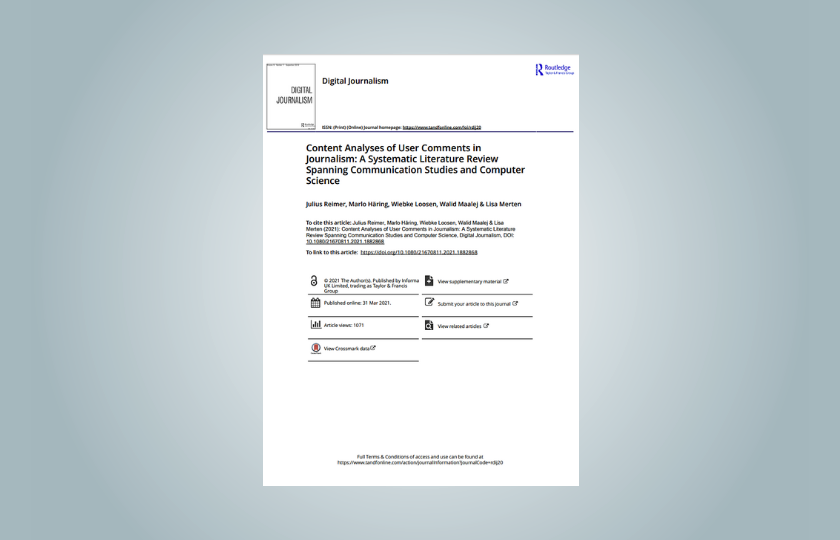
Cover: Content Analyses of User Comments in
Journalism A Systematic Literature Review
Spanning Communication Studies and Computer
Science
Article in Digital Journalism

Content Analyses of User Comments in Online Journalism

In their article, Julius Reimer, Wiebke Loosen, and Lisa Merten, together with Marlo Häring and Walid Maalej, present a systematic literature review on the content analysis of user comments in a journalistic context.

Media Research Blog

Trump’s social media ban

Trump’s ban from social media, while gaining significant media attention, does not represent an isolated case. Preventing individuals from accessing social media platforms or parts of them is a common phenomenon today. Edoardo Celeste terms it ‘social media exclusion’ and argues that it is possible to distinguish three types of this phenomenon on the basis of the actors and specific underlying factors determining the users’ exclusion.

Martin Fertmann
Post on the JuWissBlog

Censorship or Self-Defense? On the Blocking of Opposition Media in Ukraine

Martin Fertmann and Leif Thorian Schmied write on the “Junge Wissenschaft im Öffentlichen Recht” blog about the shutdown of three pro-Russian television stations in Ukraine. The stations were banned by decree—without a court proceeding—through a joint decision by President Zelenskyy and the National Security and Defense Council.

1 … 31 32 33 34 35 … 43

Page 33 from 43

Newsletter

Information about current projects, events and publications of the institute.

Subscribe now