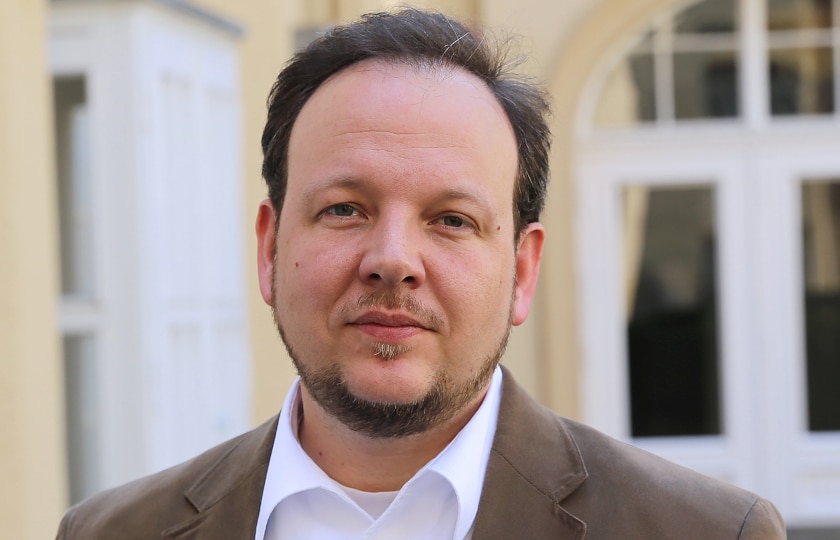
Team Agile Formats

The Agile Formats team within Program Area 3—Science Communication, Agile Formats, and Library Services—started in 2026 as part of the institute’s strategic development. As a service- and knowledge-transfer-oriented unit, the team develops and supports innovative working formats that combine scientific expertise, interdisciplinary exchange, and societal knowledge transfer.

Working closely with the scientific program areas, the team designs and organizes formats such as Research Clinics, Sprints, and other collaborative and innovative working and knowledge-transfer settings. The goal is to make our scientific findings accessible to various target groups, including the scientific community as well as stakeholders from politics, the (media) industry, civil society, and professional practice.

The team is responsible for planning, facilitating, implementing, and following up on agile formats. This includes engaging external experts, developing working materials, and documenting and synthesizing the results. A particular focus is on communicating insights from these formats in a way that is tailored to the target audience and making them accessible through various media and knowledge transfer formats.

Through evaluation, feedback, and continuous improvement, the team helps to sustainably embed agile working methods at the institute and create new spaces for interdisciplinary collaboration, knowledge transfer, and societal impact.

Overview

Last update: 24.09.2026

Blog Articles, News, Projects, Publications, Podcast Episodes

Cover der Zeitschrift Computational Communication Research_Teaser
Open Access

How Document Sampling and Vocabulary Pruning Affect the Results of Topic Models

In the new issue of the journal Computational Communication Research, Dr. Gregor Wiedemann writes together with three other authors about how Topic Modeling could be simplified. This article answers the question whether and how Topic Models can be calculated reliably and without quality loss on smaller samples for the analysis of the population.

Publikation "
Journalistic Coverage of COVID-19

Ethnographic Insights into the Science Media Center and Its Response to the COVID-19 Outbreak

In einer Sonderausgabe des Journal of Science Communication, die sich ausschließlich mit der Kommunikation im Zusammenhang mit COVID-19 befasst, schreibt Irene Broer über die interredaktionelle Reaktion des Science Media Center Germany (SMC) auf den Ausbruch der Pandemie.

Six stylized figures in a video conference window with one figure highlighted in a different color and icons for microphone, camera, participants, chat, and more below.
Blogpost

Who is Zoom to Judge?

Why Engaging in Content Governance is Not a Good Idea for the Successful Video Conferencing Platform.

Cover
Contribution to Anthology

Taking Ingolf Pernice Seriously

In the anthology "Don't Give Up, Stay Idealistic and Try to Make the World a Better Place. Liber Amicorum for Ingolf Pernice", Matthias C. Kettemann describes how the legal scholar Ingolf Pernice has influenced his research on normative order and what normative order on the Internet is all about.

Cover
Accompanying Text to Paul Celan

Of the Strange Celan Sound and an Art-Creating Poetry Voice

Paul Celan is one of the most important German-speaking poets and had a very special way of reciting his poems. In this compilation, the original recordings can be heard for the first time. For this occasion, Hans-Ulrich Wagner has written a detailed accompanying text with background information on Celan's life, work and recitations.

Cover
Article Online

Brainwashing the Germans through Radio Plays?

Was the radio play used for political propaganda? Hans-Ulrich Wagner looks into this in his article in the journal 'Medienkorrespondenz' [Media Correspondence].

Cover
Human Rights Online

Freedom of Expression and the Internet

In this book Matthias C. Kettemann and Prof. Dr. Wolfgang Benedek discuss the importance of human rights on the Internet - especially the right to freedom of opinion.

Portrait
Platform Regulation

Statement on Austria’s Communications Platforms Act

Together with other legal experts in the field of platform regulation, PD Dr. Matthias C. Kettemann issued a statement on the ministerial draft of the Communications Platform Act (KoPI-G), an Austrian federal law on measures to protect users on communications platforms.   This statement can be accessed on the website of the Austrian Parliament.

Portrait
Ethics of Digitalization

How to Use Ethics to Save Digitalisation

In his blog article, Matthias C. Kettemann explains what the "Ethics of Digitalisation" project is about and why it is important to address the normative shaping of digitisation by law.

Portrait Matthias Kettemann
Blogarticle

How Should Private Content Moderation Be Regulated in the New Public Spaces?

On the legal blog Consultor Judrídíco Matthias Kettemann, Juliana Abrusio, Ricardo Campos and Juliano Maranhão address the international debate on content regulation on the Internet as well as what needs to be kept in mind.

Stephan Dreyer
Statement Submitted

Statement Submitted as Part of the Media Regulatory Authorities’ Consultation on the Statutes Governing the Regulation of Media Intermediaries

Stephan Dreyer and Wolfgang Schulz have issued a statement on the regulation of media intermediaries during the consultation of the medienanstalten.

1 … 34 35 36 37 38 … 43

Page 36 from 43

Newsletter

Information about current projects, events and publications of the institute.

Subscribe now