
Transformation of Journalism and the Public Sphere

The research group ‘Transformation of Journalism and the Public Sphere’ examines the transformation of journalism and the public sphere through an empirical and theory-driven approach – partly to understand what this means for democratic cohesion.

Journalism and the public sphere are emerging under new circumstances today: artificial intelligence is not merely intervening from the outside, but is becoming part of society’s communicative DNA. Language models help shape the narrative, platforms pre-sort content, and recommendation systems decide what reaches the public sphere in the first place – and this is shifting the way society communicates with itself.

One focus of the research group is on communicative AI: language models and automated systems have long since ceased to be mere tools; instead, they are themselves becoming participants in social communication. They intervene deeply in the structures through which the public sphere is formed. We analyse this reciprocal appropriation: how AI permeates communicative fields such as journalism, whilst at the same time being appropriated and integrated by people and organisations.

Another strand of our research examines the role that media and communication play in fostering – or jeopardising – social cohesion, and how the social order of understanding and media usage are changing in the digital age – supported by empirical evidence, for example through surveys on the cohesion-related services provided by public service broadcasters or participation in the qualitative panel of the Research Institute for Social Cohesion. Knowledge transfer is of particular importance here: we actively contribute our findings to public discourse and to dialogue with editorial teams, educational institutions and opinion leaders.

Our research is theory-driven, interdisciplinary, methodologically open, internationally networked – and consistently conducted through dialogue-oriented exchange with practitioners and the public. As part of the Worlds of Journalism Study (WJS), the world’s largest comparative study on the state of journalism, we contribute to international journalism research.
Overview

Leaders

Last update: 24.09.2026

Blog Articles, News, Projects, Publications, Podcast Episodes

Cover: Artikel "
Article in "Publizistik"

Concept and Challenges of a Social Media Observatory as a DIY Research Infrastructure

Gregor Wiedemann, Felix Victor Münch, Jan Philipp Rau, Phillip Kessling, and Jan-Hinrik Schmidt discuss the lessons learned from establishing the Social Media Observatory (SMO), an open-science infrastructure for monitoring social media, in their article published in the quarterly journal of communication research *Publizistik*

Deckblatt: "ChatGPT, LaMDA, and the Hype Around Communicative AI: The Automation of Communication as a Field of Research in Media and Communication Studies"
Article in the journal “Human-Machine Communication”

The Automation of Communication as a Field of Research in Media and Communication Studies

The article recommends: To better understand the current changes in the media landscape, we should broaden our perspective. Instead of focusing solely on human-machine interaction, we should consider social communication as a whole.

Illustration: Person blickt ins Smartphone
Funded by the Federal Ministry of Education and Research

The Role of Celebrities in Disinformation Campaigns

This project examines the communication of "celebrities" in social media to gain a better understanding of their role in disinformation campaigns.

Redakteure im dpa-Büro
Value of the News

The History of the German Press Agency (dpa)

The project compiles a comprehensive history of the German Press Agency from 1949 to the present. It shows the significance of the dpa as a leading news agency for public communication in Germany as well as for the democratisation of the German society after the end of the Second World War will be worked out.

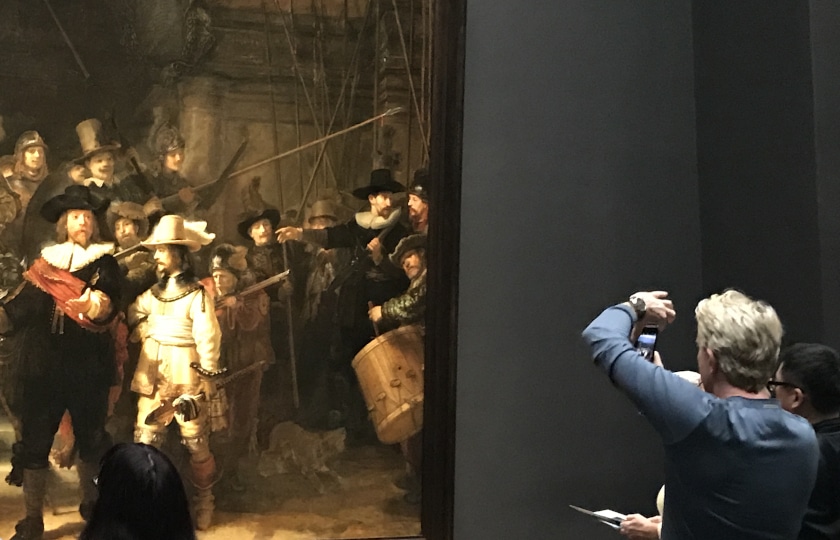
Menschen vor einem Gemälde im Amsterdamer Rijksmuseum
Project in the Leibniz Research Network "Value of the Past”

Practices of Appropriating the Past

The past is negotiated by many actors and made relevant for the present in ever new communicative practices.

Cover der Publikation Plattform-Demokratie
Download the Results Report

Perspectives on Platform Power, Public Values and the Potential of Social Media Councils

In the final report of the “Platform – Democracy” research project, Matthias C. Kettemann and Wolfgang Schulz present ways to better protect human rights and democratic values in the digital sphere.

Cover des Arbeitspapiers  Reuters-Bericht 2023
Working Paper Nr. 67 for Download

Reuters Institute Digital News Report 2023

Interest in the news has been declining over the long term. In 2023, 52 percent of adult Internet users in Germany say they are extremely or very interested in the news.

Cover des Arbeitspapiers Medinnutzung in Mecklenburg-Vorpommern
Working Paper Nr. 66

Media Use and Political Culture in Mecklenburg-Western Pomerania

The study examines how people in Mecklenburg-Western Pomerania stay informed about politics and other socially relevant issues in their state, and what their general attitudes toward politics are.

Junger Mann im Profil reibt sich die müden Augen
News Usage in International Comparison

News Fatigue in Germany on the Rise

Interest in news continued to decline in 2023. 52 per cent of adult internet users in Germany say that they are extremely or very interested in news.

Cover Eckpunkte
Statement on the Key Points Paper

Statement: Key Points from Federal Ministry of Justice on the Law Against Digital Violence

A group of HBI experts in the fields of media law, youth media protection, platform regulation, and Internet research issued a statement outlining their assessment of a key points paper from the Federal Ministry of Justice (BMJ) regarding a law on digital violence.

Cover der Publikation
Article in the magazine “Journalism”

Exploring the Interrelation between Journalism and Social Cohesion

In their new article in the journal *Journalism*, Julius Reimer, Verena Albert, and Wiebke Loosen explore how journalism can either strengthen or weaken social cohesion. The article is based on the findings from four group discussions with 21 experts from the fields of journalism, academia, and civil society “cohesion practice.”

Cover des Arbeitspapiers Belastende Online-Erfahrungen
Working Paper No. 65

Adolescents’ Perception, Evaluation, and Coping with Distressing Online Experiences

The findings of the qualitative study by Kira Thiel and Claudia Lampert provide valuable insights into how adolescents cope with distressing online experiences and where they need support.

1 … 25 26 27 28 29 … 43

Page 27 from 43

Newsletter

Information about current projects, events and publications of the institute.

Subscribe now