
Transformation of Journalism and the Public Sphere

The research group ‘Transformation of Journalism and the Public Sphere’ examines the transformation of journalism and the public sphere through an empirical and theory-driven approach – partly to understand what this means for democratic cohesion.

Journalism and the public sphere are emerging under new circumstances today: artificial intelligence is not merely intervening from the outside, but is becoming part of society’s communicative DNA. Language models help shape the narrative, platforms pre-sort content, and recommendation systems decide what reaches the public sphere in the first place – and this is shifting the way society communicates with itself.

One focus of the research group is on communicative AI: language models and automated systems have long since ceased to be mere tools; instead, they are themselves becoming participants in social communication. They intervene deeply in the structures through which the public sphere is formed. We analyse this reciprocal appropriation: how AI permeates communicative fields such as journalism, whilst at the same time being appropriated and integrated by people and organisations.

Another strand of our research examines the role that media and communication play in fostering – or jeopardising – social cohesion, and how the social order of understanding and media usage are changing in the digital age – supported by empirical evidence, for example through surveys on the cohesion-related services provided by public service broadcasters or participation in the qualitative panel of the Research Institute for Social Cohesion. Knowledge transfer is of particular importance here: we actively contribute our findings to public discourse and to dialogue with editorial teams, educational institutions and opinion leaders.

Our research is theory-driven, interdisciplinary, methodologically open, internationally networked – and consistently conducted through dialogue-oriented exchange with practitioners and the public. As part of the Worlds of Journalism Study (WJS), the world’s largest comparative study on the state of journalism, we contribute to international journalism research.

Overview

Leaders

Last update: 24.09.2026

Blog Articles, News, Projects, Publications, Podcast Episodes

Cover der Publikation "Better Internet for Kids (BIK) Policy Map 2023"
Fourth Edition

The Better Internet for Kids Policy Map

The fourth edition of the Better Internet for Kids (BIK) Policy Map provides an overview of the implementation of the “European Strategy for a Better Internet for Kids” (BIK Strategy) in the EU member states, as well as in Iceland and Norway. The findings are organized according to the three pillars of the BIK+ Strategy: “safe digital experiences,” “digital empowerment,” and “active participation.”

Illustration einer Lupe, von Puzzlesteinen, Netzwerken
EU Cooperation Project

Children Online: Research and Evidence

As part of the project, the knowledge platform core-evidence.eu was created, which provides a comprehensive and, at the same time, contextualised overview of the research situation about the effects of the digital transformation on children and young people in Europe.

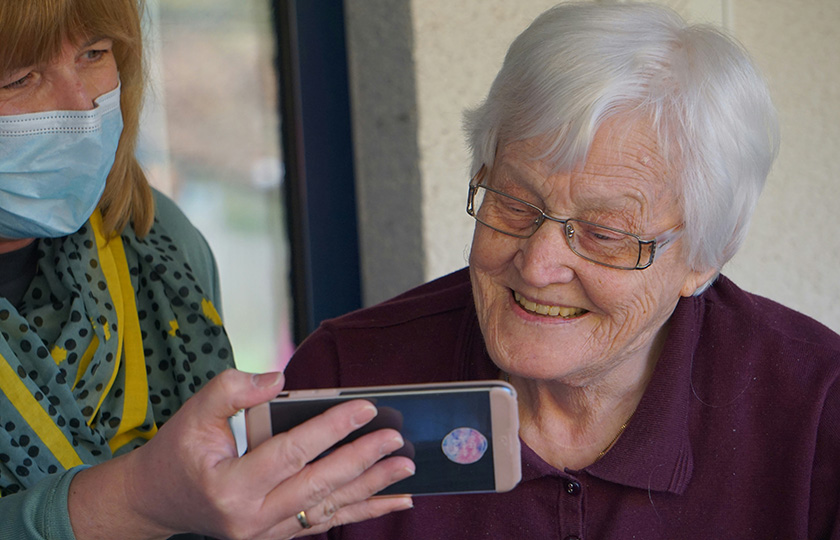
Eine Frau mit Maske zeigt einer Seniorin etwas auf dem Samrtphone
Cooperation Health Communication

Digitally Healthy – Fit for Apps and the Internet

What experiences do older people have with digital health services, and how can their digital health literacy be improved? The HBI has done a study on this as part of a transdisciplinary project.

Eine Welle bricht.
New Research Project!

Capacities and Competences in Dealing with Hate Speech and Hostility towards Science (KAPAZ)

The “Capacities and Competences in Dealing with Hate Speech and Hostility towards Science (KAPAZ)” research consortium aims to gain new empirical insights into the prevalence of hostility and derogatory behavior toward scientists in Germany.

Vier junge Mädchen schauen in ein Handy und in ein Tablet
Dealing with Online Risks

The Youth Media Protection Index 2022

Children are increasingly exposed to online risks, prompting growing concerns among parents about their children's online safety. These are some of the findings of the 2022 Youth Media Protection Index, compiled by the HBI and JFF on behalf of the Voluntary Self-Regulation of Multimedia Service Providers (FSM).

Cover Jugendmedienschutzindex 2022
Full study as a brochure

The Youth Media Protection Index 2022

Parents’ concerns about their children’s online safety are on the rise. Children and adolescents are increasingly exposed to online risks. These are the findings of the 2022 Youth Media Protection Index, which has now been published as a brochure. HBI researchers Claudia Lampert, Stephan Dreyer, and Kira Thiel contributed to the study.

Cover Zeitschrift
Child and Youth Protection in Theory and Practice

Children’s and Adolescents’ Online Behavior During the COVID-19 Pandemic

Claudia Lampert and Kira Thiel conducted research on how young people structured their online activities during the early stages of the COVID-19 pandemic and how their parents dealt with the situation, and they wrote about their findings in the journal "Kinder- und Jugendschutz in Wissenschaft und Praxis" (Child and Youth Protection in Science and Practice).

Cover
Anthology

100 Years of Radio in Germany

Hans-Ulrich Wagner writes about radio personalities and their careers in his contribution to the anthology "100 Years of Radio in Germany", which has been published by the Federal Agency for Civic Education (bpb).

Paper:
Peer-reviewed Paper

Boundary Detection and Categorization of Argument Aspects via Supervised Learning

In a conference paper, Mattes Ruckdeschel and Dr. Gregor Wiedemann describe analytical methods for the automatic identification of argument aspects used to categorize pro and con arguments by content.

Cover
Transparency in Automated Decision-Making Processes

Transparency or Opacity

Martin Fertmann, together with Simone Kuhlmann, Fabrizio De Gregorio, Hannah Ofterdinger, and Anton Sefkow, has edited an anthology of legal articles addressing the issue of transparency in automated decision-making processes.

Cover des Arbeitspapiers  Social Media Content Creator
Working Paper Nr. 64 for Download

Social Media Content Creators from the Perspective of Their Young Followers

Teens and young adults specifically follow influencers to stay informed—social media content creators serve various roles in this process and play a significant role in shaping public opinion.

Cover
Book Chapter

Parliamentary Groups and Members of Parliament

Tobias Mast writes in his contribution to the new Handbook of the Law of State Expression about the legal competencies and boundaries for parliamentary groups and members of parliament when communicating publicly in their official role.

1 … 26 27 28 29 30 … 43

Page 28 from 43

Newsletter

Information about current projects, events and publications of the institute.

Subscribe now